Should Washing Machine Shake? A Practical Troubleshooting Guide
Struggling with a noisy, vibrating washer? This urgent guide from Best Washing Machine covers common causes, quick checks, and step-by-step fixes to stop your machine from shaking.


Most washing machines shake because they’re not level, the load isn’t balanced, or the suspension is worn. Start with the easiest fix: level the machine and redistribute the load. If the vibration persists, check the feet, drum support, and floor stability. If this doesn’t fix it, proceed with the step-by-step fixes below.
Why Washing Machine Shake Happens
According to Best Washing Machine, vibration is most often caused by improper leveling or load distribution. A washer that sits on an uneven floor or has feet that aren’t adjusted can transfer movement to the surrounding structure, turning a quick wash into a shaky performance. New installations sometimes come with transit bolts or shipping brackets that must be removed before use; if left in place, they can cause unusual wobble. Beyond installation, daily use—like loading a single heavy item, or mixing bulky towels with jeans—can produce imbalanced spins. The brand's analysis also notes that aging components, especially the suspension or shock absorbers on the drum, contribute to persistent vibration as cycles wear on. This article from Best Washing Machine aims to help homeowners diagnose quickly, fix the most common causes, and implement prevention steps so future laundry days stay quiet and efficient.
Common Causes of Excessive Vibration
Vibration that you can feel through the floor usually comes from one or a combination of these factors:
- Unbalanced load: A single heavy item (duvet, rug, jeans) can throw the drum off-center during spin.
- Not level or unstable installation: If the machine rocks when you push on its corners, the feet aren’t contacting the floor evenly.
- Worn suspension or drum support: Over years, the springs, dampers, or bushings lose stiffness, increasing wobble.
- Damaged drum or counterweights: Dented or loose components shift the drum off-axis.
- Overloading or underloading: Too-full drums can’t rotate smoothly; too-light loads bounce inside.
- Faulty feet or base: Worn or uneven feet fail to stabilize the washer.
- Floor issues: A soft, flexible, or sloped floor amplifies vibrations, especially on hard spin cycles.
Check Your Installation and Leveling
The quickest fix is often the simplest: level the machine. Place a spirit level on the top surface and check front-to-back and side-to-side. If the bubble isn’t centered, adjust the leveling feet: rotate clockwise to raise or counterclockwise to lower until the unit sits evenly. After adjusting, place a small shim or rubber pad under any foot that rocks. Re-check both axes until the machine shows a stable reading in both directions. Remember to test on the actual floor where the washer sits; a rigid concrete slab behaves differently from a soft wood floor. Best Washing Machine recommends taking a few test spins on a no-load cycle to confirm there’s no rocking. If the floor itself is uneven, you may need to relocate the washer to a more stable spot or install a anti-vibration pad for extra support.
Inspect the Load, Drum, and Lid
Evenly distributed clothes reduce drum imbalances. When sorting, mix heavy items with lighter ones and avoid pooling many heavy towels in a single side. Check the drum for dents, loose rollers, or a misaligned belt. For top-loaders, ensure the lid is secure and the lid switch engages properly; a loose lid can cause erratic spinning. If you notice visible wobble only during high-speed spins, the problem may be an out-of-balance load rather than the machine itself.
Diagnostic Flow: Symptom to Diagnosis
The diagnostic approach follows a simple flow: identify the symptom, list likely causes, prioritize fixes by ease, and verify with a test. Start with “Is it level?” — if yes, move to load balance; if not, fix leveling first. If leveling doesn’t stop the wobble, consider suspension wear or a damaged foot. Always verify after each fix with a short test run.
Step-by-Step Fixes for the Most Common Causes
-
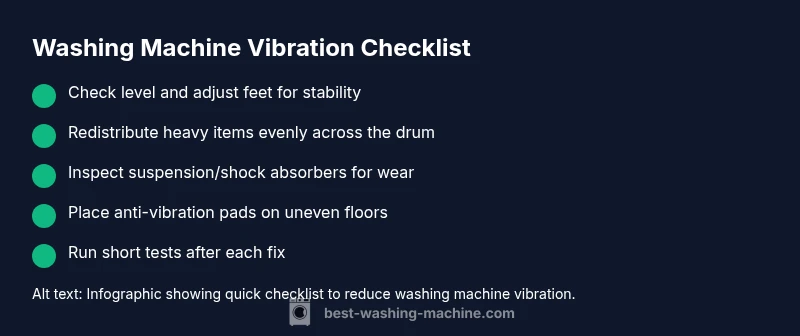
Level and rebalance the load: Ensure feet are on a firm surface and the machine sits evenly on all four feet. Redistribute clothing so the drum is balanced around the center. Run a short test cycle to verify stability.
-
Stabilize the floor: If the floor is uneven or flexible, install anti-vibration pads under the feet and re-check with a test spin. Pro tip: place a straightedge across the top to confirm even contact with all four feet.
-
Inspect suspension components: Look for damaged springs or dampers, especially on front-loaders. Replace any worn parts following the manufacturer’s instructions.
-
Check drum and counterweights: Tighten loose bolts and inspect counterweights for cracks. Replace damaged parts to restore proper drum alignment.
-
Optimize loading habits: Avoid overloading; mix heavy items with lighter ones and adhere to manufacturer load guidelines. Small, balanced loads spin more steadily and quietly.
Prevention Tips to Keep Your Washer Quiet and Stable
- Regularly verify the level and feet every few months, especially after moving the appliance.
- Use correctly balanced loads and avoid mixing very heavy items with light ones.
- Place the washer on a solid, level surface; consider anti-vibration pads on wooden floors.
- Schedule professional servicing if wobble persists after basic maintenance, as persistent vibration can indicate worn components or structural issues.
Steps
Estimated time: 30-60 minutes
- 1
Level the washer and rebalance
Place a level on the top surface and adjust the feet until the unit reads level in both directions. Redistribute heavy items to balance the drum around the center. Run a short no-load cycle to verify stability.
Tip: Small shim under a rocking foot can save the whole unit from wobble. - 2
Test on a stable floor
If the floor is uneven or soft, consider anti-vibration pads or moving the washer to a firmer spot. Re-check level after placing pads and test again.
Tip: Always test with a real cycle on the actual floor where the washer sits. - 3
Inspect suspension
For front-loaders, inspect springs and dampers for leakage or wear. If you hear clunks or see visible damage, replace with the manufacturer-recommended parts.
Tip: Unplug the machine before inspecting; take photos of wiring for reference. - 4
Check drum and counterweights
Look for loose bolts or shifting counterweights. Tighten fasteners and replace damaged components to restore balance.
Tip: Handle with care to avoid personal injury; support the drum when loosening parts. - 5
Refine loading habits
Avoid overloading; distribute weight evenly and avoid pairing very heavy items with light ones in the same wash. Run a test cycle to confirm vibrations are reduced.
Tip: If in doubt, run medium-load cycles first to gauge stability.
Diagnosis: Machine shakes during operation
Possible Causes
- highUnbalanced load
- mediumOut-of-level installation or uneven floor
- mediumWorn suspension or shock absorbers
- lowDamaged drum or counterweights
Fixes
- easyLevel the machine and redistribute the load; run a test cycle
- easyCheck and adjust leveling feet; place anti-slip shims if needed
- mediumInspect suspension/shock absorbers and replace if worn
- mediumInspect drum and counterweights for damage and tighten/replace as needed
FAQ
Why does my washing machine shake more on spin cycles?
Spin cycles reach higher drum speeds, which magnifies any imbalance or levelness issues. Start by balancing the load and leveling the unit, then inspect suspension if needed.
Spin cycles go faster, which makes wobble more noticeable. Balance the load and level the machine first, then check the suspension if it persists.
Can I fix a shaking washer myself?
Many shaking issues are solvable with leveling, load balancing, and basic inspection. More complex problems like worn shocks or damaged drums may require a professional.
Yes, many fixes you can do yourself, but some parts may need a pro.
What tools do I need to level a washing machine?
A simple carpenter’s level, a wrench for foot adjustments, and a rubber shim or pad are usually enough to level and stabilize a washer.
Grab a level, a wrench, and shims to level the washer.
Is a shaking washer a safety hazard?
Persistent vibration can indicate structural issues or electrical components being strained. If wobble continues after basic fixes, have a professional assess the unit.
Yes, ongoing wobble can indicate bigger problems; get it checked if it won’t settle.
When should I call a professional?
If the washer still wobbles after leveling, or you hear grinding, clunking, or leaks, consult a technician. They can diagnose suspension wear or internal damage.
Call a professional if it won’t settle after basic fixes or you hear unusual noises.
Watch Video
The Essentials
- Level the washer to stop wobble
- Redistribute loads for balanced spins
- Check feet and floor stability
- Test with a short spin after fixes
- Call a professional if wobble persists