Troubleshooting: Washing Machine is Making Loud Noise
Urgent guide to diagnose and fix a washing machine that’s making loud noises. Learn common causes, safe checks, and when to call a pro.


The most common cause of a washing machine making loud noise is a loose object, unbalanced load, or worn mechanical parts such as bearings or shock absorbers. Start by unplugging the unit, removing any items in the drum, and leveling the feet. If the noise persists, you may be dealing with worn bearings or a damaged belt, which usually requires professional service.
Why a washing machine is making loud noise
A washing machine is making loud noise is a common issue that disrupts daily life and can indicate developing problems. In many cases, the fix is straightforward and involves basic checks, but some noises point to worn parts that will need replacement. The tone set by Best Washing Machine emphasizes safety and methodical diagnosis: start with the simplest explanations before opening the cabinet. The most common culprits are loose foreign objects in the drum or pump, an unbalanced load, and worn suspension components that fail to dampen the tub’s movement. The location and timing of the noise matter: a sound during spinning typically suggests a wobble or bearing issue, while a noise during agitation may come from the agitator or drive belt. By mapping the sound pattern to a likely cause, you save time and avoid unnecessary disassembly. Over time, neglecting a loud noise can lead to additional damage, leaks, or energy inefficiency. A calm, patient approach lets you catch the fault early and decide whether you can fix it at home or need a licensed technician.
Common noise profiles and what they mean
Not all loud noises mean the same problem. A rattle when the drum rotates is often a sign of a loose item in the drum or a loose pump part. A grinding or squealing during spin can indicate worn bearings, a damaged belt, or a failing pulley. A banging or thudding sound on every revolution can be linked to suspension damage or tub supports. For front-load machines, the high-pitched whine sometimes points to belt or motor issues, whereas the rough thud during agitation points to the agitator assembly or misaligned tub. If you notice the noise starting after a particular cycle or loading pattern, that hint helps pinpoint whether the problem is mechanical or related to how the load is distributed.
Quick checks you can do safely
Before touching internal parts, unplug the machine and power down. Remove laundry and visually inspect the drum for foreign objects like coins, buttons, or zipper pulls that could rattle during spin. Check the machine’s feet: a level surface reduces vibration and prevents metal-to-cabinet contact. Inspect the drain hose and pump area for kinks or blockages; a blocked pump can cause grinding noises as water moves. If you can access the belt drive, inspect for wear—frayed or glazed belts are a common cause of noise in belt-driven models. For front-loaders, also listen for noise when the door is open and the drum is turned by hand; this can reveal rough bearings or a stiff pulley. Finally, run a short, empty test cycle on a low spin to see if the noise persists, and whether it correlates to drum rotation, load weight, or speed.
Diagnostic flow overview: symptom → diagnosis → solution
This section outlines a practical decision tree to troubleshoot loud noises. Start with the symptom: is the noise present only during spin, agitation, or both? If the noise is tied to spin and you hear a thud every revolution, the culprit is likely a loose item or an unbalanced load. If the noise happens during agitation, the agitator or drive belt is suspect. If the drum feels loose or rubs against the cabinet when rotated by hand, you may have worn bearings or a bent drum. For each potential cause, attempt non-invasive fixes first: remove debris, level the unit, re-seat the drum, and replace a frayed belt if accessible. If the noise continues after these steps, step up to more involved repairs or call a professional. The aim is to avoid unnecessary disassembly and ensure safety at every stage.
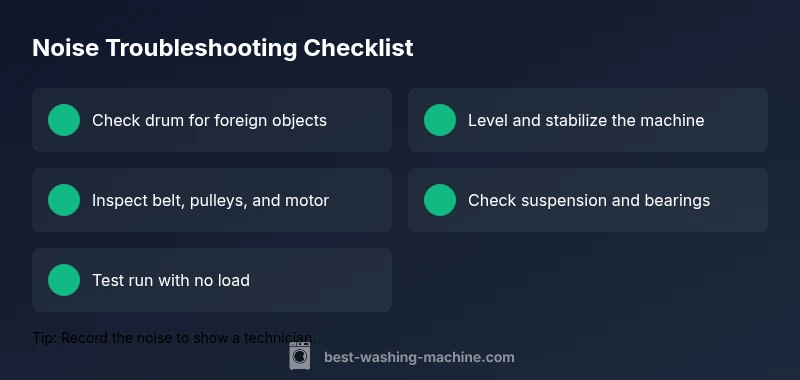
Steps
Estimated time: 60-90 minutes
- 1
Power off and safety check
Unplug the washer and switch off any nearby breakers. Remove jewelry and stand clear of any water. Visually inspect the exterior for loose parts or obvious damage before you open the cabinet.
Tip: Always unplug before inspecting any internal components. - 2
Level the washer and stabilize
Check that the machine sits level on the floor. If necessary, adjust the front and rear feet until the unit doesn’t wobble in spin. A stable drum reduces vibration and noise.
Tip: Use a small spirit level to confirm levelness on both axes. - 3
Check for foreign objects in drum
Carefully rotate the drum by hand to feel for rough spots or resistance. Remove coins, buttons, or hair ties that can rattle during spin. Reseal the drum and run a short cycle with no clothes to confirm the sound.
Tip: If you hear grinding while turning, avoid running the cycle and consult a pro. - 4
Inspect belt, pulleys, and motor area
Access the belt-drive area only if you’re comfortable. Look for cracks, fraying, or glazing on the belt; check pulleys for wobble. If the belt is worn, replace it following your model’s service manual.
Tip: Do not force belts off or on; use proper clamps and lubricants as recommended. - 5
Check suspension and tub bearings
If your model uses suspension springs or tub supports, inspect for wear or damage. Worn bearings can cause a rumbling or grinding noise during spin. Replace bearings or shocks as needed using manufacturer parts.
Tip: Bearings replacement can be complex; consult a professional if unsure. - 6
Run a test cycle and observe
With clothes removed, run a short test cycle on a gentle setting. Listen carefully for the repeat pattern and note which phase creates the sound. Document the behavior to share with a technician if you need help later.
Tip: Record the sound using your phone to show a technician.
Diagnosis: Washing machine is making loud noise
Possible Causes
- highForeign objects in drum or pump
- highUnbalanced load during spin
- mediumWorn drum bearings or suspension
- lowDamaged drive belt or pulleys (belt-driven models)
- lowLoose or misaligned agitator (in top-load models)
Fixes
- easyPower off, unplug, and remove obvious debris from drum and pump area
- easyLevel the washer and redistribute clothes evenly; run without load to test
- mediumInspect drive belt for wear and replace if necessary (on accessible models)
- hardInspect and replace worn bearings or shock absorbers
- hardCall a technician for bearing/pulley issues or tub damage
FAQ
What are the most common causes of a washing machine making loud noises?
Loud noises often come from foreign objects in the drum, unbalanced loads, worn drum bearings or pulleys, a damaged drive belt, or worn shock absorbers. Identifying the phase where the noise occurs helps narrow the culprit.
Common causes include objects in the drum, unbalanced loads, worn bearings, or a damaged belt. Start by checking for foreign objects and ballast.
How can I tell if the noise is from the drum or the motor?
If the noise is tied to spin and you hear a thud every revolution, the culprit is likely a drum-related issue such as bearings or a belt. If it happens during agitation or a continuous whine, the motor or belt area is suspect.
Noise during spin suggests drum issues; noise during agitation points to motor or belt.
Is it safe to use the washer if it’s making loud noises?
Running a washer with a loud noise can cause further damage or water leaks. If the noise is severe or you notice shifting or leaks, stop use and inspect or call a technician.
No—avoid use until you diagnose the cause or a professional confirms it’s safe.
Should I replace the drum bearings or the belt myself?
Belts are generally easier and safer to replace than bearings, which often require wheel alignment and special tools. If you’re unsure, consult a repair manual or professional.
Belt replacement is often easier for most DIYers; bearings usually require a pro.
How much does professional repair typically cost for loud noises?
Costs vary by model and region. A professional can inspect, diagnose, and provide an estimate for parts and labor before proceeding.
Costs vary by model; a technician can provide an estimate.
Can a top-load washer with an agitator cause loud banging?
Yes, worn agitator bushings or loose mounting can cause banging. Inspect the agitator and fix or replace components as needed.
Agitator wear can cause banging; check the agitator assembly.
Watch Video
The Essentials
- Identify noise pattern and load balance first
- Level the machine to reduce vibration
- Check belts and pulleys only if comfortable
- Call a professional for bearing or motor issues