Why Your Washing Machine Keeps Filling and How to Stop It
Urgent troubleshooting guide for when your washing machine keeps filling. Learn common causes, safety steps, and a clear diagnostic flow from Best Washing Machine.


Most likely the inlet valve is stuck open or the water-level sensor is failing, causing the tub to fill continuously. First, unplug the machine and check the water inlet hoses and valve, then test the pressure switch and float. If the issue persists, schedule service.
Why Your Washing Machine Keeps Filling: Context and Stakes
In modern homes, a washing machine that keeps filling can flood laundry spaces and waste water, plus raise utility bills. The most common culprits are components in the fill circuit: the water inlet valve, the water level sensor (pressure switch), and the related hoses and fittings. According to Best Washing Machine analysis, overfill symptoms often point to these parts first, especially if the symptom occurs during the fill or rinse cycles. Start with the simplest checks—turn off power and water, inspect hoses for kinks, and verify the valve is not jammed open. By approaching the issue with a calm, methodical plan, you can prevent water damage and minimize downtime. This guide is designed for homeowners, renters, and even small business laundries who need quick, safe guidance.
Common Causes Behind Uncontrolled Filling
There are several plausible reasons a washing machine keeps filling. A stuck-open inlet valve or a valve with a minor leak can continuously allow water into the tub. A faulty water level sensor or pressure switch can fail to signal when the tub has reached the proper level, causing an endless fill. Timer or control board faults can also lock the fill circuit on, especially in older models or after power surges. External issues, like excessive household water pressure or a misconnected hose, can also mimic these problems. Understanding these causes helps you prioritize tests and avoid unnecessary disassembly.
Safe Quick Checks You Can Do Right Now
Before you touch any internal components, perform these quick checks to narrow down the issue: 1) Power off and unplug the machine; 2) Shut off the cold and hot water valves to stop water flow; 3) Check that no hoses are kinked or crushed; 4) Look for obvious leaks around the inlet valve and hose connections. If water continues to flow after you shut off the valve, the inlet valve or a control fault is likely involved. Keep a spill tray handy, and if you see water near electrical components, stop immediately and unplug at the wall. These steps are safe for most DIY troubleshooters when done with care.
How to Inspect the Water Inlet Valve and Hoses
The water inlet valve controls incoming water. To inspect it safely: 1) Unplug the machine and shut off the water supply; 2) Remove the access panel per the user manual and locate the inlet valve; 3) Check for corrosion, crack lines, or mineral buildup; 4) If you can access the valve’s coil, gently wiggle it to see if the valve is loose. Use a multimeter to test coil resistance if you have one, and compare to the model’s specs. If the valve is stuck or damaged, replacement is generally required. Replace hoses if you notice cracks or bulges.
Diagnosing the Water Level Sensor and Pressure Switch
A malfunctioning pressure switch can think the tub is low on water and instruct the fill valve to run longer. To diagnose: 1) Locate the pressure switch assembly connected to the drain hose and tub; 2) Inspect the hose for kinks, cracks, or obstruction; 3) Remove power and test the switch with a multimeter for continuity; 4) If the switch does not read properly, it likely needs replacement. Some models require calibration or a specific diagnostic procedure; consult the manual if you’re unsure. A faulty sensor is a common reason for continued filling.
When the Inlet Valve and Fill Circuit Are Fine: Other Origins
If the valve and sensor check out, other possibilities exist. A faulty timer or electronic control board can keep the fill relay energized. Wiring issues, such as a short to the fill circuit, can also cause overfill. Inspect for burnt wires, loose connectors, or signs of arcing. In newer machines, software glitches may trigger a stuck-fill condition; a reset or firmware update could resolve it. If you’re not comfortable with electrical diagnostics, this is a signal to call a pro.
Safety, Warnings, and When to Call a Pro
Water plus electricity is a hazardous combination. Always unplug before opening panels, and never work with live power exposed. If you smell burning, hear buzzing, or see smoke, shut off the power and water immediately and contact service. Do not attempt high-voltage testing if you lack training. A licensed technician can safely diagnose complex control-board faults, sensor faults, or valve anomalies and perform replacements with proper testing. Preventive maintenance reduces recurrence, so consider a professional inspection schedule if you repeatedly encounter fill issues.
Maintenance to Prevent Reoccurrence
Preventive care pays off. Regularly inspect inlet hoses for wear, replace plastic fittings showing signs of stress, and keep the area dry around the base. Use the manufacturer’s recommended detergents to avoid residue buildup that can affect sensors. If you live in hard-water areas, mineral deposits can affect valves and sensors; consider a water-softening solution or periodic descaling as recommended by your model’s manual. Finally, implement a simple quarterly diagnostic check to catch early signs of wear.
Quick Start Troubleshooting Flow and Next Steps
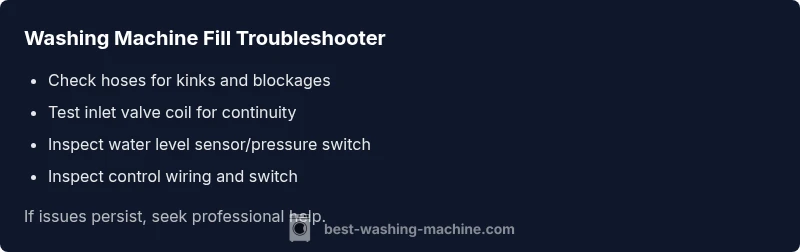
Here’s a practical flow to follow if your washer keeps filling: confirm power is off, isolate the water supply, inspect hoses, test the inlet valve, test the pressure switch, inspect the control connections, reassemble, and run a controlled test fill. If the fill persists after these steps, document the symptoms, power down, and contact Best Washing Machine supported channels for guidance. A professional evaluation is advised if you notice evidence of electrical issues, flooding, or persistent fill after valve and sensor checks.
Steps
Estimated time: 60-90 minutes
- 1
Power down and secure water supply
Unplug the washer and turn off both the hot and cold water valves. This stops water flow and reduces shock risk while you inspect components. If reachable, place a dry towel nearby to catch any residual water.
Tip: Always work on a dry surface; use a non-slip mat to prevent accidents. - 2
Inspect hoses and fittings
With power off, remove the back panel or access door as allowed by manufacturer. Check hoses for kinks, cracks, or bulges. Ensure clamps are tight and the inlet filter isn't blocked by sediment.
Tip: Replace worn hoses immediately to prevent leaks. - 3
Test the inlet valve and coil
Carefully locate the inlet valve coil. If accessible, apply a gentle wiggle to test for sticking. Use a multimeter to check coil resistance according to your model’s spec, and replace if readings are out of range.
Tip: If you’re unsure about testing, skip to professional help rather than guessing. - 4
Check the pressure switch/level sensor
Follow the drain hose to the pressure switch. Look for cracks or occlusions; disconnect power and test continuity if you have the tools. Replace the switch if it fails continuity tests or shows physical damage.
Tip: A small obstruction can cause misreads and lead to overfilling. - 5
Inspect the lid/door switch and wiring
Top-load washers rely on the lid switch to confirm the tub is safe to run. Make sure the switch engages correctly when the lid is closed. Inspect wiring for loose connections or signs of burning.
Tip: Securely reattach any disconnected connectors to prevent future faults. - 6
Run a controlled test fill
Reassemble panel covers, reconnect power, and run a short test fill cycle with no load. Observe whether water stops at the correct level. If it continues, proceed to professional service.
Tip: Document readings and timing to share with a technician. - 7
Document findings and call a pro if needed
If the issue persists after the above steps, record the symptoms and parts tested. Contact a qualified technician or Best Washing Machine support for next steps and potential parts replacement.
Tip: Avoid attempting further disassembly beyond your comfort level.
Diagnosis: Washing machine won't stop filling or continues to fill after tub is full
Possible Causes
- highInlet valve stuck open or leaking
- mediumFaulty water level sensor or pressure switch
- lowDefective timer/control board causing fill cycle to stay active
- lowWiring fault or short in fill circuit
- lowExcess household water pressure or kinked inlet hose
Fixes
- easyShut off water supply and unplug the machine, then inspect for valve sticking or leaks; replace valve if needed
- mediumTest and replace the water level sensor/pressure switch if it fails basic tests
- mediumCheck control board connections and reset or service the timer as per the model manual
- hardInspect for wiring damage and repair or replace damaged harnesses
FAQ
What is the most likely cause of a washing machine that keeps filling?
The most likely causes are a stuck-open inlet valve or a faulty water level sensor. Both can signal the machine to continue filling even when it should stop. Secondary causes include a malfunctioning timer or control board and blocked hoses.
Most likely, a stuck inlet valve or bad level sensor is causing the fill to continue. A technician can confirm with a quick test.
Can I replace the inlet valve myself?
Replacing an inlet valve is possible for some DIYers with basic hand tools and a parts diagram. However, incorrect installation can cause leaks or electrical hazards. If you’re unsure, hire a professional to ensure a safe, correct repair.
You can do it if you’re comfortable with plumbing and unplugging, but if in doubt, a pro is safer.
How do I test the water level sensor at home?
Testing a water level sensor usually requires locating the sensor and using a multimeter to check continuity according to the model’s service manual. Visual signs like cracks or corrosion also indicate replacement is needed.
You’d test continuity with a meter, following your model’s manual; if you’re unsure, skip testing and call a pro.
My hoses look fine—what else could be wrong?
If hoses are intact, the issue might be the valve, sensor, or control board. Also check for a mis-set cycle or software fault in newer machines. Resetting the control or performing a firmware update may help in some models.
Hoses being okay points you toward valve, sensor, or control issues. A reset or firmware check might help some models.
When should I call a professional?
Call a professional if you’ve completed basic checks (valve, sensor, wiring) and the machine still overfills. Also seek help for signs of water damage, strong electrical smells, or complex control board faults.
If basic checks don’t fix it, or you see water damage, it’s time to call a professional.
How can I prevent overfill in the future?
Regular inspection of inlet hoses, valves, and sensors, plus following manufacturer maintenance guidelines, reduces recurrence. Consider a professional inspection if your model is older or has repeated fill issues.
Keep up with maintenance and inspections to prevent future fill problems.
Watch Video
The Essentials
- Shut off power and water before any inspection.
- Inlet valve and water level sensor are the most common culprits.
- If not confident, call a professional for safe repair.
- Regular maintenance prevents future fill issues.