Water Hammer on Washing Machine: Troubleshooting Guide
Diagnose and fix water hammer on washing machines with safe, step-by-step checks, practical tips, and guidance on when to call a professional to prevent banging and damage.


Water hammer on washing machine is usually caused by a pressure surge when water suddenly stops or changes direction, often from loose hoses, a blocked valve, or an unvented supply line. Quick fix: power off and unplug, secure all hoses to the washer and wall, ensure the inlet valve is fully open and not kinked, and run a short test cycle. If banging persists, add a water hammer arrester or contact a professional.
What is water hammer on washing machine?
Water hammer refers to a loud banging or thudding noise that occurs when a washing machine fills, stops, or changes the direction of water flow. This surge happens when the water pressure is abruptly diverted, creating a shock wave through the plumbing. According to Best Washing Machine, many cases stem from simple, fixable issues like loose inlet hoses or a valve that closes too quickly. The effect is not only noisy; repeated shocks can loosen fittings, crack pipes, or wear the washer’s fill valve. Understanding the phenomenon helps homeowners address the root cause rather than masking symptoms with temporary fixes. A calm, methodical approach reduces risk and preserves the washer’s life.
Common causes of water hammer in washers
- Loose or vibrating inlet hoses: Hoses that aren’t secured can rattle against the washer or wall, amplifying the banging sound.
- Blocked or faulty shutoff valve: A valve that closes too fast or has debris can create a pressure pulse.
- Inadequate air chambers or anti-hammer devices: Some homes lack air chambers or modern arresters, making shocks more likely.
- Worn or sticking fill valve: A valve that doesn’t seat properly can produce repeated surges as the machine fills.
- Improper hose routing or long runs: Sharp bends or overly long hoses can trap water and create pressure spikes.
Pro tip: The Best Washing Machine analysis notes that even small changes—like tightening a clamp or replacing a damaged hose—can drastically reduce hammer sounds without major repairs.
Safety first: hazards and best practices
Before you touch any part of the washer or plumbing, turn off the machine, unplug it from the outlet, and shut off the home water supply if you need to manipulate hoses or valves. Do not attempt repairs if you smell gas, hear a hissing leak, or see water pooling. Use eye protection when inspecting hoses or valves. Keep children and pets away from the work area. Electrical components near water can be dangerous, so treat all steps as potentially hazardous and proceed slowly. If you feel unsure at any point, it’s wise to call a licensed plumber. Safety always comes first.
Diagnosing the noise: water hammer vs. other noises
A true water hammer tends to occur at water shutoff moments or during rapid filling, with a deep thud that resonates through walls. It differs from a squeal from a faulty pump or a rattle from a loose appliance. Start by listening: is the noise tied to a specific cycle stage (fill, agitation, or drain)? Is it present only when a valve closes or when a pressure spike happens at the faucet? By narrowing the symptom to the timing and location, you can identify whether the issue is inlet hose related, valve related, or a missing air arrester. This approach avoids unnecessary repairs and points you toward the right solution.
Quick checks you can do safely today
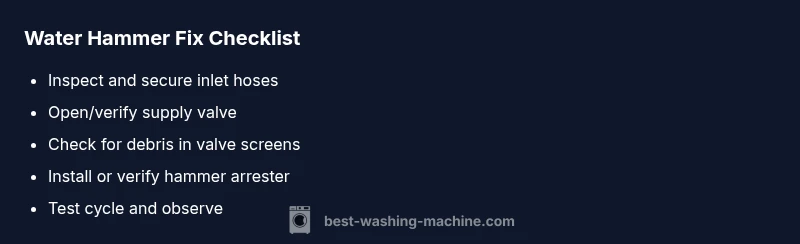
- Inspect and secure all inlet hoses: Tighten fittings, ensure hoses are not kinked, and verify wall connections are snug. Use anti-vibration clips if necessary.
- Open the shutoff valve fully and ensure there are no leaks around the valve seat or screen.
- Check the drain hose and its routing to ensure the hose isn’t inserted too far or blocked.
- Look for obvious signs of damage like bulges, cracks, or corrosion on hoses and connections.
- If you find nothing obvious, test the machine with a short cycle and observe where the hammer occurs. Small changes can reveal the culprit.
Safety note: Do not operate the washer with damaged hoses or if you detect leaking water around electrical components. If in doubt, stop and call a professional.
Step-by-step fixes for the most common causes
1) Tighten and secure hoses (easy)
Power off, unplug, and tighten all inlet and outlet hose connections both on the washer and at the wall. Replace damaged clamps and ensure the hoses are straight with gentle bends. Pro tip: Use hose clamps for extra security and avoid over-tightening, which can damage fittings.
2) Verify the supply valve is fully open (easy)
Make sure the home shutoff valve is fully open and not partially closed. If the valve is old or sticky, consider replacing it to prevent abrupt pressure changes. Pro tip: Perform this check with the machine unplugged and water supply off to avoid leaks.
3) Inspect the fill valve for wear (medium)
If the fill valve seats poorly, replace it or consult a technician. A stuck or sluggish valve can cause repeated surges during filling. Pro tip: When replacing, rinse the valve housing to remove sediment that can cause sticking.
4) Add or replace a water hammer arrester (medium)
Install an air chamber arrester or a modern anti-hammer device at the first supply connection. If you’re renting or in a multi-family home, coordinate with building maintenance to use properly rated components. Pro tip: Check local codes and ensure the arrester is sized for your water pressure.
5) Repair or replace a faulty valve or screen (medium)
A damaged valve seat or clogged screen can cause erratic flow. Clean or replace the valve components as needed. Pro tip: Take a photo before disassembly to aid reassembly and document part numbers for replacement.
6) Re-test and observe results (easy)
Run a short cycle and listen for persistence or improvement. If hammering remains, it may be caused by another upstream device or an installation issue that needs professional attention.
7) When to stop and call a pro (hard)
If you notice persistent banging after trying these steps, or if you detect water leaks, a gas line nearby, or complex plumbing changes, contact a licensed plumber.
Safety tips & warnings
- Always disconnect power and water before inspecting hoses or valves.
- Do not force fittings or valves; use manufacturer-recommended parts and tools.
- If you smell gas or hear a gas leak near plumbing work, stop immediately and contact your gas provider.
- When in doubt, seek professional help; DIY fixes can void warranties or cause bigger damage if done improperly.
Key takeaways: quick tips to prevent future hammer
- Secure and inspect inlet hoses regularly; replace if damaged.
- Use water hammer arresters on older homes or where hammering is frequent.
- Keep the area around the washer dry and clear to spot leaks early.
- Schedule periodic maintenance to catch valve wear before it becomes a problem.
How to maintain a quiet washer: a quick regimen
- Monthly visual inspection of hoses and clamps.
- Run a test cycle after any plumbing work and listen for unusual sounds.
- Keep the area around the washer free of clutter to prevent accidental yanking on hoses during use.
- If you live in a region with hard water, consider a descaler or filtration to reduce mineral buildup that can affect valves.
FAQ: common troubleshooting questions
- What causes water hammer on a washing machine? A surge from rapid valve closure or unvented water supply, often due to loose hoses or faulty valves.
- Are hammer arresters effective? Yes, when properly installed and sized for your water pressure and pipe layout.
- Can I DIY the fix safely? Yes for simple hose tightening and valve checks, but replace damaged components or install arresters with caution; call a pro for complex plumbing changes.
Steps
Estimated time: 30-45 minutes
- 1
Power off and unplug the washer
Shut down the machine, unplug the power cord, and ensure the area is dry before starting any inspection.
Tip: Always start with safety; water and electricity are a dangerous combination. - 2
Inspect inlet hoses and connections
Check both ends of each hose for cracks, bulges, or looseness. Tighten fittings and replace damaged hoses.
Tip: Use a flashlight to check for hairline cracks you might miss by sight alone. - 3
Check the shutoff valve and screen
Turn off the valve, disconnect and inspect the screen for debris; replace if dirty or corroded, then reassemble.
Tip: Do this slowly to avoid bending the valve stem. - 4
Install or verify a water hammer arrester
If your home lacks an arrester, install one according to local code. If you already have one, ensure it is properly sized and not degraded.
Tip: Choose the right size for your water pressure; an undersized arrester won’t prevent hammering. - 5
Test with a short cycle
Plug the machine back in and run a short cycle to observe if the noise persists or has diminished.
Tip: Document any changes with notes or a quick video for reference. - 6
Consider professional evaluation
If banging continues after these steps, a licensed plumber may need to inspect upstream piping and valves.
Tip: Professional advice can prevent hidden leaks or damage from escalating.
Diagnosis: Loud banging or thudding noises when the washing machine fills, stops, or changes water direction
Possible Causes
- highLoose or vibrating inlet hoses
- highBlocked or faulty shutoff valve
- mediumMissing or ineffective air chamber/hammer arrestor
- mediumWorn fill valve or improper seating
Fixes
- easySecure hoses and replace damaged clamps; ensure proper routing away from vibrating surfaces
- easyFully open the supply valve and replace a sticking valve if needed
- mediumInstall or replace a water hammer arrester or air chamber
- mediumReplace worn fill valve or clean a clogged screen
- hardCall a licensed plumber if leaks persist or if you suspect upstream plumbing issues
FAQ
What is water hammer on a washing machine and why does it happen?
Water hammer is a loud banging sound caused by a pressure surge when water flow is rapidly interrupted or redirected. It often results from loose hoses, a fast-closing valve, or a missing air chamber.
Water hammer is a banging sound from a sudden change in water pressure. It usually comes from loose hoses or a valve that closes too quickly.
Can water hammer damage my washer or pipes?
Yes, repeated shocks can loosen fittings, wear valves, or crack pipes over time. Addressing the issue reduces wear and potential leaks.
Yes. Repeated hammering can wear fittings and pipes, so fix it promptly.
Do anti-hammer devices really work on washers?
Yes, when properly installed and sized for your system. They absorb the surge and smooth out pressure changes.
Yes, anti-hammer devices can help if installed correctly.
Is it safe to DIY fixes for water hammer?
Simple checks like tightening hoses or replacing damaged parts are generally safe. For valve replacement or arrester installation, consider professional help.
Yes for simple checks, but call a pro for major changes.
When should I call a professional?
If the noise persists after basic checks, or you detect leaks or gas nearby, a licensed plumber should assess the system.
If it keeps banging after checks, get a professional.
Will upgrading my hoses help with hammering?
Replacing worn hoses with reinforced ones and ensuring correct routing can reduce movement and noise, but it may not fix every hammer issue.
New hoses can help, but hammering may need more.
Watch Video
The Essentials
- Secure hoses first, as loose lines are the most common hammer cause.
- Check and replace faulty valves or missing arresters to stop shocks.
- Install a water hammer arrester if your system lacks one.
- If in doubt, call a pro to ensure safe, code-compliant repairs.