Water Leaking Under Washing Machine: Troubleshooting Guide
Learn how to diagnose and fix water leaking under your washing machine. This practical, step-by-step guide covers common leak points, safety tips, and when to call a professional to protect floors in 2026.


Most leaks come from loose or damaged hoses the pump or the door seal. Quick checks: power off and shut water; inspect inlet and drain hoses for looseness or cracks; look at the door seal and tub rim for gaps; run a short cycle while watching for drips. If you cannot locate or stop the leak contact a professional.
Understanding Why Water Leaks Occur
Water leaking under a washing machine typically means a mechanical issue rather than a major failure. In many homes leaks come from hoses, seals, or the pump. The most common culprits are loose inlet or drain hoses, torn door seal on front load washers, or a clogged or failing drain pump. Environmental factors like overfilling, using too much detergent, or placing the unit on a soft floor can exaggerate the leak. Observe when the leak appears during fill, wash, or spin to narrow down the faulty component. Taking photos helps if you call a technician later. According to Best Washing Machine analysis, regular checks of hoses and seals are the most effective preventative measure to minimize leaks. The goal is to identify the source without creating additional water damage so proceed with caution and prioritize safety.
Immediate Safety Steps (Power Down & Water Shutoff)
Safety first. Before poking around unplug the machine and switch off the water supply at the wall valve to prevent further flooding. If you notice water pooling on the floor, place towels or a basin to catch drips. Move the machine away carefully to access back panels. Do not tilt the unit excessively; internal components can be sharp. If you smell burning plastic or see arcing, stop immediately and call a professional. These steps reduce electrical and water risks and set the stage for safe inspection. The Best Washing Machine team emphasizes following safety practices in every troubleshooting walkthrough.
Common Leak Points: Hoses, Pumps, and Seals
Hoses are the most frequent source of leaks. Inspect the inlet hose that carries hot or cold water from the shutoff valve and the drain hose that leads to the standpipe. Look for cracks, bulges, or loose clamps. The drain pump and its seals can leak if a filter is clogged or pump is worn. Front load machines often show wear at the door seal which forms a flexible gasket around the opening. A worn tub seal can cause water to escape under the drum. Regular washing loads, vibration, and improper leveling can also create edge leaks that drip to the floor. By mapping where water shows up, you can focus fixes on the right component.
How to Inspect the Inlet Hose and Drain Hose
With utilities off, check the inlet hose at the back of the machine for cracks and kinks. Tighten the coupling at both ends with pliers, but do not overtighten to avoid damaging the valve. Replace any hose that shows signs of wear or bulging. Next examine the drain hose for cracks or loose clamps. If the hose is too long it may kink or trap water; reroute it to avoid sharp bends. After reattachment run a short cycle with a small amount of water and observe the connections for leaks.
Checking the Drip Tray, Tub Seal, and Door Seal
Front load washers have a door seal that can tear over time; look for cracks or missing sections around the gasket. The tub seal on top load machines should be examined for dryness and cracks where water escapes. If your model uses a drip tray or reservoir, check that it is clean and properly seated, since a full tray can overflow. Replace damaged gaskets and seals promptly to prevent ongoing leaks. When replacing seals, ensure you apply manufacturer approved parts and follow the correct orientation.
Running Simple Checks Without Disassembling
You can often spot leaks by running a quick test after basic checks. With power and water off, reconnect the hoses snugly, clear any blockages, and run a brief cycle on a low load. Watch for drips near the back and bottom edge of the cabinet and listen for unusual sounds that indicate a loose pump. Use a dry towel to monitor any fresh moisture on the floor. If any water appears during the test, pause the cycle and recheck all connections.
How to Test for Leaks: Step-by-Step
Prepare a dry workspace and remove any floor mats. Start with the simplest cause first the inlet and drain hoses. Tighten connections inspect for cracks replace if necessary. Next check the door seal for wear if you have a front loader. Remove and inspect the pump filter and hoses for clogs. If the leak continues trace it to the tub seal or pump housing with a flashlight and a mirror. Finally, schedule professional service if needed.
Common Fixes You Can Try at Home
Tighten loose hose clamps replace worn hoses and replace torn seals. Clean the pump filter and ensure the drain path is clear. Level the machine and adjust feet to reduce vibrations that can cause leaks. Use the manufacturer approved parts for replacements and avoid cheap generic components. Always test after each repair to confirm the fix works.
When to Call a Pro Safety and Warranty Considerations
If you notice a leak behind the machine that you cannot locate or stop after the above checks, call a qualified appliance technician. Leaks near electrical components or signs of leaking around the control panel warrant professional evaluation. If your unit is under warranty, initiating service through the manufacturer may be required to preserve coverage. Do not attempt major disassembly if you are unsure about the location of the leak.
Prevention Tips to Avoid Future Leaks
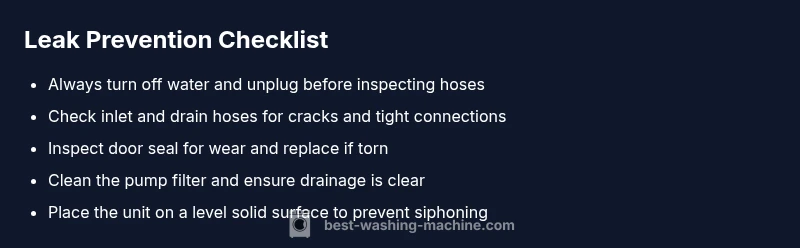
Regularly inspect hoses every 6 to 12 months and replace hoses that show wear. Do not overfill the drum or use excessive detergent which can produce suds that back up into seals. Ensure the washer is positioned on a level floor with stable supports and keep the space dry and clean. Schedule professional service at the first sign of wear to extend the life of your appliance. A proactive maintenance routine reduces the risk of water damage and keeps laundry day running smoothly.
Steps
Estimated time: 45-60 minutes
- 1
Power down and secure utilities
Unplug the machine, switch off the water supply, and disconnect the power cord from the outlet. This prevents electrical shock and further water exposure while you inspect. Stand clear of any wet areas and keep children and pets away.
Tip: Always confirm the machine is unplugged before touching any internal parts. - 2
Move the machine to access back panels
Gently pull the washer away from the wall to expose the back and rear hoses. Take care not to damage flooring or plumbing. A helper can help you if the machine is heavy.
Tip: Use a towel to catch any residual water on the floor as you reposition the unit. - 3
Check inlet hose connections
Inspect the inlet hose where it connects to the wall valve and the back of the machine. Tighten fittings gradually with pliers, but avoid overtightening which can damage threads or valves.
Tip: If you see cracks or bulges, replace the hose rather than reusing it. - 4
Check drain hose for tension and routing
Ensure the drain hose is properly seated and has no kinks or sharp bends. Re-route if necessary to prevent sagging that can trap water near the base.
Tip: Keep the hose elevated above the floor level to prevent backflow. - 5
Inspect pump and filter for clogs
Locate the drain pump and its filter housing. Remove any lint or debris that could impede drainage, then reassemble securely.
Tip: Running a quick test after cleaning helps confirm clearance. - 6
Inspect door seal and tub seal
For front-loads, examine the door gasket for tears or dryness. For top-loads, check the tub seal area for wear. Replace with manufacturer approved parts if you find damage.
Tip: Always use compatible seals to ensure a proper fit. - 7
Perform a controlled test cycle
Reconnect hoses, restore power, and run a short cycle with a small load on a low setting. Watch closely for any fresh leaks around connections.
Tip: Keep a dry towel handy to catch any drips during the test. - 8
Decide on next steps or call a pro
If water remains visible after these steps, stop the cycle and seek professional service. Persistent leaks could indicate a cracked housing or internal failure.
Tip: Document symptoms and take photos to share with the technician.
Diagnosis: Water leaking under washing machine during or after cycles
Possible Causes
- highLoose or cracked inlet hose or drain hose
- mediumDamaged door seal or tub seal (front-load)
- mediumClogged or failing pump
- lowOverfilling or excessive detergent leading to suds overflow
Fixes
- easyCheck hose connections and tighten or replace damaged hoses
- mediumInspect door seal or tub seal and replace if torn
- easyClean or replace the drain pump and filter if clogged
- easyReduce detergent usage and avoid overloading the drum
- hardIf leaks persist, schedule professional service
FAQ
What are the most common causes of water leaking under a washing machine?
Hoses or seals are the usual culprits. Look for loose hose clamps torn door seals or a clogged pump. Identify the exact source before replacing parts.
Most leaks come from hoses or seals so start with those areas and watch for signs of a torn gasket or loose connection.
Is it safe to repair a washer leak myself?
Basic hose replacements and seal inspections are doable for someone comfortable with tools and unplugging. Do not attempt major disassembly near live electrical components. When in doubt hire a pro.
You can handle simple hose work but avoid risky disassembly. If unsure, call a pro.
How can I tell if the leak is from the inlet hose or drain hose?
Dry the area, run a short cycle, and observe where water appears. Leaks at the back near hoses point to inlet or drain hose problems.
Watch the hose connections closely during a test to see where the drip starts.
When should I replace the drain pump?
Replace the drain pump if it shows signs of wear, makes grinding noises, or if the pump area remains wet after replacing hoses. Consider a professional if the area is hard to access.
If the pump seems worn or keeps leaking after other fixes, it may need replacement.
Will a leaking washer damage the floor?
Yes, leaks can damage floors and promote mold growth. Take quick action by stopping the leak and drying the area to protect flooring.
Leaks can hurt floors, so fix quickly and dry the area.
What maintenance can prevent leaks?
Regularly inspect hoses, keep the floor dry, level the machine, and clean the drain pump filter to prevent clogs that lead to leaks.
Routine checks help prevent leaks from happening in the first place.
Watch Video
The Essentials
- Shut off power and water immediately at the first sign of a leak
- Check hoses first before replacing major components
- Door and tub seals are common leak points on many washers
- If the leak persists after basic checks, call a professional promptly