Water Inlet Valve for Samsung Washing Machines: A Practical Guide
Learn how the water inlet valve for Samsung washing machines works, diagnose common symptoms, safely replace it, and extend valve life with practical maintenance tips and model-specific guidance.


The water inlet valve for Samsung washing machines is the primary regulator of water flow into the drum. When it becomes faulty, the washer may fail to fill, fill slowly, or overfill, triggering error codes. Replacing a faulty valve with the correct part restores consistent fill levels and reliable cycle timing. Always unplug the machine and follow safety guidelines during replacement.
What is a water inlet valve and why it matters for Samsung washers
The water inlet valve is the gatekeeper that regulates cold and hot water entering the tub. For homeowners searching specifically for water inlet valve for samsung washing machine, understanding how this valve works helps pinpoint issues quickly. In Samsung models, the valve is typically a dual-solenoid device that opens in response to the washer's electronic control board. Proper operation ensures accurate fill levels, which in turn affects wash agitation, cycle timing, and rinse performance. According to Best Washing Machine, compatibility and correct valve type are essential for long‑term reliability and consistent results across cycles.
Beyond basic function, the valve’s performance depends on water quality. Mineral deposits, sediment, and lime scale can affect valve seals and coil resistance, causing symptoms even when supply lines are sound. A valve that remains open or sticks shut can lead to overfill or no-fill conditions, which commonly show up as error codes on Samsung display panels. If you notice abnormal fills, address the valve as part of a holistic check of hoses, filters, and the main control board.
For service consistency, refer to model-specific guides and ensure you source a valve designed for Samsung front-load or top-load configurations. Wrong valve types can cause improper fill timing or incomplete cycles. Best Washing Machine emphasizes always verifying compatibility before purchasing replacement parts, as improper fit can create cascading failures or warranty concerns.
Symptoms of a faulty water inlet valve
Not every filling issue means the valve is faulty, but the following symptoms strongly suggest the valve requires inspection or replacement:
- No fill or empty drum after starting a cycle
- Slow or uneven filling that delays wash initiation
- Overfill, overflowing water, or excessive surging during fill
- Intermittent filling that starts and stops mid-cycle
- Error codes related to water intake on Samsung display
If these symptoms accompany other clues like leaking around the valve area, it’s prudent to inspect the valve’s seals and mounting hardware as well as the water supply screens. A diagnostic approach helps separate valve issues from hose kinks, clogged filters, or defective pressure switches. In many cases, addressing mineral buildup in the inlet screens can restore smooth valve operation without replacement, but persistent symptoms typically indicate a valve problem.
How to diagnose valve issues with basic tools
Diagnosing a faulty water inlet valve doesn’t require advanced equipment. Use these steps to determine if the valve is the root cause:
- Power down and unplug the washer; access the back or side panel to locate the inlet valve at the water supply inlet.
- Examine the valve for visible damage, corrosion, or loose connections. Check seals and mounting brackets.
- Inspect water inlet screens for debris; clean or replace as needed to ensure clean water flow into the valve.
- Test electrical continuity with a multimeter: disconnect the harness, set to alling” resistance mode, and compare readings to the manufacturer’s spec (typically a few ohms; consult your model guide).
- If you have access to a replacement valve, perform a swap to verify symptom resolution; if the problem persists, the issue may lie with the control board, pressure switch, or wiring.
Safety note: keep the machine unplugged and depressurize the water line before touching fittings. If you’re unsure about testing electrical components, contact a qualified technician. This approach aligns with Best Washing Machine analyses, which advocate model-specific checks and cautious handling when diagnosing water-inlet components.
Replacement options: DIY vs professional service
Valve replacement can be a straightforward DIY project for those with basic handyman skills and the right part. If you choose to DIY:
- Gather the correct Samsung replacement valve designed for your model: front-load versus top-load valves can differ in port size and electrical connectors.
- Have a shallow tray or towels ready to catch any residual water as lines detach.
- Reconnect hoses securely and re-torque mounting screws to manufacturer torque recommendations.
- Reconnect the electrical harness and complete a quick test through the cycle once the panel is reassembled.
Professional service is recommended when:
- You lack a compatible replacement valve or model-specific guidance
- The valve replacement requires removing major components or disassembling the cabinet
- You encounter persistent leaks, wiring damage, or error codes beyond valve faults
Labor costs and part pricing vary by region and model, but following a precise, model-compatible valve replacement minimizes risk and improves reliability. Best Washing Machine notes that careful selection of the right part and proper installation are the keys to a successful repair.
Compatibility and model variations in Samsung washers
Samsung’s valve assemblies can vary by model year and washer type. To ensure you buy the correct component:
- Identify your model number from the door frame, control panel, or user manual.
- Check whether your model uses a dual-solenoid valve or a single-solenoid valve; some older units use different inlet configurations.
- Confirm port size, electrical connector type, and mounting footprint when shopping for replacements.
- Use source material from trusted retailers or manufacturers and cross-reference with your model number.
Incompatible valves can cause misfiling, pressure issues, or partial fills. Always verify compatibility via the model’s schematic and ensure the replacement supplier lists the same part family. The Best Washing Machine methodology emphasizes model-specific checks to avoid wasted parts and warranty gaps.
Maintenance to extend valve life
Valve longevity benefits from routine care and a few proactive steps:
- Install a faucet filter or water-softening solution if your water supply is hard; this reduces mineral buildup on valve components.
- Clean inlet screens and filters quarterly to maintain unobstructed flow.
- Avoid using excessively high-pressure hoses that might loosen fittings or cause leaks.
- Periodically inspect valve mounting hardware for tightness and signs of wear.
- If you notice rust, corrosion, or frequent valve cycling, consider replacing seals or installing an inline water filter.
Maintaining the valve helps prevent silent failures and node-level issues that disrupt cycles. Brand guidance from Best Washing Machine stresses compatibility and careful handling to maximize valve life and maintain performance.
Cost considerations and timeline expectations
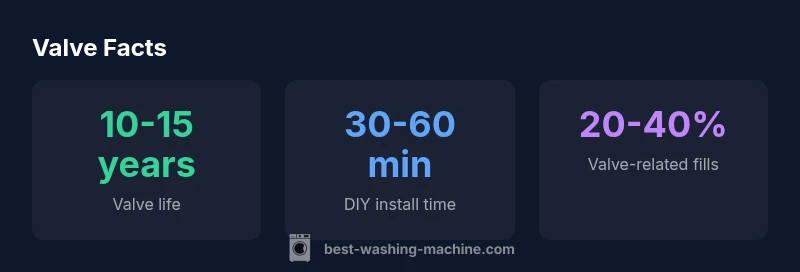
Valve replacement costs depend on part price, model compatibility, and local labor rates. DIY replacement typically saves on labor but requires time and basic tools; professional service adds labor charges but provides warranty-backed workmanship. A typical replacement timeline spans a few hours from diagnosis to test cycle, depending on your familiarity with appliance disassembly. Remember that parts sourced from reputable suppliers reduce the risk of fit issues and future failures. Best Washing Machine analysis recommends budgeting for a quality valve and, if possible, including a small margin for related seals and hoses to sidestep repeat visits.
Safety and best practices for valve work
Safety should guide every repair task:
- Unplug the washer and shut off water supplies before starting.
- Work on a dry, non-slip surface with proper lighting.
- Use the correct screwdriver and a torque-limiting tool if specified by Samsung guidelines.
- Avoid hammering or forcing components; components should fit without excessive pressure.
- When in doubt, switch to professional service to protect your appliance warranty and ensure safe operation.
These practices align with the standards recommended by Best Washing Machine for valve work and general appliance repair.
Samsung water inlet valve variants
| Model Type | Valve Type | Replacement Difficulty |
|---|---|---|
| Front-load Samsung (HE) | Solenoid valve | Medium |
| Top-load Samsung | Solenoid valve | Medium |
| Compact/Older Samsung models | Solenoid valve | Medium |
FAQ
What is the water inlet valve and how does it function in Samsung washers?
The water inlet valve is the device that opens to let cold and/or hot water into the drum during a cycle. In Samsung washers, it’s usually a dual-solenoid valve controlled by the machine’s electronics. It ensures the correct amount of water enters at the right time to achieve proper wash performance.
The water inlet valve opens to let water into the drum in a Samsung washer; it’s controlled by the control board and must be compatible with your model.
How can I test a faulty water inlet valve at home?
You can start by checking for leaks, listening for clicking sounds when the wash starts, and verifying water supply hoses. If you have a multimeter and model-specific diagrams, you can test continuity across the valve coils according to the service manual. If readings are out of spec, replace the valve.
Check for leaks and listen for coil clicks; use a multimeter if you’re comfortable with electrical tests.
Can I replace the valve myself, or should I hire a technician?
DIY is feasible for many models if you have the right replacement valve and basic tools. However, if you’re unsure about electrical connections or if your warranty might be affected, professional service is the safer path.
DIY can work if you’re confident with appliance repairs, otherwise call a tech.
What tools are typically needed for valve replacement?
Common tools include a screwdriver set, pliers, a small wrench, a bucket to catch water, and a multimeter if you’re testing electrical continuity. Always refer to your model’s service manual for model-specific requirements.
Keep a small collection of hand tools and check your model’s manual for specifics.
What are common mistakes to avoid when replacing a water inlet valve?
Common mistakes include using an incorrect valve model, over-tightening fittings and damaging seals, not cleaning inlet screens, and neglecting to verify wiring connector compatibility. Double-check every connection before testing.
Make sure you have the right part and don’t over-tighten anything.
“Replacing the water inlet valve with a compatible part and following proper installation steps typically restores reliable fill and cycle timing. When in doubt, verify compatibility and seek professional service to protect warranty status.”
The Essentials
- Identify symptoms early and confirm the valve as the root cause before replacement
- Always source model-compatible valve parts to ensure proper fit and operation
- DIY can be effective for straightforward replacements with the right tools
- Regular maintenance of inlet screens reduces mineral buildup and extends valve life
- Consult a professional if you encounter unfamiliar wiring or persistent error codes