What Happens When the Belt Breaks on a Washing Machine
Understand signs of a broken drive belt, safety steps, and practical DIY replacement guidance. This troubleshooting guide covers symptoms, a diagnostic flow, and when to call a pro to prevent damage.


A broken drive belt stops the drum from spinning and the agitator from moving clothes. You’ll hear grinding, thumping, or no motion at all, and the drum may feel loose. Unplug the washer and inspect or replace the belt if you’re comfortable with basic repairs. This is a common symptom of belt failure and indicates you should confirm with a quick belt check.
How a Drive Belt Works in a Typical Washing Machine
In most belt‑driven washers, the motor turns a pulley that drives a rubber belt. The belt then spins the drum or agitator at the correct speeds for wash and spin cycles. When the belt is healthy, you get smooth agitation, effective cleaning, and fast, even spins. The belt is a common point of failure because it endures constant flex, heat, and tension during every cycle. If you’re wondering what happens when the belt breaks on a washing machine, the answer is simple: the drum or agitator stops moving or spins erratically. According to Best Washing Machine Team analysis, belt damage or breakage interrupts the torque transfer, so your laundry won’t advance properly. Recognizing this mechanism helps you interpret symptoms quickly and plan the right repair. In addition, the belt’s condition affects energy use and overall performance, so a worn belt can quietly degrade wash efficiency over time. By understanding the belt's role, you can troubleshoot more confidently and decide whether to DIY or call a pro.
Common Symptoms of a Belt Break
The most obvious sign is laundry that won’t advance through the cycle. If the drum doesn’t spin during the spin phase or the agitator won’t move, a belt issue is likely. You may also hear unusual noises — grinding, squeaking, or a loud thump — especially when starting a cycle. A belt that has frayed or slipped can leave behind powder or parts near the access panel or under the unit. Some models show a slipping belt visually wrapped around pulleys or a slack loop inside the cabinet. According to Best Washing Machine Team, even a belt that’s merely stretched can cause slipping and poor performance, so inspect the belt for wear and proper routing. Finally, if clothes come out soaking wet or hot clothes emerge after a cycle, it’s a strong hint the spin action isn’t happening as designed.
Safety First: Immediate Steps You Should Take
First, unplug the machine and cut power to avoid any electrical hazards during inspection. If you notice water leakage, don’t run the unit; address the leak and dry the area. Move the machine away from walls if you need access, but keep it on a sturdy, level surface. Wear protective gloves and use a flashlight to shine into access panels. Do not attempt to force a jammed belt, and never reach into moving parts while the machine is plugged in. If you do smell burning insulation or hear sizzling, stop and disconnect power, then seek professional help. By prioritizing safety, you prevent electric shocks and further mechanical damage while you diagnose the issue.
Diagnostic Flow: From Symptoms to Diagnosis
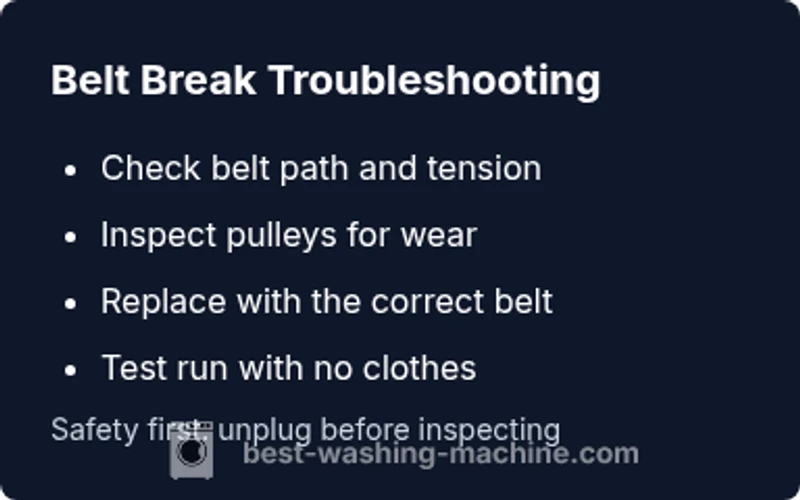
Symbol → Logic: Start with observable symptoms (no spin, unusual noise, or clothes not draining). If the drum doesn’t rotate freely by hand with the power off, the belt or pulleys are likely involved. Next, inspect the belt path for wear, cracks, or looseness. If the belt is broken or stretched and off the pulleys, that confirms belt failure. If the belt looks intact but the drum doesn’t spin, check the motor pulley, tensioner, and drum pulleys for damage. Finally, test by replacing a suspect belt or tightening a worn tensioner; re-run a test wash with no clothes to confirm normal operation. Best Washing Machine recommends proceeding methodically to avoid misdiagnosis and unnecessary parts replacement.
Do-It-Yourself Belt Replacement: When It’s Practical
If you’re comfortable with basic tools and safety protocols, replacing a drive belt is a common DIY task. Gather a new belt compatible with your model, a screwdriver set, needle-nose pliers, and a flashlight. Begin by unplugging the washer, removing the access panel, and relaying how the belt was routed. Detach the belt from the motor pulley first, then loosen any tensioners and slide the belt off the tub pulley. Compare the old belt to the new one to verify size and width, then install in the reverse order, ensuring correct alignment and tension. Finally, reassemble the panel and run a short empty cycle to check for proper operation. If the model uses a spring-loaded tensioner or a serpentine belt system, consult the manual for exact routing to avoid misrouting. The Best Washing Machine Team emphasizes double-checking belt routing and tension to prevent reoccurrence, and to disconnect the power before touching any belts.
When to Call a Professional
If you see damaged pulleys, a seized motor, or burnt wiring, don’t push through the repairs yourself. Some models place the belt behind inaccessible panels or include integral components that require special tools. If you lack the necessary safety equipment or mechanical experience, it’s safer to hire a technician. Even for DIYers, a professional consultation can prevent misalignment that causes rapid belt wear or motor strain. If you’re unsure about model-specific belt routing or if the drum bearings sound rough, a pro can assess the entire drive system and confirm whether a belt replacement is the best fix. According to Best Washing Machine Team, professionals can often diagnose underlying issues beyond the belt that impact longevity and performance.
Maintenance to Prevent Belt Breaks
Preventive care helps extend belt life. Avoid overloading the washer, balance loads evenly, and ensure the machine sits level to reduce stress on the belt. Use the correct detergent and avoid harsh cleaners that degrade rubber. Periodically inspect the belt for cracks, glazing, or fraying, and replace it before it fails if you notice wear. Keep the area around the belt clean to spot leaks or debris early. Consistent maintenance, not just repairs, is the best defense against unexpected belt failures and costly damage to the motor or tub.
What to Expect After a Belt Replacement
After replacing the belt, reassemble the access panels and run a test cycle without clothes to verify proper operation. Listen for unusual noises or slipping and check that the drum spins smoothly during the wash and spin phases. If the belt remains quiet and the drum spins normally, gradually run a small load to ensure full performance. If issues persist, there may be additional problems such as a misaligned pulley or damaged bearings. The Best Washing Machine Team recommends documenting the repair and noting any warning signs of future wear to help with early detection.
Quick Troubleshooting Checklist
- Confirm power is off before any inspection. - Check for visible belt wear or damage. - Ensure correct belt routing and tension. - Inspect pulleys and tensioner for wear. - Test the machine with a short empty cycle after replacement. - Reassemble panels securely and clean up workspace.
Steps
Estimated time: 60-90 minutes
- 1
Power down and unplug the washer
Unplug the power cord and switch off any nearby breakers. Move the unit slightly to access panels without bending cords. Wear gloves and use a flashlight to inspect internal areas before touching belts.
Tip: Label screws and take a quick photo of belt routing before removal. - 2
Access the drive belt
Remove the front or rear access panel per your model’s manual. Locate the drive belt shield or cover, and identify the belt path around the motor pulley and tub pulley.
Tip: Keep track of how the belt sits on each pulley; a diagram can help during reassembly. - 3
Release and remove the old belt
Loosen any tensioner and slide the belt off the pulleys. If the belt is broken, you may find only fragments; note where the pieces lay.
Tip: Never force the belt—a broken belt should come away with gentle guidance. - 4
Compare and install the new belt
Compare the new belt to the old one for width and length. Align the belt with the same routing as the old belt, ensuring it sits snugly on both pulleys.
Tip: Rotate the pulleys by hand to confirm smooth movement before securing everything. - 5
Tension and reassemble
Re-tension the belt according to your model’s specs. Reassemble the access panel and secure all screws. Check that no wires are pinched.
Tip: A belt that's too tight can stress the motor; one that's too loose will slip. - 6
Test run without clothes
Plug the machine back in and run a short empty cycle to verify proper spinning and agitation. Listen for abnormal noises and inspect for belt movement.
Tip: If you hear grinding or see no belt movement, power off and re-check routing. - 7
Final checks and cleanup
Ensure panels are securely fastened and the area is dry. Run a full wash with a small load to confirm stable operation over several minutes.
Tip: Document the replacement date for future maintenance.
Diagnosis: Drum does not rotate or agitates, with unusual noises or clothes not moving through wash/spin cycles
Possible Causes
- highDrive belt is broken, worn, or slipped
- mediumPulley or motor shaft damaged, causing belt misalignment
- lowDrum bearings or transmission components seized or worn
Fixes
- easyReplace the drive belt and inspect belt path for proper routing and tension
- mediumInspect pulleys, tensioner, and motor shaft for wear; replace as needed
- hardIf internal components are damaged, consult a professional for repair or replacement
FAQ
Can I fix a washing machine belt break myself?
Yes, if you’re comfortable with basic tools and safety practices. Many belt issues are straightforward to replace, but some models hide belts behind inaccessible panels. If you’re unsure about routing or tension, consult the manual or a professional.
Yes, you can fix it yourself if you feel confident with basic tools and safety steps. Some models require professional help for belt routing or hidden panels.
How can I tell if the belt is broken?
Common signs include no drum rotation, loud grinding or thumping, and a visual crack or fray if you can see the belt. A belt that’s loose or off the pulley also indicates damage. Always unplug before inspecting.
Look for no drum movement, grinding noises, and visible wear or a loose belt. Unplug the washer before checking.
Will a broken belt damage the motor?
A broken belt can strain the motor if you continue to run the machine, potentially causing overheating or electrical issues. Stop using the unit and inspect the belt and pulleys before testing again.
A broken belt can harm the motor if you keep running the washer. Stop and inspect before testing.
Is it safe to operate with a broken belt?
No. A broken belt can cause the drum to stop mid-cycle, leak issues, or damage other components. Disconnect power and arrange for a belt inspection or replacement.
No—don’t run it with a broken belt. Unplug and get it inspected or replaced.
How long does a belt replacement take?
For a typical belt-based washer, expect about 60–90 minutes depending on model and your experience. More complex models may take longer or require professional help.
Most homeowners can replace a belt in about an hour or so, depending on the model.
Watch Video
The Essentials
- Identify belt wear early to prevent bigger failures
- Safety first: unplug and dry area before inspection
- Follow correct belt routing to avoid misalignment
- DIY belt replacement is common on many models
- Call a pro if you encounter pulleys or bearings damage