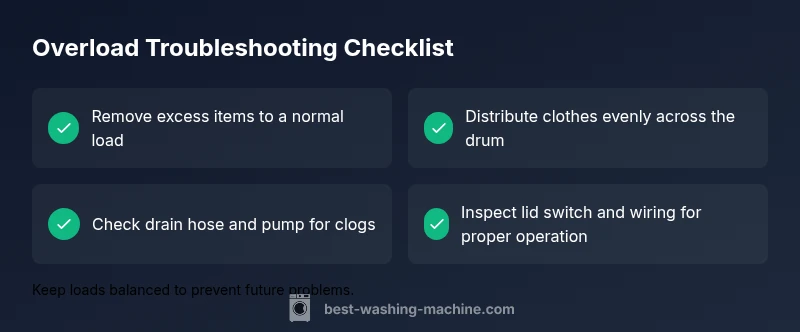
What If Washing Machine Is Overloaded: Troubleshooting Guide
Urgent troubleshooting guide from Best Washing Machine to diagnose and fix overload issues. Learn quick fixes, diagnostic flow, step-by-step repairs, and prevention tips to keep your washer running efficiently.


The most likely cause when a washer seems overloaded is packing the drum past its capacity, which leads to spinning issues and uneven cleaning. The quick fix is to remove items, split the load into smaller batches, and redistribute evenly before restarting. If problems persist, check for a jammed agitator, a stuck lid switch, or drainage restrictions.
Why overloads happen and why it's a problem
According to Best Washing Machine, the most common overload scenario begins when you pack the drum past its rated capacity. When the tub is too full, clothes don’t distribute evenly, the agitator struggles, and the drum can’t spin freely. The result is longer cycle times, poorer cleaning results, increased energy use, and greater wear on bearings and belts. If you ask, what if washing machine is overloaded, you’ll discover that even small batches with poor distribution can trigger the same symptoms as a truly full drum. Over time, repeated overloads can shorten the life of the motor and suspension. Balanced, moderate loads improve agitation, extraction, and efficiency, and they reduce bounce during the spin cycle. So start with the simplest cure: reduce load size and re-distribute items to avoid clumping.
Immediate fixes you can try now
When you notice overload symptoms, use a calm, methodical approach. First pause the cycle, then remove several items to bring total mass down to a level that the drum can handle without straining. Redistribute clothing evenly across the drum, avoiding large clumps on one side. If you’re washing bulky items, mix in lighter pieces to help balance. Check that the load is not just smaller but also well distributed so the agitator can move freely. Finally, run a test with a small load to verify stability; if the machine remains loud or excessively unbalanced, stop and reassess. These quick actions usually resolve the majority of overload issues without tools.
Diagnostic flow for overload symptoms
Use this flow to systematically diagnose overload-related problems. Start with symptoms: poor cleaning, long cycles, or loud thumping when spinning. Move to causes: load size, distribution, or worn suspension. Next, check fixes: redistribute, clean filters, and ensure hoses are clear. If you still see problems, go to advanced checks: lid switch, drum bearings, and shock absorbers. This flow helps you decide whether you can fix it yourself or if professional help is needed. Keep in mind safety: unplug the machine before inspecting. If the washer is older or heavily used, some components may wear and require service.
Common causes of overload and how to check them
- Excessive load size: When you try to wash more clothes than the drum can handle, it strains the motor and disrupts the wash action.
- Uneven distribution: Bulky items pushed to one side cause unbalanced spins and noisy cycles.
- Bulky fabrics and towels: Heavy items tend to clump together, increasing the chance of imbalance.
- Worn suspension or shock absorbers: Worn parts reduce the drum’s ability to settle evenly.
- Drainage restrictions: A blocked drain or pump can mimic overload by triggering a fault when water can’t exit properly.
Safety and best practices when troubleshooting
Always unplug before sticking your hands into any accessible parts. Wear rubber-soled shoes and avoid working with wet floors. Do not operate the washer while the access panel or filters are open. If you hear grinding, grinding, or see smoke, stop immediately and seek professional help. Use the diagnostic flow instead of jumping to complex repairs. Keep kids and pets away from the appliances while testing and never reach into spinning drums.
Prevention and maintenance to avoid overloads
Regularly plan your loads to spread fabrics more evenly across the drum. Use the correct detergent amount to prevent excessive suds, which can trap clothes and complicate cleaning. Periodically check the drain hose and pump for obstructions. Inspect suspension components if you notice persistent vibrating noises. Schedule professional servicing every few years for newer models or heavy users. These habits reduce the likelihood of overloads and improve overall efficiency.
Load types and washer design: what changes by model
Front-load and top-load washers distribute weight differently. Bulky items like quilts or bath towels are more likely to cause balance issues in any drum. Choosing a model with good load-sensing technology or a larger drum can reduce overload risk. Always refer to the user manual for load sizing guidelines because capacity numbers are guidelines, not guarantees for every fabric mix.
Quick load-sizing cheat sheet
- Daily wear (t-shirts, underwear, jeans): Fill about halfway to allow room for movement.
- Bulky items (towels, blankets): Use a third of the drum or smaller, paired with lighter items.
- Mixed fabrics: Distribute evenly and avoid clumping any single item.
- Heavily soiled or heavy items: Wash in smaller batches to prevent excess strain on the motor and suspension.
Steps
Estimated time: 15-60 minutes
- 1
Shut off power and safety
Unplug the washer or switch off the circuit. Ensure the unit is completely powered down before you handle the drum or hoses to avoid shock.
Tip: This step reduces risk when inspecting or moving heavy loads. - 2
Remove excess items
Take out items until the drum size looks reasonable for the washer capacity. Overloading is the #1 cause of performance problems.
Tip: Place removed items nearby for later washing in smaller loads. - 3
Redistribute clothes evenly
Spread items across the drum so that no single area is overly dense. Balanced distribution helps the motor spin smoothly.
Tip: Avoid stuffing bulky items into one side. - 4
Run a test with a small load
Add a small load and run a regular cycle to observe balance and noise. Listen for grinding or thumping.
Tip: If it still struggles, stop and re-check load size. - 5
Check for error codes and drain flow
Note any error codes and inspect the drain hose and pump for kinks or clogs. A blocked drain can mimic overload symptoms.
Tip: Clear clogs and test again. - 6
Decide on next steps
If balance issues persist after adjustments, contact a professional to inspect suspension or transmission components.
Tip: Don't attempt complex repairs beyond your comfort level.
Diagnosis: Washes poorly or stops mid-cycle due to overloading
Possible Causes
- highLoad size exceeds drum capacity
- highUneven distribution leading to unbalanced spin
- mediumWorn suspension or drum bearings
- lowBlocked drain or pump from overload debris
- lowDamaged lid switch or wiring
Fixes
- easyRedistribute clothes and reduce batch size
- easyClear any visible debris from the drain pump filter
- mediumInspect suspension components if excessive vibration occurs
- easyTest lid switch and wiring for proper operation
- mediumIf imbalance persists, schedule professional service
FAQ
Why does my washer shake or stop mid-cycle when overloaded?
Overloading causes uneven weight distribution, which destabilizes the drum during spin. It can trigger motor protection or sensor faults. Redistribute the load and reduce batch size before retrying.
Overloading makes the drum unbalanced, so it shakes. Reduce the load and try again.
How can I tell if the drum is overloaded?
If you see clothes bunching on one side, or the door lock engages but the drum struggles to spin, the load is likely too large. Try smaller batches and ensure even distribution.
If clothes are bunched on one side, its overloaded. Try smaller loads.
Can I continue washing with an overloaded load?
No. Overloading can damage the drum and reduce cleaning efficiency. Always adjust load size and distribution before starting a cycle.
No, don’t push through an overload; adjust the load first.
What should I do if the machine won't drain after overload?
Check the drain hose for kinks or clogs and inspect the pump filter. Remove obstructions and run a drain cycle to clear residue.
Check hoses and pump filter for clogs and fix them.
Is overload damaging the washer?
Prolonged overloads can wear bearings, strain suspension, and shorten the appliance life. Avoid repeats by loading properly and balancing.
Overloading over time can wear out parts and shorten life.
When should I call a professional?
If repeated overloads cause persistent shaking, unusual noises, leaks, or error codes, a professional should inspect suspension, belts, and the transmission.
If it keeps acting up, get a pro to check the internals.
Watch Video
The Essentials
- Unload to a proper batch size before washing.
- Balance the load to prevent spin issues.
- Check drain and lid switch if problems persist.
- Schedule maintenance to prevent future overloads.