Will a Washing Machine Leak If Overloaded? Troubleshooting Guide
Learn why overloads cause leaks, how to diagnose quickly, and step-by-step fixes to prevent spillovers. Best Washing Machine guides you from symptoms to safe, lasting repairs in 2026.


Yes. Overloading is a leading cause of washing machine leaks because it strains seals hoses and the drum. The quick fix: stop the cycle unload excess laundry and redistribute evenly. Then run a short test with a normal load to verify the leak is gone.
Will washing machine leak if overloaded? Causes and physics
According to Best Washing Machine overloads are a common cause of leaks because the extra load pushes water toward seals and hoses during agitation and spin. When the drum is overloaded, water can splash over the door gasket, drip from the drain hose, or collect under the machine as the pump struggles. The leak is usually gradual rather than a spray, making it easy to underestimate the damage until stains appear or the cycle ends.
How overloads stress critical components and create leakage paths
The extra weight from an overloaded load increases drum movement and causes seal surfaces to wear faster. The door seal, tub seal, and hose connections bear the brunt of this stress. Over time, micro tears can form, allowing water to escape at compression points. In addition, the pump can struggle to drain a heavy load, leading to backflow through the drain hose. This stress also agitates connections that might loosen over time, creating a slow trickle rather than a single burst.
Early warning signs that overloads are causing leaks
Look for visible drips near the door, dampness along the front panel, water pooling on the floor after a cycle, or a musty smell from trapped moisture. A slow leak from the door seal is common after a heavy load. Regularly inspecting the seal after a difficult wash helps catch issues before major damage occurs. If you notice water on the floor consistently after heavily loaded cycles, begin a targeted inspection.
Safe diagnostic flow from symptoms to diagnosis
Start with the simplest checks first. If you recently overloaded, remove the payload and run a short test with a normal load. Observe for new leaks while the machine fills and drains. If water appears, identify whether it comes from the door area, the hoses, or the base. This flow helps pinpoint whether the problem is a seal, hose, or pump.
How to safely perform checks without causing more damage
Always unplug before touching any internal parts. Inspect the door seal for cracks or tears, dry around the seam, and check for detergent residue that can worsen leaks. Inspect drain and inlet hoses for cracks or loose clamps. If you identify a damaged part, replace it following manufacturer guidelines. Avoid using damaged parts until you have confirmation of the issue.
Preventing overload leaks through habits and maintenance
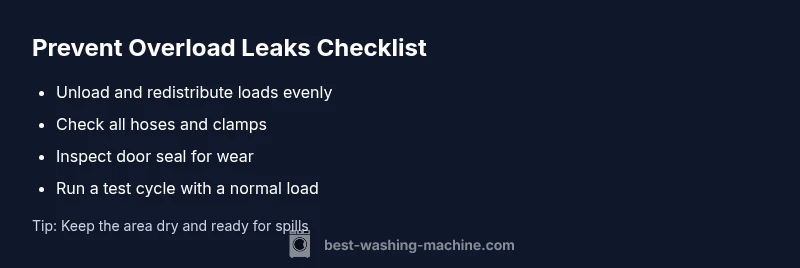
Follow manufacturer load limits and avoid mixing bulky items with small ones. Use the proper detergent amount to reduce suds that can spill over seals. Regularly check hoses and clamps, and clean the door seal to remove lint and residue. Schedule periodic maintenance and address any signs of wear promptly to prevent future leaks from overloads.
Steps
Estimated time: 20-40 minutes
- 1
Power off and unplug the washer
Unplug the unit and move it away from the wall to inspect the area behind it safely. If needed, shut off the water supply valves to prevent accidental leaks while you work.
Tip: Safety first: always disconnect power before inspecting any components. - 2
Remove excess laundry and redistribute
Take out items and spread them evenly around the drum. A balanced, normal load helps prevent water from pushing against seals during the wash cycle.
Tip: Distribute heavy items evenly to avoid clumping near the agitator. - 3
Inspect hoses and connections
Check the drain hose and both inlet hoses for signs of wear, cracks, or loose clamps. Tighten clamps and replace damaged hoses as needed.
Tip: Look for soft spots or bulges in hoses that indicate failure. - 4
Check door and tub seals
Examine the door gasket and tub seal for cracks or tears. Clean away residue that could hinder a proper seal and replace if damage is evident.
Tip: Wipe the seal with a damp cloth to inspect for micro tears. - 5
Run a test cycle with a normal load
With no visible leaks, run a short wash to verify if the leak resurfaces. Stay nearby to observe if any water escapes during fill, wash, or drain phases.
Tip: Place towels or a shallow tray to manage any incidental drips. - 6
Decide on next steps
If leaks stop after correcting the overload, monitor for a few cycles. If leaks persist, contact a professional for a pump or seal inspection.
Tip: Document what you checked to share with a technician.
Diagnosis: Visible leak during or after a cycle, especially after a heavy load
Possible Causes
- highOverloaded drum causing water to push past the door gasket or drain path
- mediumLoose or kinked drain hose/backflow
- mediumWorn door seal or tub seal
- lowDamaged pump or drain pump seal
Fixes
- easyPause cycle unload excess laundry and redistribute load evenly
- easyCheck drain hose for kinks cracks or loose connections; secure or replace as needed
- mediumInspect door seal for cracks; replace if damaged; clean gasket to ensure seal
- mediumIf leak persists after basics, call a professional for pump or seal inspection and possible replacement
FAQ
Will an overloaded washing machine leak during a cycle?
Yes overloads can cause leaks during or after a cycle due to pressure on seals and hoses. Remove excess load and inspect seals. Run a test with a normal load to confirm.
Overloads can cause leaks. Remove the extra load and inspect seals, then run a normal cycle to check.
What parts are most commonly involved in overload leaks?
Door seals, tub seals, drain hoses, and pump seals are often involved when a washer leaks after an overload.
Door seals and hoses are common culprits when overload leaks occur.
Can I finish washing if I see a leak?
Stop the cycle, unplug the machine, and inspect the suspected area. Do not continue if water continues to leak.
Stop and inspect. Do not keep washing if it leaks.
How can I prevent overload leaks in the future?
Always load within capacity, distribute loads evenly, and check hoses and seals regularly.
Load within capacity and check seals regularly to prevent leaks.
When should I call a professional for a leak?
If leaks persist after basic checks or you identify a damaged part, or you notice electrical risk, contact a repair technician.
If it keeps leaking after checks, call a professional.
Watch Video
The Essentials
- Unload overloads before washing
- Distribute items evenly across the drum
- Inspect hoses and door seals regularly
- Test with a normal load after fixes