Which Washing Machine Repair: A Practical How-To Guide
A comprehensive, step-by-step approach to diagnosing and choosing the right repair for your washing machine. Learn symptoms, DIY limits, service options, and how to get fair quotes with practical tips.


Learn which washing machine repair tasks are most common, how to identify symptoms, and when to call a pro. This guide walks you through diagnosing problems, evaluating DIY vs professional fixes, and selecting trustworthy repair services. It also covers safety tips, cost considerations, and how to compare quotes to decide confidently and avoid unnecessary replacements.
What counts as 'which washing machine repair' and why it matters
In the world of home laundry, understanding which washing machine repair is needed helps homeowners save time, money, and frustration. The phrase isn’t about chasing every fault—it's about recognizing when a fault is repairable and when replacement might be wiser. Repairs span electrical, mechanical, and plumbing issues that affect wash performance, noise, vibration, and drainage. By framing the task as a repair rather than a discard, you protect your appliance’s value and extend its life. This section clarifies how to identify signals pointing to repair needs, how to avoid unnecessary replacements, and how to plan a budget-friendly, safe service path. Throughout, Best Washing Machine analysis emphasizes practical steps you can take today to keep your laundry routine smooth.
Common symptoms and likely causes
Washer problems typically present as not agitating, not draining, not spinning, or failing to fill. Each symptom has common culprits. If the washer stops mid-cycle, check the lid switch, door lock, and wiring harness before evaluating mechanical wear. A drum that won’t spin may indicate a worn belt or a failed motor coupling. Slow draining or overfilling often points to clogged hoses, a blocked pump, or a faulty float switch. Leaks can stem from loose hoses, degraded seals, or a cracked tub. Excessive vibration or loud banging can signal unbalanced loads, worn feet, or damaged drum bearings. When available, read error codes—they guide diagnosis and help you ask precise questions when contacting a technician. This symptom-based approach helps you separate minor maintenance from costly repairs.
DIY headroom and safety: what you can fix vs what you should not
There are safe, low-risk tasks homeowners can tackle, such as cleaning the drain pump filter, clearing inlet screens, and ensuring hoses are secure. However, many repairs involve high voltage components, pressurized water lines, or complex electronics. Do not open the control board, disconnect power when the unit is plugged in, or attempt to reseat major components without proper training. If you smell fuel or see burnt components, stop and seek professional help. Before attempting any DIY task, unplug the machine, read the user manual, and verify model-specific guidance. Document serial numbers and take photos to share with a technician if needed. The goal is to solve easy fixes while avoiding accidental damage and personal injury.
Assessing repair options: in-home vs shop, warranties, and quotes
When a repair is needed, decide between in-home service and taking the machine to a shop. In-home service is convenient but some jobs require disassembly or test runs that are more efficient in a workshop. Ask about warranty coverage on parts and labor; many repairs include a limited warranty. Request a written diagnostic and estimate before work begins, detailing parts, labor, travel, and disposal fees. Compare multiple quotes to understand market pricing and check whether follow-up visits are included if issues recur. If the model is older or the fix is expensive, weigh a replacement against repair costs. Best Washing Machine analysis highlights transparency and accuracy in pricing to help you make informed decisions.
Finding the right technician: questions to ask and red flags
Choose technicians with appropriate licensing, clear communication, and demonstrated experience with your washer brand and model. Ask about diagnostic steps, expected timelines, and typical costs for common repairs. Inquire about availability, parts sourcing, and whether emergency service is offered. Red flags include vague estimates, pressure to authorize expensive parts without explanation, and a lack of written guarantees. Read reviews, request references, and verify contact information. A trustworthy pro provides an itemized estimate, a clear diagnostic plan, and a reasonable turnaround time. If a company won’t explain the issue or refuses a written quote, keep looking.
Preventive steps after repair and upkeep
After repair, run a test cycle with towels to confirm there are no leaks and monitor performance for 24–48 hours. Clean filters monthly, inspect hoses for cracks, and ensure connections are tight. Use the correct detergent amount and type for your machine to minimize residue buildup. Schedule regular professional maintenance every 1–2 years, especially for older models, and keep a repair log with dates and issues. This record helps future technicians diagnose recurrent problems quickly and reduces downtime.
Tools & Materials
- Digital multimeter(Test sensors, motors, and switches)
- Screwdriver set (Phillips & flathead)(Small and medium sizes for panels)
- Needle-nose pliers(Grip hoses and small components)
- Bucket or shallow pan(Catch water during drain checks)
- Soft towels or rags(Clean up spills and protect parts)
- Flashlight or headlamp(Inspect dark areas and connectors)
- Owner’s manual or model-specific wiring diagram(Navigate safe disassembly and specs)
- Camera or smartphone(Document setup and damaged parts)
- Gloves(Hand protection for dirty work)
- Detergent & cleaning brushes(Clean filter housings and seals)
Steps
Estimated time: 60-120 minutes
- 1
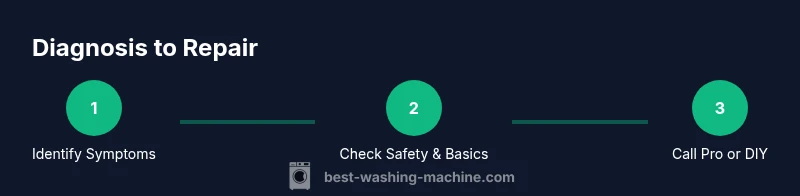
Identify symptoms and collect model details
Begin with a clear statement of what’s wrong and how long it’s been happening. Note any error codes displayed on the control panel and collect the model and serial numbers. This information speeds up diagnostics and helps you compare repair options later.
Tip: Have the user manual and model number ready before you start. - 2
Power down and inspect basic components
Unplug the washer and disconnect power. Check water supply, inlet hoses, filters, and door or lid switches for gaps, kinks, or blockages. A simple hose swap or filter cleaning can fix many issues.
Tip: Never work on live electrical components. - 3
Check for error codes and consult the manual
Decode any displayed error codes using the model manual or online resources. Codes point to subsystem faults (drain, fill, motor, sensor) and narrow the field for DIY vs pro repair.
Tip: Document codes with screenshots or notes for your technician. - 4
Perform safe DIY tasks you can fix
If the issue is simple (clogged pump filter, lint in screens, loose hose clamps), perform the fix and test with a short cycle. Do not attempt electronics or motor disassembly.
Tip: Limit DIY to tasks that don’t expose you to high voltage or pressurized water. - 5
Decide whether to call a professional
If the problem persists after safe DIY tasks, call a licensed technician. Share code data, what you’ve tried, and your observations to get an accurate quote.
Tip: Request a written diagnostic and estimate before work begins. - 6
Compare quotes and verify warranty terms
Explore multiple quotes and confirm parts, labor, travel, and any disposal fees. Check for a workmanship warranty on the repair so you’re protected if the issue returns.
Tip: Prefer a local provider with positive reviews and transparent pricing.
FAQ
What should I do first when my washer stops mid-cycle?
Check for error codes, inspect the lid switch, and ensure water supply hoses are attached and not kinked. If the code points to a component you can safely test, perform that check before calling a pro.
First, read any error codes, then check the lid switch and hoses. If you can safely test something basic, do it before calling a technician.
Can I fix most problems myself?
Some issues are simple like cleaning filters or reseating hoses. More complex problems involve electronics or motor components and should be handled by a licensed technician. Always weigh safety and warranty considerations.
Some issues you can fix yourself, but for electronics or motor problems, it’s best to hire a pro. Safety and warranties matter.
How long does a typical repair take?
Most repairs take a few hours from diagnostic to completion, depending on part availability and the job’s complexity. If the repair requires parts, the timeline may extend to a few days for ordering and in-home service.
Most repairs take a few hours, but parts availability can stretch timelines to a few days.
What is a fair cost range for common repairs?
Costs vary by region and the repair needed. Expect diagnostic fees, parts, and labor to sum to a broad range; you should receive a written estimate before work begins.
Costs vary by problem and location; get a written estimate before any work.
How do I choose a trustworthy repair technician?
Look for licensed technicians, request written estimates, ask for references, and verify warranties. Read reviews and confirm the technician’s familiarity with your washer’s brand and model.
Choose licensed pros with clear quotes, good references, and model-specific experience.
Is there a warranty after repair?
Many repairs include a limited warranty on parts and labor. Ask for warranty duration and scope before authorizing work, and ensure it’s included in the written quote.
Yes, most repairs come with a limited warranty on parts and labor; confirm details in writing.
Watch Video
The Essentials
- Identify symptoms early to prevent unnecessary replacements.
- Differentiate safe DIY tasks from risky repairs.
- Ask for a written diagnostic and estimate before hiring.
- Compare quotes and check warranty coverage.
- Document repairs to simplify future service.