Why Is Washing Machine Door Not Opening: Quick Troubleshooting
Urgent guide to fix a washing machine door that won’t open. Identify common causes, safety steps, DIY fixes, and when to call a professional for a fast, safe resolution.


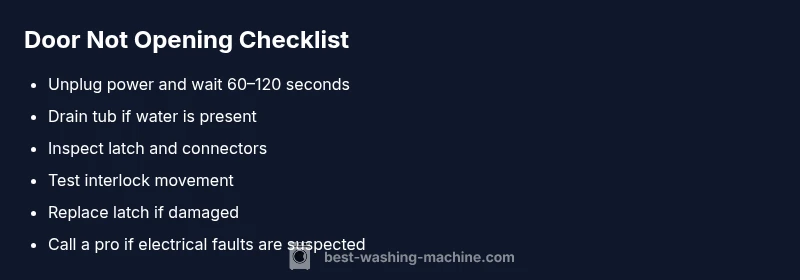
The most likely reasons the door won’t open are a faulty door latch interlock or a jammed latch that thinks water is still in the tub. Start with unplugging the washer, then wait a minute or two and try to open the door. If water remains, run a quick drain cycle or manually empty the tub before retrying.
Why the problem happens and why is washing machine door not opening
If you’re wondering why is washing machine door not opening, the answer usually points to a safety interlock or latch fault. Modern washers lock the door during cycles and when water is detected in the tub. When the latch or control board misreads conditions, the door may stay locked even when the cycle ends. You’ll commonly encounter this issue after a power outage, a jammed latch, or a sensor stuck in a locked state. According to Best Washing Machine, door-lock failures are among the most frequent service calls, but many can be resolved at home with careful diagnostics and safe disassembly. This guide walks you through the root causes, safe checks, and practical fixes you can perform before calling a technician.
Key takeaway: address safety first, then test the interlock in a controlled way.
Immediate safety steps to take if the door won’t open
Power down the unit and unplug it from the wall outlet. If your model has a dedicated circuit or a removable power cord, disconnect it completely. Do not attempt to pry the door open while the latch is engaged, and avoid forcing the door—this can damage the drum, glass, or latch. If there is water in the drum, do not yank the door; instead, prepare to drain or manually remove water following the manufacturer’s guidance. Clear the area to prevent accidental water leakage or injury. If you notice buzzing sounds or the motor trying to start when you press the door button, it’s a sign the safety interlock is active or stuck.
Important: If the door remains locked after a forced power cycle, seek professional help rather than attempting further disassembly.
How the door latch interlock works and common failure modes
The door latch interlock is a safety device that prevents water from spilling out if the door opens mid-cycle. It is controlled by the machine’s main PCB and driven by the door switch. Common failure modes include a broken latch catch, corroded or loose wiring, a faulty actuator, or a control-board fault that never unlocks. Symptoms include a door that stays locked after the cycle ends, a door light that remains on, or a delay before the door can be opened. In some cases, mineral buildup or detergent residue can jam the latch. Understanding these components helps you diagnose whether you’re dealing with a mechanical fault or an electrical/control issue.
For quick diagnostic hints, listen for a tiny click when attempting to open and feel for resistance at the door handle. These cues point toward the latch or interlock being the culprit.
Quick fixes to try before calling a pro (step-by-step at home)
Start with the simplest checks: ensure the power cycle was complete, confirm the tub is drained, and attempt a controlled reset of the machine. If safe, reach behind the front panel to inspect visible wiring to the latch (with power disconnected). Never use tools to force the door open; instead, retry after a complete unplug and a 1–2 minute wait to allow interlocks to reset. If the door still won’t release, the latch may be physically damaged or the interlock electronics may be failing. This is a clear signal to contact a professional technician for a precise diagnosis and safe repair.
When to call a professional and how to prepare for service
If the door still won’t open after basic resets and latch inspection, or if you notice damaged wiring, burning smells, or water leakage, stop and call a pro. Gather model details, recent error codes, and a brief description of the symptoms. A technician will typically test the interlock with a multimeter, check the PCB for faults, and assess whether the latch needs replacement. While waiting for service, keep the area dry and avoid attempting further disassembly that could void warranties or cause injury.
Steps
Estimated time: 30-60 minutes
- 1
Power down and unplug
Unplug the washer from the wall and switch off any circuit breakers to ensure there is no live power. This is the first and most important safety step before any inspection. If your model has a removable lead, detach it carefully.
Tip: Label cords and screws to avoid losing parts during reassembly. - 2
Drain the tub if necessary
If you feel water inside the drum, run a gentle drain or spin cycle to remove standing water. Avoid forcing the door while water remains, as pressure can push water toward the door seal.
Tip: Keep towels ready to manage any splashes. - 3
Access the latch area
Remove the lower front panel per the user manual to access the door interlock and latch. Use proper tools and avoid prying; document screws positions for reassembly.
Tip: Take photos during disassembly to guide reassembly. - 4
Inspect latch and wiring
Check for broken plastic, corrosion, or loose connectors at the latch. Reseat any loose wires gently and look for signs of wear or melt marks on connectors.
Tip: Do not tug on wires; only reseat or replace damaged parts. - 5
Test interlock behavior
With power still disconnected, inspect the interlock plunger for smooth movement. If you have an appropriate tool, you can carefully move the plunger to see if it unlocks the mechanism.
Tip: If the interlock feels stuck or makes grinding sounds, do not force it. - 6
Reassemble and test
Reattach the front panel, reconnect power, and perform a quick cycle to verify the door opens at the end of the test run. Do not load laundry on this test—use empty drum.
Tip: If the door still locks, proceed to professional service.
Diagnosis: Door won't open after cycle ends or during wash
Possible Causes
- highFaulty door latch interlock or damaged latch
- mediumElectrical control issue or stuck interlock sensor
- lowWater remained in tub causing lock to stay engaged
Fixes
- easyUnplug the washer and wait 1–2 minutes, then plug back in and try to open the door again
- easyDrain the tub if water is present and retry the door release
- mediumInspect visible wiring to the latch and reseat connectors if safe to do so
- mediumIf the latch or interlock is damaged, replace the part or have a technician perform the replacement
FAQ
Why is the washing machine door not opening after a cycle ends?
Most often the door latch interlock is faulty or stuck. Electrical control faults or water in the tub can keep the door locked. Follow safety steps, reset power, and inspect the latch before deciding if a professional is needed.
Most often the door latch interlock is faulty or stuck, or the control detects water in the tub. Start with safety steps and a power reset, then inspect the latch.
Can I manually override a stuck door latch?
Manually forcing the door is unsafe and can damage the drum or latch. Use the proper reset, drain, and inspection steps, and only bypass through professional service if instructed by a technician.
Forcing the door is unsafe. Use the reset and inspection steps and call a professional if needed.
What should I do if water remains in the drum after the cycle?
Drain the drum first, then reattempt opening. If water persists, the drain system or pump may be blocked, requiring service.
Drain the drum, then retry. If water stays, the drain or pump might be blocked—seek help.
Is it safe to open the door when water is inside?
Opening with water inside is risky and can cause flooding. Wait for complete drainage or call a professional if you cannot drain safely.
No—don’t open while water is in the tub. Drain safely or get help.
When should I call a professional for door lock issues?
Call a professional when basic resets, drainage, and latch inspection do not restore function, or if you notice burnt wiring or unusual smells.
If basic steps fail or you see damaged wiring, call a pro.
How long should a door latch typically last?
Latches vary by model, but a typical lifespan spans several years with proper maintenance. If you notice repeated failures, replacement is likely needed.
Latches last several years with care; repeated failures mean replacement may be needed.
Watch Video
The Essentials
- Unplug the washer before any inspection.
- Check the latch first; most fixes involve latch or interlock.
- Do not force the door; call a professional for electrical issues.
- Regular maintenance reduces latch jams and future faults.