Will a Washing Machine Fit Through Your Door? A Practical, Step-by-Step Guide
Learn how to determine if your washing machine can pass through a doorway, how to measure clearance, and safe moving steps with practical tips from Best Washing Machine.


You can often move a washing machine through a doorway by measuring clearance, choosing the right orientation, and using a helper with the right tools. Start by checking the washer's width and depth against the door opening, remove hoses, and use a dolly to guide it through with slow, steady motions. This guide walks you through safe steps.
Understanding the Challenge
If you need to move a washing machine through a door, the task hinges on the clearances between the washer and the doorway. Door frames, hinges, and the door swing all impact whether the appliance can pass without disassembly. According to Best Washing Machine, many households encounter door-frame limitations when relocating a washer, especially in older homes or tighter apartment layouts. The central question—will washing machine fit through door—depends on precise measurements of both the unit and the opening. Rather than relying on intuition, take careful measurements of width, height, and depth, then compare them to the washer’s actual dimensions. With the right planning, you can avoid costly damage to walls or the appliance itself. This guide helps you navigate common constraints and choose the safest approach for moving a washer through a standard interior door.
Measuring the Opening Before You Start
Before attempting a move, you must know the available clearance. The key dimensions are the door width, the door height, and the doorway depth (including any trim). Don’t forget to account for the door swing—whether the door opens toward or away from you can dramatically change usable space. In practice, measure the door frame at the narrowest point, then measure the washer’s width, height, and depth from the exterior. Add a small tolerance to each measurement to account for hoses, padding, and slight misalignments. While most households have doors wider than the washer, the actual pass-through often depends on whether you can tilt or rotate the unit without catching corners on the frame or ceiling. This is where careful planning, not guesswork, pays off.
Washer Size Variants and How They Affect Fit
Washing machines come in several form factors, primarily front-load and top-load, with some compact options. Front-load models tend to be shallower than top-load equivalents, but they can also be taller, which matters when negotiating a doorway with a low lintel or ceiling crown. Compact or apartment-sized washers are designed to minimize depth, which can improve pass-through prospects. When you’re evaluating fit, compare not just width, but height and depth to the doorway clearance. Best Washing Machine emphasizes that the overall depth, especially if you must angle the unit, often determines passability more than width alone. If you own a tall, deep model, consider alternate orientations or temporary disassembly to improve odds.
Planning the Move: Tools and Helpers
Successful doorway navigation requires selecting the right tools and assembling a small team. A sturdy dolly or moving straps can transfer most of the weight while keeping your back safe. You’ll also want a tape measure, blankets or moving pads for protection, and a helper to manage the balance as you angle the machine. Prepare by disconnecting hoses and the power plug, draining water lines, and laying down a clear path with a protective rug or mat. By coordinating with a partner, you can achieve smoother turns at corners and through the door frame without scratching walls or damaging the machine.
Step-by-Step Move: Can You Get It Through?
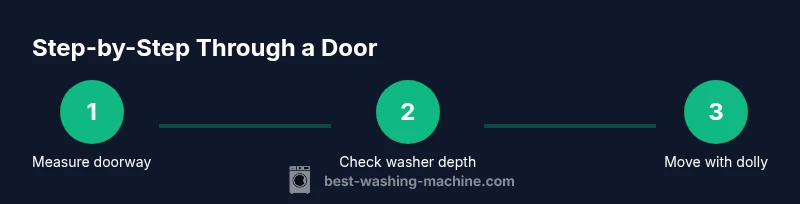
This section provides actionable steps to move a washing machine through a doorway while minimizing risk. Start by verifying measurements, then clear the route, disconnect utilities, and position the appliance for entry. Use a dolly to transfer weight, tilt only as much as needed, and rotate gradually so the widest point passes through on the natural arc of the door opening. Keep one person guiding from behind the unit and another in front to prevent the washer from tipping. Stop if you hear grinding or feel resistance, as forcing it can cause structural damage. After the machine passes, reattach hoses, level it, and test for leaks before putting it into position.
Common Pitfalls and Safety Considerations
A frequent mistake is pushing the washer through without removing all hoses and the drain line, which can snag and cause injuries or spills. Another risk is over-tilting, which can damage internal components or dislodge the shock absorbers. Always unplug the unit, wear protective gloves, and keep hands and feet away from pinch points. If you’re unsure about the maneuver, pause and reassess your approach rather than forcing the appliance through an awkward angle. By following proper lifting techniques and using the right equipment, you minimize risk to yourself and the appliance.
Alternatives When It Won’t Fit: Options to Consider
If the doorway is simply too narrow, it may be safer to explore alternatives rather than forcing the move. Options include temporarily removing the door from its hinges, disassembling parts of the appliance (where manufacturer-approved), or transporting the washer through another route (e.g., via a back entrance or service elevator). In some cases, hiring a professional appliance mover is the best option to avoid damage to walls or the unit. Always check your warranty and the manufacturer’s guidance before disassembly, and avoid removing components that could void coverage.
Maintenance After the Move
Once the washer is through the doorway, inspect all connectors for leaks and ensure the unit is level. Reconnect hoses and verify there are no kinks or damaged sections. Run a short rinse cycle to confirm there are no leaks and that the washer drains properly. Keeping the area dry reduces the risk of mold and water damage. Regularly inspect doorways and entryways for future moves, and document the process for future projects. Consistent checks help extend the life of the appliance and protect flooring and walls in your home.
Tools & Materials
- Measuring tape(Long enough to measure door height and width; at least 6 feet preferred)
- Helper or partner(One person in front, one behind for balance)
- Sturdy dolly or moving straps(Heavy-duty and rated for appliance weight)
- Moving blankets or pads(Protect surfaces and the washer)
- Protective gloves(Grip and safety)
- Flat, clear path(Remove obstacles, consider using a rug or mat)
- Screwdriver set(For hose and panel adjustments if needed)
- Tape and marker(Label hoses and connections)
Steps
Estimated time: 60-90 minutes
- 1
Measure doorway and washer
Record the doorway width, height, and depth, then measure the washer's width, height, and depth. Ensure at least a small clearance for hoses and the rotating path.
Tip: Double-check the door swing direction before starting. - 2
Clear the route
Remove obstacles, lay protective mats, and designate a stop point beyond the doorway. A clear path reduces the risk of tripping or snagging.
Tip: Keep a clear space at the door frame for angle changes. - 3
Disconnect utilities
Unplug power, shut off the water supply, and drain hoses. Coil hoses neatly to avoid snagging during movement.
Tip: Take a photo of hose connections for easier reassembly. - 4
Position the washer on the dolly
Center the machine on the dolly with the heaviest side down. Secure it with straps or blankets to prevent shifting.
Tip: Place foam pads between the dolly and the washer to reduce friction. - 5
Begin through the doorway
Have the helper tilt minimally and push slowly while you guide from the opposite side. Rotate gradually to align with the door opening.
Tip: Pass the widest point first; work the top corner through last. - 6
Check alignment and pass through
Continue in small increments, checking for contact with walls, trim, or ceiling. Once through, lower gently onto a flat surface and recheck balance.
Tip: If resistance increases, back off and reassess the angle. - 7
Reconnect and level
Reconnect water hoses and power, then level the washer to prevent vibration and damage during operation.
Tip: Test with a short cycle after confirming there are no leaks. - 8
Final safety check
Inspect the floor area for moisture or damage and ensure the path remains clear for future use.
Tip: Keep a note of any adjustments for next time.
FAQ
Will a standard full-size washing machine fit through a typical interior doorway?
It depends on the doorway clearance and the washer’s dimensions. Measure carefully and consider disassembly or alternate routes if the fit is marginal.
Measure the doorway and washer, then decide if disassembly or a different route is safer.
What measurements should I take to determine fit?
Measure doorway width, height, and depth, then measure the washer’s width, height, and depth. Include extra space for hoses and movement.
Measure both the doorway and the washer, plus some extra clearance for hoses.
Can top-load and front-load washers pass through narrow doors?
Both can pass with careful planning, but front-load models may offer shallower depth. In tight spaces, plan rotation and tilt carefully.
Both types can pass; plan rotation and tilt carefully in tight spaces.
Is it safer to hire a professional for moving heavy appliances?
If the space is very tight, or if you’re unsure about technique, hiring a professional can prevent damage and injuries.
For tight spaces or uncertain moves, professionals can help prevent damage.
What safety precautions should I take during the move?
Unplug the unit, drain hoses, wear gloves, and use a proper dolly. Move slowly and avoid forcing the washer through the opening.
Unplug, drain, wear gloves, use a dolly, and move slowly.
What if I can't pass through the doorway even after disassembly?
Consider alternate routes, partial disassembly only if permitted by the manufacturer, or consult a professional to avoid damaging the unit.
If it still won’t pass, explore alternatives or professional help.
Watch Video
The Essentials
- Measure twice, move once for door clearance.
- Use a helper and a dolly to share weight safely.
- Disconnect hoses and power before moving.
- If it won’t pass, consider alternatives or professionals.
- Best Washing Machine recommends planning and caution for any doorway move.