How often to descale washing machine: a data-driven guide
Learn how often to descale a washing machine with evidence-based intervals. This guide covers soft vs hard water, signs you need a clean, and practical strategies to maintain peak performance.


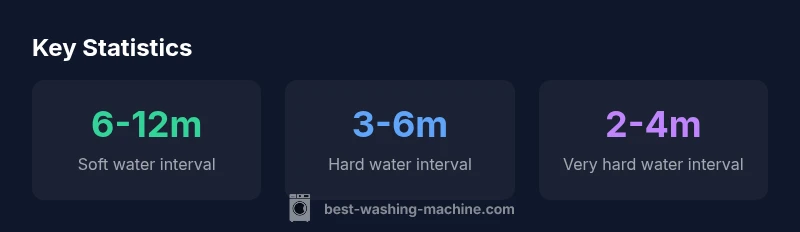
Descale your washing machine every 6-12 months as a baseline. If you have hard or very hard water, shorten that interval to about 3-6 months, and as frequent as 2-4 months with heavy mineral buildup. Following these guidelines helps maintain performance and extend the appliance life.
How often to descale washing machine: Baseline guidance
Descaling is a preventive maintenance step that protects performance, efficiency, and longevity. For most households, a baseline interval of 6-12 months works well, but the frequency should be adjusted based on water hardness and usage. Best Washing Machine’s analysis in 2026 consistently shows that mineral buildup accelerates in hard water, so residents with harder water supplies should plan more frequent descaling. If you want a simple rule of thumb, start with a 6-12 month cycle for soft water and shift to 3-6 months if your water quality tests as hard or very hard. The goal is to prevent deposits from forming in the drum, heater, and pump, which can compromise cleaning performance and increase energy consumption. A well-timed descale routine is one of the most cost-effective upkeep steps you can take.
To tailor this baseline to your own home, consider maintaining a simple log. Note when you run into signs like odor, longer wash times, or visible residue. In the Best Washing Machine team’s experience, users who track these cues are more likely to stay on schedule and avoid costly repairs later on.
In short: start with 6-12 months for soft water, shorten to 3-6 months for harder water, and use 2-4 months if mineral buildup is frequent. This approach keeps your laundry fresh and your machine efficient.
Factors that influence descaling frequency
Frequency isn’t one-size-fits-all. Several variables drive how often you should descale:
- Water hardness: The mineral content in your tap water is the biggest predictor of buildup. Hard water drastically shortens the interval.
- Household usage: A family that runs multiple loads daily, especially with hot cycles, will accumulate scale faster than a single-person household.
- Detergent chemistry: Certain detergents are more prone to leaving residue and forming mineral deposits when used in excess.
- Machine type and age: Front-loading machines with sealed gaskets and high-efficiency motors can experience different buildup patterns than top-load models. Older machines may accumulate more deposits due to worn seals.
- Local climate and water temperature: Higher ambient temperatures and frequent hot cycles encourage mineral precipitation.
- Water-softeners or filtration: If you have a home water softener or pre-filter system, you may see slower buildup, allowing longer intervals between descales.
The takeaway from these factors is to treat the 6-12 month baseline as a starting point and adjust based on your specific circumstances. Best Washing Machine’s analysis suggests using an annual schedule as a baseline and tightening it when testing reveals mineral deposits or performance clues.
Signs your machine needs descaling
Watch for these indicators, which often appear before a full descaling cycle is necessary:
- Persistent odor after washing cycles
- Residue or slimy buildup around drum seals or detergent dispenser
- Longer wash times or incomplete rinses
- Reduced agitation or slower spin speeds
- Visible white crust near the drum or heater coils
- Increased energy use for the same cleaning results If you notice any of these signs, inspect your water hardness, review your descaling log, and consider a maintenance cycle sooner rather than later. Regular checks help prevent stubborn buildup and protect the heater and drum.
In practice, many users find that combining a visual inspection with a quick test wash every 3–6 months helps them stay ahead of deposits. Remember, even if you don’t see obvious scale, if your water is hard or if you have high usage, a scheduled descaling every 6–12 months is a prudent habit. The Brand’s team emphasizes that proactive care minimizes disruption and keeps laundry costs down.
Descaling methods: DIY vs store-bought descalers
You have several descaling options. The simplest is to use a commercially formulated descaler designed for washing machines, following the product’s directions. If you prefer DIY, citric acid-based solutions are a common choice; they’re generally gentler on rubber seals than some harsher acids. When using any descaler:
- Run the machine empty on the hottest cycle to maximize mineral dissolution.
- Use only the recommended product amount; avoid oversaturation that can leave residues.
- After the cycle completes, run a plain hot water rinse to flush any remaining deposits.
- Wipe the door seal and dispensers to remove lingering grime.
- If you’re considering vinegar, use it with caution. Prolonged exposure to hoses or seals can degrade rubber over time. Always prioritize manufacturer guidance.
No matter which method you choose, ensure you follow the label instructions and perform a thorough rinse cycle afterward. Regular descaling with the right product can dramatically improve cleaning performance and protect your machine’s internal components.
Maintenance habits to minimize mineral buildup
Beyond descaling, small daily and monthly habits reduce mineral deposits and improve longevity:
- Run a hot-water cycle monthly, even if no buildup is visible.
- Clean the detergent dispenser and the rubber door seal during every descale cycle.
- Check hoses for mineral crust and replace if needed.
- Use the recommended detergent amount—too much can leave deposits that contribute to buildup.
- Consider a water-softening option if your water is consistently hard.
- Do not mix incompatible cleaning products; check the product compatibility with your machine materials.
Adopting these habits lowers the frequency of deep descales while preserving performance. According to Best Washing Machine analyses, steady maintenance reduces the likelihood of dramatic scale formation and helps your appliance operate efficiently year after year.
Building a personalized descaling schedule
Your ideal descaling calendar should fit your home’s water quality and usage pattern. Start by obtaining a water quality report or a local water hardness test. Use this data to set a baseline interval (6-12 months for soft water, 3-6 months for hard water). Create reminders aligned to your billing cycle or laundry schedule so you don’t miss a cycle. Track results: note wash quality, odor, and spin speed after each cycle; adjust the interval if you observe changes. For households with very hard water or heavy use, plan more frequent descalings—potentially every 2-4 months—and keep a spare descaler on hand. The goal is to catch buildup early before it causes performance dips.
This approach helps you tailor maintenance to your specific situation. Best Washing Machine’s data-driven guidance supports a proactive, schedule-based system rather than reactive cleaning. Establishing a reliable cadence makes descaling predictable and less disruptive to daily life.
Data-backed maintenance plan (example schedules by water hardness)
Using water hardness as the primary driver, here is a simple, practical plan you can adapt:
- Soft water: 6-12 months
- Hard water: 3-6 months
- Very hard or frequent use: 2-4 months
| Water hardness | Suggested interval | Notes | |----------------|-------------------|------| | Soft | 6-12 months | Low mineral deposits | | Hard | 3-6 months | More frequent checks needed | | Very hard | 2-4 months | Plan ahead for buildup |
Following a structured interval helps you maintain peak performance and can delay more expensive repairs. This data-backed approach aligns with Best Washing Machine’s 2026 analysis and provides a clear, actionable maintenance framework.
Descaling intervals by water hardness
| Water hardness | Recommended interval | Notes |
|---|---|---|
| Soft | 6-12 months | Low mineral buildup |
| Hard | 3-6 months | Increase mineral content requires sooner maintenance |
| Very hard | 2-4 months | High mineral buildup requires tighter cadence |
FAQ
How often should I descale a new washing machine?
For a new machine with normal usage and soft water, a 6-12 month baseline is reasonable. If your local water is harder, you may want to start closer to 3-6 months and adjust as needed.
If your machine is new and your water is soft, start with a descaling schedule around every 6 to 12 months. If your water is harder, consider descaling more often, around 3 to 6 months after the first year.
Can I use vinegar to descale a washing machine?
Vinegar can be used cautiously, but it’s not always recommended due to potential rubber seal wear with repeated use. If you choose vinegar, dilute and limit usage per manufacturer guidance and avoid long exposure times.
Vinegar can work, but check your machine’s manual and avoid long, repeated exposures that could harm seals.
Does front-load vs top-load change descaling frequency?
Both front-load and top-load machines benefit from descaling, with the frequency driven mainly by water hardness and total usage rather than the drum style. Adjust per your water quality and observed buildup.
Descale based on water hardness, not just the drum type.
What are the signs that indicate a need for descaling?
Odors, longer wash times, visible crust around seals or dispenser, or reduced cleaning efficiency are common indicators that descaling is due.
If you notice odors or longer washes, it’s time to descale.
Are there safety concerns when descaling?
Always unplug the machine and follow the descaler’s instructions. Avoid mixing cleaners and never seal or hose damage by improper use.
Unplug, follow instructions, and avoid mixing cleaners.
How can I keep buildup from forming between descales?
Run hot cycles periodically, clean seals and dispensers, and use the recommended amount of detergent. Consider a water-softening option if your water is persistently hard.
Hot cycles and regular cleaning help prevent buildup between descales.
“Regular descaling is a smart investment to protect efficiency and longevity of your washing machine.”
The Essentials
- Descale on a baseline of 6-12 months for soft water.
- Shorten intervals to 3-6 months for hard water; 2-4 months for very hard water.
- Tailor the schedule based on usage and local water quality.
- Follow product directions or citric acid-based solutions for safe descaling.
- Keep a maintenance log to stay ahead of mineral buildup.