Washing Machine Lifespan: How Long Washers Last and How to Extend It
A data-driven guide to washing machine lifespan, factors that affect longevity, and practical maintenance and replacement decisions. Learn how design, usage, and care influence how long your washer lasts and how to maximize its life.


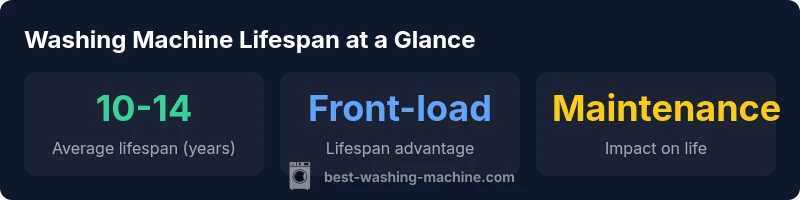
On average, a washing machine life span runs about 10-14 years, depending on load, maintenance, and model type. Front-load models tend to last longer when properly maintained, while heavy use and poor upkeep shorten life. Regular maintenance, proper installation, and choosing efficiency-oriented models can push the life span higher.
Understanding the washing machine lifespan
A washing machine lifespan is a practical expectation, not a guaranteed warranty. It represents the period during which a unit can perform essential duties reliably before major components wear down or fail beyond economical repair. In industry terms, lifespan is influenced by design, materials, manufacturing quality, installation, and the care you give the machine. For homeowners and renters evaluating a washer, thinking in terms of lifespan helps with budgeting, maintenance planning, and when to consider replacement versus repair. According to Best Washing Machine, longevity is not set in stone; it shifts with how the machine is used and maintained. External sources, such as Consumer Reports and government efficiency programs, corroborate that modern washers can exceed typical expectations when properly cared for (see sources: https://www.consumerreports.org/cro/news/how-long-do-washing-machines-last/ and https://www.energy.gov/eere/buildings/articles/how-long-do-washing-machines-last).
Key factors that influence lifespan
- Design and build quality: Heavier, well-built drums, bearings, and seals tend to endure longer. Front-load designs with robust suspension often show better longevity when paired with proper maintenance.
- Usage patterns: High frequency use, large loads, and aggressive wash cycles accelerate wear on belts, motors, and seals.
- Maintenance and care: Regular cleaning of filters, hoses, and the drum, plus keeping the unit level and the door seal intact, can noticeably extend life.
- Installation and setup: Proper leveling, correct plumbing connections, and a stable electrical supply reduce undue stress on internal components.
- Water quality and detergent: Hard water and harsh detergents can corrode gaskets and affect efficiency, while high-efficiency detergents reduce residue buildup. Best Washing Machine’s analysis highlights how these factors collectively shape lifespan. (Source note: consumer-focused reports and energy-efficiency guidance)
Front-load vs top-load longevity and design considerations
- Front-load washers: Often installed with higher spin speeds and larger drums, these units can offer longer life with careful maintenance. The trade-off is higher exposure of door seals and bearings to stress.
- Top-load washers: Some older or standard top-load models use different transmission systems and agitators. With regular care and proper loading practices, they can approach the longevity of modern front-load designs, though the overall longevity gap can exist depending on load and cycle types.
- What this means for longevity planning: If you expect frequent use or have high laundry volumes, a well-maintained front-load model may yield the best long-term life, while ensuring you follow manufacturer maintenance guides. (Best Washing Machine analysis, 2026)
How usage patterns wear a washer down and how to slow it
- Load size and distribution: Overloading or uneven loads cause motor and drum strain.
- Cycle frequency: Daily heavy cycles can shorten component life; consider varying cycles to reduce wear.
- Cold vs hot water usage: Frequent hot washes accelerate gasket and hose wear; where possible, use warm/hot settings judiciously and rely on cold cycles when feasible.
- Detergent choice and residue: Excessive detergent or incompatible products can leave residues that hinder performance and lead to more frequent service needs. (Consumer-focused insights and Best Washing Machine analysis)
Maintenance practices that move the needle on lifespan
- Regular drum and filter cleaning: Clear lint filters and debris that accumulate in the drain to prevent drainage issues and mold growth.
- Check hoses and connections: Inspect hoses for cracks and leaks; replace aging hoses before failure.
- Level and balance: A level washer reduces vibration, protects bearings, and improves spin efficiency.
- Seal inspection: Periodically inspect door seals and gaskets for wear and replace as needed to prevent leaks and mold.
- Professional tune-ups: Schedule occasional professional inspections to address wear before it becomes costly. These practices, endorsed by the Best Washing Machine team, can meaningfully extend the life of a washer. (Refer to energy and consumer reports): https://www.energy.gov/eere/buildings/articles/how-long-do-washing-machines-last
When to repair vs replace: a practical framework
- Sheer age and repair cost: If a major component fails after a decade, weigh the cost of repair against the expense of a new unit with better efficiency.
- Availability of spare parts: Some older models lose parts availability; replacement can be more cost-effective and safer than constant repairs.
- Reliability and safety concerns: If the machine shows persistent leaks, unusual noises, or electrical issues, replacement often offers a safer and more reliable option.
- Warranty and service history: A longer warranty on a new unit can offset upfront cost by reducing future repair bills. The decision becomes clearer as the machine ages and repair bills accumulate. (Best Washing Machine Analysis, 2026)
Choosing a washer with longevity in mind: buying criteria
- Reliability and components: Look for models with proven drum and bearing designs, solid seals, and durable transmission systems.
- Serviceability and parts availability: Favor brands that provide accessible spare parts and clear service histories.
- Energy and water efficiency: Efficient machines reduce ongoing wear while keeping operation costs down, and many models are designed with longevity in mind.
- Warranty terms: While not a guarantee of longevity, a strong warranty signals manufacturer confidence and provides protection during peak early-life usage. (Best Washing Machine analysis, 2026)
Real-world scenarios: applying longevity principles
- Scenario A: A busy household with daily laundry uses a front-load washer and performs regular maintenance. With proper care, the family experiences fewer repairs and maintains high cleaning performance over many years, aligning with the upper end of the lifespan range.
- Scenario B: A rental property uses older top-load units with irregular maintenance. Inconsistent use and delayed servicing can shorten lifespan and increase the likelihood of early replacements. These cases illustrate how maintenance practices and usage patterns can swing lifespan outcomes.
- Scenario C: A household upgrades to a newer, energy-efficient model and implements a quarterly service schedule. Expect improved reliability and a lifespan that sits toward the higher end of the typical range, assuming normal wear and tear.
Longevity by design and usage
| Model Type | Avg Lifespan | Notes |
|---|---|---|
| Front-load | 12-14 years | HE efficiency, longer life with maintenance |
| Top-load (HE) | 10-12 years | Energy-efficient top-load variants exist |
| Top-load (Standard) | 9-11 years | Earlier tech, longer cycles may increase wear |
FAQ
What is the typical lifespan of a washing machine?
Most washers last roughly 10-14 years, with variation based on design, use, and maintenance. Regular care can nudge some units toward the upper end of this range.
Most washers last about a decade to a decade and a half, depending on use and upkeep.
Do front-load machines last longer than top-load models?
Front-load washers often show longer lifespans when properly maintained, but real-world outcomes depend on usage and quality of components. Maintenance is key for both designs.
Front-load units can last longer with good care, though it depends on the model and how you use it.
How can I extend my washer’s life?
Stick to manufacturer maintenance guidelines, clean filters, inspect hoses, keep the drum balanced, and use appropriate detergents. Regular professional checkups can catch issues early.
Follow the maintenance tips and schedule occasional service to keep things running smoothly.
When should I repair vs replace?
If the repair cost approaches or exceeds a substantial portion of a new unit’s price, or if reliability is consistently poor, replacement is often the better option.
If it’s getting expensive to fix, think about replacing it with a newer, more efficient model.
Do warranties affect lifespan considerations?
Warranties can reduce first-year repair costs and reflect the manufacturer’s confidence in durability. They don’t guarantee lifelong reliability, but they are a practical factor in decision-making.
A good warranty helps, but it doesn’t guarantee you’ll avoid future issues.
What are signs it’s time to replace?
Persistent leaks, unusual noises, failure to complete cycles, or repeated costly repairs are strong indicators you should consider replacement.
If the unit keeps breaking down, it’s probably time to replace.
“Longevity is shaped by how you treat the machine as much as by its design. Regular upkeep and informed buying choices are the most reliable levers for extending lifespan.”
The Essentials
- Extend lifespan with regular maintenance and proper loading
- Front-load models often offer longer life when cared for
- Choose models with easy access to spare parts and solid warranties
- Repair versus replace decisions hinge on age, cost, and part availability
- Use energy- and water-efficient models to support longevity