Washing Machine Repairing: DIY Guide for Home Fixes
A comprehensive, step-by-step guide to diagnosing and repairing common washing machine issues safely. Learn tools, parts, and decision points to decide when to DIY or hire a pro.


This guide helps you diagnose and repair common washing machine problems safely, returning your unit to reliable operation. You’ll learn essential tools, safety steps, and practical troubleshooting techniques for washing machine repairing, plus when to DIY or call a professional. Expect actionable steps and maintenance tips that protect your appliance investment.
Understanding the repair mindset: when to fix vs replace
Every household faces decisions about whether to repair or replace a malfunctioning appliance. In the realm of washing machine repairing, weighing cost, reliability, and safety is essential. According to Best Washing Machine, a proactive approach—learning the basics of diagnosis and safe repair—can extend the life of your washer and avoid early replacement. Start by clarifying the problem: is it a loud noise, slow draining, failure to spin, or an error code on the control panel? Each symptom points to different subsystems: drainage, drive mechanism, electronics, or mechanical seals. As you plan a DIY repair, set a clear goal: restore proper function without compromising safety. Keep expectations realistic; some issues, like a cracked tub or severely corroded wiring, are better handled by pros or through replacement. This mindset helps you decide whether to tackle the repair yourself or hire a technician. The rest of this guide will walk you through diagnostic steps, essential tools, and safe procedures to achieve reliable results.
Essential safety guidelines before you begin
Safety is the foundation of any washing machine repair. Always unplug the machine from the power source, and shut off both hot and cold water valves before touching hoses or internal components. Wear insulated gloves and protective eyewear, and work on a dry, stable surface to minimize slip hazards. Avoid working on a live circuit or with a wet floor, and keep a bucket or towels handy to catch any residual water. Read the model’s manual for specific cautions, and never bypass safety interlocks or defeat manufacturer protections. Finally, if you notice burnt wiring, exposed conductors, or a crack in the housing, stop and reassess—these signs indicate higher risk and may require a licensed technician. Keeping safety front and center reduces the chance of injury and costly mistakes during washing machine repairing.
Diagnosing drainage problems
Drainage issues are among the most common reasons homeowners open the service panel. Start by inspecting the drain hose for kinks or clogs, ensuring it’s correctly connected to the household standpipe and not kinked beneath the machine. Check the lint filter or pump screen for blockages that can halt flow. Listen for the pump running during a drain cycle and look for any visible leaks around clamps and hoses. If the washer fills but does not empty, the problem often lies with the pump impeller, the hose, or a clogged filter. For belt-driven models, inspect the belt for cracks or wear. Diagnosing drainage problems accurately saves time and prevents unnecessary part replacements.
Not spinning or agitating? Check the drive belt and lid switch
A washer that fills but won’t spin or agitate usually points to a drive belt issue, a faulty lid switch, or a failed transmission. Start by unplugging the unit, then access the belt (if your model uses one) and inspect for cracks or fraying. If the belt looks worn, replace it with the correct belt type for your model. Next, test the lid switch—this safety interlock prevents spinning when the lid is open. A faulty switch can be tested with a multimeter or by briefly bridging the switch leads (only if you are confident in electrical work). If the switch fails, replace it. If the belt and switch are fine, the problem may lie in the transmission or timer control. Careful inspection and testing here can prevent unnecessary replacements and restore agitation.
Electrical checks and testing basics
Electrical diagnostics are essential for many washer faults. Begin by unplugging the machine and locating the control board and wiring harness. Use a multimeter to check for continuity across fuses and common components like the door interlock, motor windings, and thermal fuses. Look for obvious signs of damaged insulation, burnt connectors, or loose/ corroded terminals. When you measure resistance, compare readings to the manufacturer’s service data for your model. If readings are out of spec, consider replacing the faulty component. Remember: never test live circuits with the machine plugged in. Electrical checks reduce guesswork and help you target the exact cause without costly trial and error.
Replacing common components: lid switch, pump, belt
Some failures are straightforward fixes. Start by identifying the component at fault (lid switch, main pump, or drive belt). Remove the part using the appropriate screwdriver and fasteners, taking care to disconnect any wires with the power off. Install the replacement part in the reverse order, ensuring connectors are secure and hoses seated properly to prevent leaks. Reconnect power and run a slow drain or spin test with no load to verify function. Always test for leaks around clamps and gaskets and re-check a full washing cycle with a small load to ensure stability. Keep replacement parts organized and labeled to speed future repairs.
Maintenance and preventive care to extend washer life
Prevention is cheaper than repair. Establish a simple routine that includes cleaning the lint screen or pump filter, inspecting hoses for cracks, and avoiding overloading the drum. Use the appropriate detergent type and quantity to reduce suds and residue, which can strain the drainage system. Periodically rotate the drum or run a cleaning cycle with a washing machine cleaner or white vinegar and baking soda blend to reduce mineral buildup. Finally, document any recurring issues and create a repair log. Proactive maintenance helps you catch problems early and keeps washing machine repairing costs down over time.
When to call a professional and the DIY decision tree
Not every problem is a DIY fix. If you encounter high voltage work, a cracked tub, a burning smell, or persistent leaks after basic troubleshooting, it’s safer to consult a licensed technician. Use a decision tree: (1) identify symptom, (2) rule out simple fixes, (3) test critical components with the right tools, (4) assess the cost and risk of replacement parts vs. a service call. If you’re unsure, prioritize safety and seek professional assessment. This approach protects you from injury and ensures a reliable outcome for washing machine repairing.
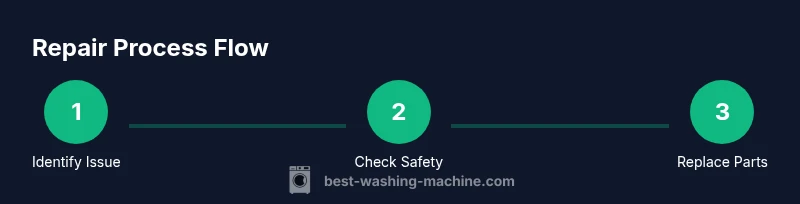
Quick-start repair flow: a practical checklist
- Begin with safety: unplug, shut off water, put on PPE.
- Observe symptoms: noise, leaks, failure codes, or non-responsive controls.
- Check drainage and hoses for clogs or kinks; inspect the pump area.
- Test electrical components with a multimeter and verify continuity.
- Replace obviously worn parts (belt, lid switch, pump) with model-specific parts.
- Reassemble, power on, and run a no-load test cycle first.
- Validate with a small load and check for leaks or abnormal sounds.
Troubleshooting resources and next steps
Keep a repair log, store spare parts in labeled bins, and photograph connections before disassembly. Consult official manuals or manufacturer diagrams for your model to confirm parts layout and wiring colors. When in doubt, contact a certified technician who specializes in washing machine repairing. Use reputable online guides, supported by manufacturer data and trusted consumer resources, to supplement your understanding and reduce repair time.
Tools & Materials
- Power off tools (circuit tester or non-contact voltage tester)(Use to verify power is off before starting)
- Flat-head and Phillips screwdrivers(Varied sizes, used to remove panels and fasteners)
- Multimeter(For continuity and resistance checks)
- Pliers and needle-nose pliers(Gripping hoses and connectors)
- Bucket, towels, and rags(To catch water and keep area dry)
- Replacement parts (lid switch, drain pump, drive belt)(Model-specific; verify compatibility)
- Hose clamps and assortment of hose sizes(For resealing connections)
- Flashlight or headlamp(Better visibility inside panels)
- Camera or notepad(Document wiring before disassembly)
Steps
Estimated time: 60-120 minutes
- 1
Disconnect power and shut-off water
Unplug the machine and shut off both water valves. Move the washer away from the wall to access power and hoses. This prevents electrical shock and water leaks during inspection.
Tip: Use a dry, non-slip mat under the washer to keep tools stable. - 2
Access the cabinet and identify fault area
Remove the access panels per the model instructions. Visually inspect for loose wires, burnt smells, or obvious wear on belts and hoses.
Tip: Take photos of wiring before disconnecting anything. - 3
Test drainage pathway
Check the drain hose, filter, and pump for clogs. Remove any debris and ensure hose is not kinked or crushed.
Tip: Always catch residual water with towels when you remove filters. - 4
Inspect drive components
Look for cracks in the drive belt and ensure it sits properly on pulleys. Verify the lid switch engages fully when the lid closes.
Tip: If tension is loose, replace belt rather than attempting adjust. - 5
Perform basic electrical tests
With power off, use a multimeter to check continuity on fuses and relays. Check door interlocks and motor windings for abnormal resistance.
Tip: Never test live circuits. - 6
Replace faulty components
Install new lid switch, pump, or belt as needed. Reconnect wiring, ensuring color-coded leads match the original configuration.
Tip: Label wires before disconnecting to simplify reassembly. - 7
Reassemble and test
Refit access panels and reconnect power. Run a test cycle with no load to confirm no leaks and proper operation.
Tip: Check for unusual noises or vibration during spin. - 8
Evaluate results and plan next steps
If the machine runs but issues persist, reassess parts quality or consult a professional. Document the repair for future reference.
Tip: Keep a maintenance log to track recurring symptoms.
FAQ
What are the most common signs a washing machine needs repair?
Common signs include failure to drain, not spinning, loud unusual noises, leaks, and error codes on the control panel. These symptoms help identify whether the issue is drainage, drive mechanism, or electronics related.
Common signs include not draining, not spinning, loud noises, leaks, or error codes that point to drainage, drive, or electronics problems.
Can I repair a washing machine myself?
Many simple problems can be addressed with basic tools and safety precautions, such as replacing a lid switch or pump. More complex issues, especially electrical or structural failures, may require a professional.
Yes for simple fixes like lid switches; for complex electrical or structural problems, hire a pro.
What tools do I need for basic repairs?
Essential tools include screwdrivers, a multimeter, pliers, a bucket, towels, and replacement parts. Always verify compatibility with your model before purchasing parts.
You'll need basic screwdrivers, a multimeter, pliers, towels, and model-matched replacement parts.
When should I call a professional?
Call a professional if you encounter electrical issues, persistent leaks after fixes, a cracked tub, or if the repair requires disassembling high-voltage components.
Call a pro if there are electrical issues, persistent leaks, a cracked tub, or high-voltage repairs.
Is it safe to repair a washing machine with electricity involved?
Work on washing machines only when unplugged, and never touch live parts. If you’re unsure about electrical safety, stop and seek professional help.
Only work when unplugged; never touch live parts. If unsure, get help.
How much does DIY washing machine repair cost?
Costs vary by part and model, typically lower than professional service but can rise with rare components. Factor in tools, replacement parts, and potential consumables.
Costs vary by part and model, usually cheaper than a pro, but plan for parts and tools.
Watch Video
The Essentials
- Diagnose the root cause before replacing parts.
- Power off and water off before any repair.
- Use proper tools and safety gear for every step.
- Test with a no-load cycle to confirm repair success.
- Follow Best Washing Machine's verdict: DIY fixes for common issues, otherwise call a pro.