When to Put Detergent in Washing Machine: A Practical Guide
Learn the exact moment to add detergent for maximum cleaning, compatibility tips for front-load and top-load washers, and how to avoid residue. A comprehensive guide from Best Washing Machine.


Determining the right moment to add detergent ensures clean clothes and minimal residue. In most cases, add detergent before the main wash begins, not during a prewash alone. Always follow your washer’s instructions and the detergent label for your specific model and detergent form. This guide explains front-load vs top-load timing, detergent types, and timing best practices, with insights from Best Washing Machine.
Understanding Detergent Timing Across Washer Types
According to Best Washing Machine, the timing of detergent is a fundamental element of laundry science. The simplest rule is to load detergent before the main wash, but the exact moment depends on your machine design and the detergent form you choose. Front-loaders and many high-efficiency washers are designed to optimize cleaning power when the detergent is released at the start of the main wash, so taking a few extra seconds to confirm placement can pay off with whiter whites and brighter fabrics. In older, non-HE machines, you may have separate compartments for prewash and main wash, which means you’ll want to plan whether you’ll use a prewash cycle. Regardless of model, always read the detergent label and your user manual to ensure compatibility; this avoids wasted product and potential buildup. The core principle is simple: add the detergent in advance, then start the cycle.
This is where Best Washing Machine’s guidance helps homeowners, renters, and operators optimize results. The timing strategy scales with soil level, water temperature, and the detergent form you choose, so a quick review of the product label before loading can save you from overuse or residue. By aligning detergent timing with the wash cycle, you maximize cleaning power while reducing wear on fabrics.
Detergent Types and Where to Put Them
Detergent timing isn’t just about when you add it; it’s also about which form you choose. Powder detergents typically go into the Main Wash drawer or directly into the drum for certain top-load models. Liquid detergents are versatile but may require placing in a specific compartment or adding to the drum for a reliable pre-dissolution, especially in cold cycles. Laundry pods are convenient but must be used according to the manufacturer’s instructions and your washer’s compatibility. For high-efficiency (HE) washers, always use HE detergent and measure carefully to avoid excess suds that can linger and leave residue. Placement varies by model: check the drawer labels (Main Wash, Prewash, Softener) or the product guidance for your machine. Avoid mixing detergent types in the same load and never overload the dispenser. Following the detergent label and your machine manual ensures proper dissolution and distribution across the cycle.
Front-Load vs Top-Load: Timing Differences
Front-load washers generally use low water volumes and rely on effective detergent distribution early in the main wash. Many models require you to place detergent in the dedicated drawer labeled Main Wash, and you’ll typically skip prewash unless heavily soiled items necessitate it. For HE detergents, use the amount recommended by the label and avoid over-dosing to prevent buildup on gaskets and seals. Top-load machines, especially traditional agitator models, may vary: some use a single large detergent drawer that handles both prewash and main wash, while others push detergent through a separate compartment. In any case, starting the detergent at the correct phase—usually the main wash—helps the cleaning chemistry work as intended and reduces the risk of residue on fabric surfaces.
Prewash, Soiling, and Special Scenarios
Heavy soils, grease, and certain stains may benefit from a prewash or pretreatment that uses detergent before the main cycle. Not all washers require a prewash, and some detergent formulations are designed to target stains during the main wash itself. If you use a prewash, add detergent to the Prewash compartment (if your model has one) or apply a small amount directly to the most soiled areas after pre-soaking. Always verify whether your detergent is appropriate for prewash use and ensure you’re following the product’s directions. Remember: overusing detergent in prewash can still lead to residue after the final rinse, so use prewash only when needed and according to the label.
What to Check Before Each Load
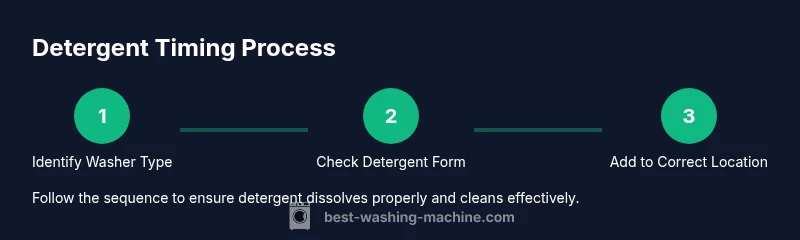
Before you start, verify three key things: your washer type (front-load or top-load), the detergent form (powder, liquid, or pod), and the load soil level. Check the detergent label for dosage and timing guidance, and ensure the correct dispenser compartment is selected. If you’re using a pod, confirm that your model supports pod usage in the drum or dispenser as intended. If you have hard water, you may need slightly more detergent or a pre-dissolving step to ensure complete dissolution. Finally, review the fabric care labels on garments to choose the appropriate wash cycle and water temperature, as these settings influence how quickly detergent dissolves and cleans.
Care, Maintenance, and Reducing Residue
Residue and odor can occur when detergents aren’t dissolved properly or when too much product is used. Regularly clean the detergent dispenser by removing drawers and rinsing with warm water to prevent buildup. If you notice suds lingering after a cycle, run an extra rinse with no clothes to flush residues. For HE washers, keep to the recommended dose and avoid adding extra detergent for smaller loads. This routine maintenance helps preserve machine efficiency and fabric appearance, while also reducing the risk of soap scum accumulating in hoses and gaskets.
Maximizing Efficiency: Water Hardness and Dose
Water hardness influences how much detergent is needed to achieve effective cleaning. In hard water, you may require a slightly higher dose or a detergent designed for hard water to avoid leaving minerals on fabrics. Conversely, soft water often cleans efficiently with smaller amounts. Always start with the label’s guidance and adjust only slightly based on your water quality. Consider running a calibration rinse on occasion to ensure the dispenser is delivering the correct amount. By aligning detergent timing with load type, soil level, and water hardness, you maximize cleaning power while conserving resources.
Tools & Materials
- Detergent (HE if your washer is HE)(Use the amount recommended on the label; measure with a cap or cup)
- Measuring cup or cap(Accurate dosing prevents residue and wasted product)
- Washer manual(Model-specific drawer locations and timing rules)
- Stain pre-treatment (optional)(For tough stains before washing)
- Water hardness test strips (optional)( Helps tailor dosage for very hard water)
Steps
Estimated time: 25-40 minutes
- 1
Identify washer type and detergent form
Check whether your machine is front-load or top-load and confirm whether the detergent is powder, liquid, or a pod. This determines where you add it and how it should dissolve. Review your detergent label for any special preparation instructions.
Tip: If you’re unsure about dispenser labels, take a quick photo of the drawer before removing to ensure correct placement. - 2
Read the detergent label for dosage and timing
Follow the label’s recommended dosage and timing. Some detergents require pre-dissolving or a specific order in the cycle. Adhering to directions reduces residue and improves cleaning efficiency.
Tip: Dosing too little can leave clothes dull; dosing too much can cause residue and extra suds. - 3
Prepare the load and optional pre-treat
Sort by fabric type and soil level. Apply stain treatment only to areas that require it, and ensure items aren’t overloaded. Heavier soils may benefit from a pre-dwash if your machine supports it.
Tip: Heavy items should have room to move; overcrowding prevents detergent and water from circulating properly. - 4
Add detergent to the correct location
Place powder in the Main Wash drawer, liquid in the variable dispenser as instructed, or place a pod in the drum if your model supports pods. Do not place detergent in the Softener compartment.
Tip: For cold-water cycles, consider pre-dissolving powder in a small amount of warm water to avoid clumping. - 5
Start the main wash with appropriate settings
Choose the appropriate cycle and water temperature for the fabric and soil. Start the load and monitor for unusual suds; if excessive foam appears, stop and run a rinse cycle before continuing.
Tip: Cold water helps preserve fabrics, but some stains release better with warm water—balance accordingly. - 6
Finish, inspect, and cleanup
Once the cycle completes, remove clothes promptly and wipe down the detergent drawer. Run a quick rinse on the drawer if you notice any buildup. Store detergents away from reach of children and pets.
Tip: Regular drawer cleaning prevents residue buildup that can affect future cycles.
FAQ
Should I put detergent in before loading clothes?
Yes, in most cases, add detergent before the main wash. This ensures even distribution and effective cleaning. Always follow your machine’s instructions and the detergent label.
Yes. Add detergent before the main wash, following your machine’s instructions and the detergent label.
Can I put detergent directly on stains?
Detergent should be applied via the dispenser or drum as directed. Direct application to stains may not dissolve evenly and could spread soil. For stains, pre-treat with a stain remover or the detergent itself as recommended by the label.
Avoid putting detergent directly on stains; pre-treat as advised by the product label.
What’s the difference in timing for front-load vs top-load?
Front-load and top-load washers differ in how they distribute detergent due to water use. Front-loaders usually use a detergent drawer for the main wash; top-loads may vary by model. Always follow the model’s guidance and detergent instructions.
Front-loaders typically use a drawer for the main wash; top-load models vary, so follow your model’s guidance.
Are laundry pods safe for all washers?
Pods are convenient but only if your model supports them as instructed by the manufacturer. Ensure you place them per the manual and keep them out of reach of children and pets.
Only use pods if your model supports them as directed by the manual.
How much detergent should I use for a small load?
Always follow the detergent label for small loads. In general, you’ll use less than a full cap or scoop; adjust for soil level and water hardness as needed.
Follow the label for small loads; adjust for soil and water hardness.
What should I do if there’s residue after washing?
Run an extra rinse cycle with no clothes, and clean the detergent dispenser. Ensure you’re using the correct detergent type and amount for your machine.
If residue appears, run an extra rinse and clean the dispenser.
Watch Video
The Essentials
- Follow detergent label guidance for dosage and timing.
- Know your washer type to place detergent correctly.
- Avoid overloading and improper drawer use to prevent residue.
- Regular dispenser maintenance reduces buildup and improves performance.