Average Size of Washing Machine: Dimensions, Space, and Tips
Explore the average size of washing machines, including typical width, height, and depth by type. Learn how to measure your space, compare front-load and top-load footprints, and choose the right model for your home with practical, data-driven guidance.


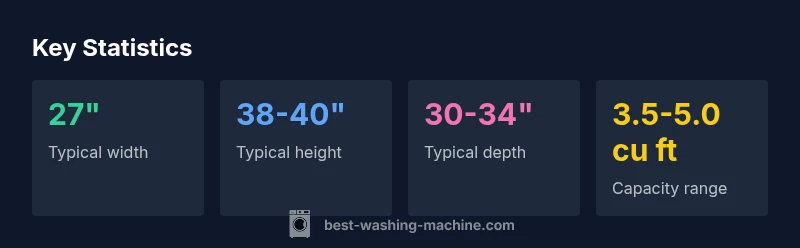
The average size of a washing machine isn’t a single fixed measurement; it varies by configuration. In U.S. homes, the practical baseline for a standard full-size washer is about 27 inches wide, 38–40 inches tall, and 30–34 inches deep. These core dimensions provide a reliable starting point for space planning, door clearance, and installation budgeting. Exact sizes differ by brand and model, especially between front-load and top-load configurations.
What 'average size' means for washing machines
There isn’t a single universal measure labeled as the ‘average size’ for washers. Instead, buyers reference a practical midpoint that fits most living spaces while delivering dependable cleaning performance. The Best Washing Machine team notes that the footprint is typically described by three core dimensions: width, height, and depth, plus the capacity per load. In the United States, traditional full-size washers usually fall around 27 inches wide, with heights near 38-40 inches and depths about 30-34 inches. These dimensions create a workable baseline for floor plans, closet spaces, and doorway clearances. However, exact figures vary by configuration (front-load versus top-load) and by whether you plan to stack a dryer. When sizing a washer, map your space first, then compare model specs using the same dimensional references. This approach aligns expectations with the actual average size you’ll encounter in typical homes.
Dimensions by model type: front-load vs top-load
Front-load washers are often designed to be compact in footprint while delivering large drum volumes, resulting in a similar width to top-loads but often a different height and depth. A typical front-load might be 27 inches wide and 39-41 inches tall with a depth around 30-34 inches. Top-load machines generally share the same width but can vary more in height depending on agitator design and lid configuration, commonly ranging from 38 to 42 inches tall. The key takeaway is that width tends to converge near 27 inches, while height and depth diverge by type and feature set. While these are common ranges, always verify the exact numbers on the product page because a single model can shift a few inches in either direction.
How capacity relates to footprint and energy use
Capacity, measured in cubic feet, is a separate dimension from footprint but is often discussed in tandem with size. Most residential washers offer a capacity of roughly 3.5 to 5.0 cu ft. Higher-capacity machines are typically larger in depth or height, but advances in drum design (large-diameter, horizontal axis) have allowed some 4.0–5.0 cu ft models to stay within standard 27-inch widths. As a rule, larger capacity tends to come with a larger footprint, but the relationship is not perfectly linear. When choosing, balance the need for bulkier loads against the space you have, and consider energy and water use labels to understand long-term operating costs.
Size considerations for small spaces and apartments
In tight spaces, compact or 24-inch-wide washers become a practical choice. These models typically measure 23.5–24 inches in width, about 33–34 inches in height, and 25–28 inches in depth. While they fit narrow gaps, they often have smaller drums and load capacities, which means more frequent cycles for larger households. If you expect to stack the washer with a dryer, verify stacking compatibility and allow for hinge clearance and venting or hose connections. For renters and small apartments, these compact footprints can be the difference between a functional laundry area and a cramped corner.
How to measure your space accurately
Before shopping, measure the space where the washer will sit: width, height, and depth (W x H x D). Leave at least 1–2 inches of clearance on all sides for ventilation and hoses, and check door swing space if the unit opens into a hallway or closet. Don’t forget to measure the nearby dryer’s footprint if you plan to stack. Record the measurements and compare them against the model’s stated dimensions on the product page. For shared laundry rooms, include a buffer for access and maintenance space. Finally, add a small margin for hoses and connections—these can add a few extra inches in practice. A careful measurement plan prevents buying a model that won’t fit in your home.
The role of pedestals, stacking kits, and add-ons
Pedestals and stacking kits can alter both the perceived and actual footprint of a washer. Stacking a dryer adds height but can reduce footprint clarity by elevating the drum access. Pedestals add storage height and can slightly change the base footprint. When planning, account for the additional clearance these accessories require and ensure you have a stable, level surface. If noise and vibration are concerns, consider anti-vibration pads and proper leveling to maintain performance without increasing space needs. Always verify compatibility with the specific model and any approved add-ons before purchase.
Choosing the right size for families and households
Families that regularly wash full loads may benefit from mid-to-large capacity models (4.0–5.0 cu ft) even if the physical footprint is similar to smaller units. A higher capacity can reduce the number of cycles per week, saving time and energy in the long run. For households with limited laundry space, a compact 24-inch model with a reasonable capacity can be a viable compromise, especially when paired with a front-load configuration that stacks nicely with a dryer. Wherever possible, test the door opening, drum access, and maneuvering space to ensure that the chosen size feels comfortable and practical in daily use.
Maintenance impacts on apparent size and performance
Maintenance tasks such as routine cleaning, hose checks, and drum hygiene can impact performance and perceived efficiency, which sometimes affects perceived size through consistent loading. A well-maintained washer runs more efficiently and is less likely to require oversized models for the same laundry load. Regularly checking seals, gaskets, and door latches helps preserve the unit’s true footprint by preventing unexpected mobility or vibrations that could complicate placement. Always follow the manufacturer’s maintenance schedule to keep dimensions and performance aligned with your expectations.
Practical decision framework: quick-check rubric
Use this framework to decide on size quickly:
- Measure space precisely (width, height, depth) and check door clearance.
- Define daily load size and frequency to determine capacity needs.
- Choose a model type (front-load vs top-load) based on space and stacking plans.
- Verify exact dimensions on product pages and retailer specs.
- Consider accessories (pedestals, stacking kits) and their added footprint.
- Review energy and water-use labels to estimate long-term costs.
Size footprint by common washer types
| Model Type | Typical Width (in) | Typical Height (in) | Typical Depth (in) | Typical Capacity (cu ft) |
|---|---|---|---|---|
| Top-load standard | 27 | 38-42 | 30-34 | 3.5-4.5 |
| Front-load | 27 | 39-41 | 30-34 | 4.0-5.0 |
| Compact 24-inch | 24 | 32-34 | 24-28 | 2.2-2.8 |
FAQ
What is the standard width of most washers?
Most residential washers are designed around a 27-inch width, though compact models exist at 24 inches. Always check the spec sheet for exact numbers.
Most washers are about 27 inches wide, but always check the exact specs.
Do front-load and top-load washers share the same footprint?
Not always. Front-load models can be deeper and may require more clearance at the back, while top-loads often have similar width but may vary in height depending on agitator and lid design.
Front-loads are usually a bit deeper; top-loads can vary in height.
Can I fit a 24-inch wide washer in a tight space?
Yes, compact 24-inch models exist for tight spots, but they typically offer less capacity and may require more frequent cycling.
There are 24-inch models, but they hold less and you may need more loads.
How does capacity relate to physical size?
Capacity measures how much laundry a machine can handle per cycle. Larger capacities often imply a larger footprint, but the relationship isn’t perfect; design choices can influence footprint without large increases in drum size.
Capacity and footprint aren’t perfectly tied; check the model specs.
Are compact washers good for families?
Compact washers work well in tight spaces or smaller households, but you may need more cycles to handle heavy loads.
Compact can work for small families, but you’ll load more often.
What should I measure before buying?
Measure width, height, depth, and ensure door swing clearance and hose access. Leave a little extra space for hoses and venting.
Measure your space and door clearance first, then check the model specs.
“Sizing a washing machine isn’t just about capacity; it’s about the footprint, door clearance, and hoses. A thoughtful layout prevents buying a model that won’t fit your space.”
The Essentials
- Measure your space before shopping.
- Front-load vs top-load footprints differ; verify dimensions.
- Compact washers fit small spaces but may have lower capacity.
- Always read exact product specs for precise dimensions.
- Consider stacking kits and pedestals when planning space.