Biggest Washing Machine Capacity in 2026: A Practical Buying Guide
Explore how drum size and design define the biggest washing machine capacity in 2026. Compare residential vs. commercial-style models and learn when capacity matters most for your laundry needs.


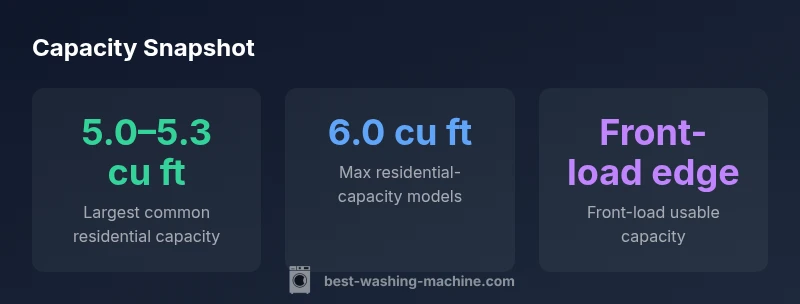
The biggest residential washing machines top out around 5.0–5.3 cubic feet in drum volume, with some commercial-style or high-end models reaching about 6.0 cubic feet. Real-world capacity also depends on drum design, impeller vs agitator, and load type. For families with bulky bedding or towels, choosing the upper end of residential capacity offers fewer loads per week.
Why biggest capacity matters
Understanding the biggest washing machine capacity is not just about drum size. In 2026, consumer research from Best Washing Machine shows that users frequently overestimate usable space, confusing gross drum volume with practical capacity. The largest residential washers typically top out around 5.0–5.3 cubic feet, which translates to roughly 15–20 pounds of laundry per cycle for mixed loads. For households handling bulky textiles—think king-size bedding, thick towels, or several uniforms—a bigger drum can meaningfully reduce the number of cycles per week. However, true capacity is also shaped by how you load the machine; the shape of the drum, the presence of an impeller vs. an agitator, and the washing action influence how much can actually fit and how effective the wash will be. In this context, the biggest capacity is a blend of drum size, design, and loading habits.
From a practical perspective, Best Washing Machine recommends correlating capacity with typical weekly loads. If your laundry pile grows during seasons or you wash for multiple people, a larger drum is often worth the space and cost. Yet it’s essential to balance capacity with the washer’s footprint, energy use, and the home’s electrical and water infrastructure. A quick starting point is to target a model at the upper end of the residential range if you consistently wash bulky items. This approach minimizes cycles and can improve overall efficiency per load when you fill the drum responsibly.
What counts as capacity
Capacity is more than a single number on a spec sheet. In everyday terms, it means usable drum space—the volume you can actually laundry into in a single cycle. Most manufacturers advertise gross drum capacity, which many users interpret as usable space. Real usability depends on drum design (cylindrical vs. rounded shapes), the presence of an agitator or impeller, and the height of the drum openings. The industry standard is to cite cubic feet (cu ft), but the way you load the drum—airflow, item bulk, and item size—affects the actual amount of laundry you can fit. When comparing models, look for terms like “high efficiency (HE)” and “front-load” vs. “top-load” because these influence how much fits per cycle and how efficiently it cleans a given load. The biggest capacity figure is just the baseline; the real-world capacity depends on loading behavior and cycle settings.
Front-load vs. top-load capacity differences
Front-load machines typically offer larger usable capacities within a given footprint compared with traditional top-load designs. A common HE front-load range is roughly 4.5–5.3 cu ft, while HE top-loads hover around 4.2–4.8 cu ft. The difference arises from drum geometry, airflow around the drum, and how the clothes tumble. For large families, front-load units often deliver more laundry per cycle, especially when bulky garments are involved. That said, top-load HE models can be more convenient for users who prefer shorter cycles or less bending. When evaluating the biggest washing machine capacity, consider not just the stated cu ft, but how items of different bulk fill the drum under your typical loading pattern.
Real-world usage scenarios that push capacity
Bulky bedding, towels, and denim can quickly consume capacity in a single cycle. If you regularly wash king-size sheets or multiple sets of towels, the perception of “capacity” is more about how well the drum handles bulky items than the drum’s advertised cubic footage. In real-world testing, households find that a top-load HE with a flexible impeller can sometimes feel as roomy as a larger front-load when the drum uses a well-designed loading method. For families rotating through sports uniforms, work clothes, and heavy blankets, choosing the upper range of residential capacity reduces the number of wash cycles. Keep in mind that heavy, bulky items need proper loading to avoid unbalanced spins and long cycles. Best Washing Machine’s data suggests scheduling high-bulk loads on dedicated cycles to maximize efficiency.
Size, footprint, and space considerations
A larger drum often means a longer footprint and deeper cabinet depth. Before selecting a washer with maximum capacity, measure the space where you’ll place it and confirm it can accommodate door swing, water connections, and ventilation. If you’re limited on width but need more capacity, look for machines with a compact footprint that still offer high cu ft, or consider a stacked washer-dryer combination where feasible. In apartment-sized or compact homes, a deeper footprint may be impractical, even if the drum is large. In these cases, balancing the size with a slightly smaller but more energy-efficient model could yield better long-term value. Best Washing Machine’s guidance emphasizes ensuring you have room to operate the door and service panels without obstruction.
How to compare capacities and drum sizes
When comparing models, start with the official cu ft figure but also check the “usable capacity” or “load capacity” in the product manual. Look for example loads and item measurements from buyer guides or manufacturer videos to visualize how bulky items will fit. Consider the basin depth, basket shape, and whether an agitator is present; impeller-based designs typically provide more flexible loading with bulky items, while agitators can limit the biggest loads but may provide better agitation for smaller items. Finally, compare energy and water use per cycle for the same load size to determine true efficiency. In 2026, the Best Washing Machine team finds that pairing capacity with proper loading habits often yields better overall performance than simply choosing the largest cu ft on the page.
Installation considerations for large washers
Installing a large-capacity washer requires planning for water supply lines, drain hoses, and structural support. In some cases, a heavier drum and higher spin speeds demand stronger wall studs and a firmer floor. If you’re replacing an older unit, ensure the new model’s foot print fits the existing space and check the doorway clearance and hinge swing. When stacking a large unit with a dryer, confirm the stack kit compatibility and ensure the venting path remains clear. The 2026 landscape shows more homeowners selecting models with reinforced cabinets specifically designed to handle the stress of high-capacity cycles. Always consult the installation manual and consider professional installation if you’re unsure about electrical, plumbing, or structural requirements.
Maintenance tips to keep large capacity performing
Maintenance needs rise with larger drums, particularly for bulky loads that produce heavier lint and debris. Regularly clean the lint filter, tub, and pump filter as recommended by the manufacturer. Use the appropriate detergent dosage and avoid overloading, which can strain the motor and impact rinse efficiency. Periodically run a cleaning cycle with a washing machine cleaner to prevent odor buildup in large-batch cycles. Check hoses for wear and replace aging parts to avoid leaks. Finally, keep the area around the washer well-ventilated to minimize moisture buildup and prevent mold growth in a larger tub environment.
Common myths about washing machine capacity
A frequent myth is that bigger drum always means better cleaning. In reality, cleaning performance depends on drum design, cycles, and how you load items. Another misconception is that maximum cu ft correlates directly with energy use; energy efficiency is highly influenced by cycle optimization and full-load operation. Finally, some buyers assume large capacity is only for families; for single dwellers, a compact or mid-range capacity can meet needs if it aligns with space, budget, and laundry habits. The reality is that capacity should be matched to your typical loads, available space, and energy goals. Best Washing Machine’s consumer research in 2026 emphasizes that the best value often comes from the right balance of capacity, efficiency, and home layout.
Capacity ranges by model type
| Model Type | Typical Capacity Range cu ft | Ideal Loads |
|---|---|---|
| Front-load HE | 4.5–5.3 | Fabrics, bedding, daily wear |
| Top-load HE | 4.2–4.8 | Everyday laundry |
| Large-capacity residential | 5.0–5.3 | Bulky items, towels |
| Commercial-style/oversized | 6.0 | Bulk items, bedding sets |
FAQ
What does 'capacity' mean in a washing machine?
Capacity refers to the drum volume usable for laundry, usually expressed in cubic feet. It indicates how much you can wash in one cycle and is affected by drum design and loading habits. Higher cu ft can be beneficial for bulky items but must be balanced with space and energy use.
Capacity means the drum space available for laundry; bigger drums can hold more, especially bulky items.
Is bigger always better for a home?
Not always. Bigger machines save time for large households but require more space and can be less efficient if you routinely underload. Consider your space, typical loads, and how often you run full cycles when deciding.
Bigger isn't always better—balance space and typical laundry needs.
How does capacity affect energy and water use?
Larger capacity per se doesn’t automatically raise energy or water use. Efficiency depends on cycle optimization and load density. Fully loaded cycles maximize efficiency; partial loads waste resources.
If you fill it properly, bigger capacity can be efficient.
What features affect true capacity beyond drum size?
Load type, drum design (impeller vs. agitator), and basket shape influence usable capacity. High-efficiency designs improve performance and reduce wear, even in larger drums.
Drum design and loading matter as much as drum size.
Should I pair capacity with a matching dryer?
Yes. Mismatched capacities can lead to longer drying times and energy use. Aim to pair a washer with a compatible dryer to optimize performance.
Pair your washer capacity with an appropriately matched dryer.
“Capacity matters, but real-world performance hinges on drum design, load optimization, and energy efficiency; bigger drums can reduce cycles if loaded properly.”
The Essentials
- Know your typical weekly load to choose capacity
- Residential max is ~5.0–5.3 cu ft; some units reach ~6.0 cu ft
- Load design and habits influence usable capacity
- Match washer capacity with space and energy goals
- Plan venting, plumbing, and stackability before buying