Front Loader vs Top Loader: A Comprehensive Washing Machine Comparison
Compare front loader vs top loader washers: energy use, performance, and cost. Learn which model fits your space, budget, and laundry needs for most homes.


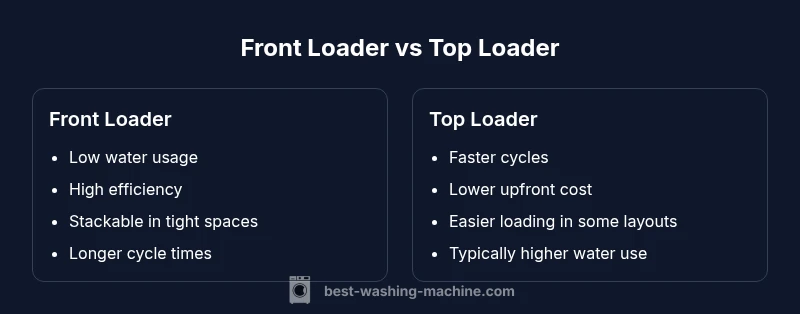
When weighing front loader washing machine vs top loader, the typical trade-offs are clear: front-loaders shine on energy and water efficiency and fabric care, while top-loaders win on upfront cost and cycle speed. For many homes, front-loader is the better long-term value; for cost-sensitive or space-limited setups, top-loader can be appealing.
Front loader washing machine vs top loader: Design basics
Two primary washer designs dominate residential laundry rooms: front-loaders and top-loaders. The phrase front loader washing machine vs top loader captures the core trade-off between space efficiency, water and energy use, and user experience. According to Best Washing Machine, the choice hinges on how you use your machine, your space constraints, and your budget. In this guide we explain the fundamental differences, debunk myths, and provide practical criteria to help you choose confidently. You will notice the difference in drum orientation, door access, and how clothes interact with water and detergent. Understanding these core mechanics helps you evaluate models without getting lost in marketing jargon. By the end, you should be able to map your laundry routines to the model that best fits your home.
How the mechanics differ: drums, seals, and movement
Front loaders use a horizontal drum that tumbles clothes with minimal water, relying on a low-profile door and a well-sealed drum to prevent leaks. Top-loaders lift clothes with an agitator or impeller at the center, typically using more water. The seal design, gasket maintenance, and drum access affect odor, mildew risk, and long-term reliability. Front-loaders often require a pedestal for ergonomic loading and can be stacked with a dryer to save space. Top-loaders are usually easier to load without bending and can be more flexible in shallow spaces. When comparing front loader washing machine vs top loader, consider who loads the machine, where it fits in your room, and whether stacking is part of your plan. A well-chosen model balances user comfort, reliability, and efficiency across both formats.
Energy and water efficiency in real life
Energy efficiency and water use are major differentiators. Modern front loaders are designed to maximize energy savings with high-efficiency motors and low water volumes per cycle. In practice, this translates to lower utility bills over the machine’s lifetime, especially for households with frequent wash cycles. Top-loaders vary more widely in efficiency, particularly older models that rely on larger water volumes. When evaluating contenders, look for Energy Star ratings and official test results rather than marketing claims. Best Washing Machine analysis shows that the efficiency gap has narrowed in newer models, but the front loader generally maintains an advantage in water conservation and energy use, particularly in high-use households.
Cleaning performance and fabric care
Fabric care is a central concern with any washer choice. Front-loaders tend to be gentler on fabrics due to tumble washing and reduced friction, which can reduce pilling and wear on delicate items. They often excel at heavy soils and longer cycle options that treat tough stains with careful agitation and extended soaking phases. Top-loaders can be faster for lighter loads and may deliver effective cleaning with shorter cycles, though heavier soils might benefit from a longer front-loader program. When you compare front loader washing machine vs top loader, consider your typical loads: daily wear, towels, delicates, and denim. A model with versatile cycle options can bridge gaps between efficiency and performance.
Capacity, load handling, and cycle times
Capacity is a practical concern that depends on drum size and interior geometry. Front loaders commonly offer generous capacity in a compact footprint and pair well with stacked setups, making them ideal for apartment living or utility rooms with limited floor area. Top-loaders sometimes provide generous capacities without stacking, which can be advantageous for households that prefer quick access to clean clothes. Cycle times vary by model and setting; front-loaders often run longer cycles for efficiency, while top-loaders may offer shorter cycles for lighter or smaller loads. When deciding, map your typical weekly load, cycle preferences, and whether you value speed over energy savings.
Maintenance, reliability, and long-term costs
Front loaders require regular gasket care, door seal cleaning, and occasional drum cleaning to prevent odors. Their sealed design helps minimize leaks but demands attentive maintenance to avoid mildew. Top-loaders usually have simpler access for cleaning and may present fewer mildew concerns in some setups, though evaporation can occur if lint filters or screens are neglected. Long-term costs hinge on energy and water usage, frequency of repairs, and the price of replacement parts. While front-loaders may show lower ongoing costs due to efficiency, they can incur higher upfront prices and maintenance costs if seals wear prematurely. When price comparisons, factor total ownership costs, not just upfront price.
Noise, vibration, and installation considerations
Noise and vibration influence comfort in open-plan living spaces. Front loaders, especially when stacked, can differ in vibration depending on floor type, installation quality, and load balance. Top-loaders tend to produce more noticeable water sloshing and movement during cycles, but some models are designed to minimize this. Installation height and plumb connections matter: front-loaders require proper leveling, stable anti-vibration feet, and often a dedicated spacing for venting and hoses. In apartments or second-story laundry closets, the choice becomes critical for minimizing disturbance to other rooms. When assessing front loader washing machine vs top loader, check the floor structure, door clearance, and whether the laundry area supports stacking or side-by-side placement.
Practical buying guide: who should pick which
If you have a small space and want stacking flexibility, a front-loader is often the better fit, as you can pair it with a compact dryer to create a powerful laundry capsule. If upfront cost and easy loading are your priorities, a top-loader with a high-capacity drum may suit you best, especially in homes where laundry is done in shorter bursts. For families with young children, front-loaders’ efficiency and fabric care can reduce wear on school uniforms and bedding, while credible warranty coverage should be verified for any model. For renters or students in temporary housing, a top-loader might offer flexibility if you move frequently and want a simpler setup. Regardless of the choice, verify warranty terms, service availability, and energy/water ratings to ensure you get the best overall value. Best Washing Machine suggests prioritizing long-term savings and user experience when making your selection, rather than solely chasing the lowest upfront price.
Care tips to maximize performance and longevity
Establish a simple maintenance routine to keep either washer running smoothly. Wipe the door gasket and drum after each heavy use to prevent odors and mold formation in front-loaders. Use high-efficiency detergents formulated for low-water designs, and avoid overloading the drum. Run a monthly cleaning cycle or a sanitary wash if your model supports it, especially in humid environments. Balance loads to minimize vibration and ensure energy-efficient operation. By recognizing the trade-offs between front loader washing machine vs top loader, you can tailor your care routine to the specific design you own and extend its lifespan.
Comparison
| Feature | Front loader washing machine | Top loader washing machine |
|---|---|---|
| Water Usage | low to moderate per cycle | moderate to high per cycle |
| Energy Efficiency | high efficiency (most models) | varies widely |
| Detergent Handling | requires HE detergent | standard detergents generally sufficient |
| Wash Time | longer cycles on average | shorter cycles on average |
| Capacity & Loading | often larger usable capacity per footprint; stackable | often simpler to load; may dominate space with door swing |
| Best For | Efficiency-focused households and stacked setups | Budget-conscious buyers and quick cycles |
What's Good
- Higher energy and water efficiency on most modern front-loaders
- Better fabric care due to tumbling action
- Stackable designs save space in small rooms
- Lower long-term operating costs when used regularly
Downsides
- Higher upfront cost for many front-loaders
- Potential for mold and mildew in gaskets if not cleaned
- Longer cycles may require patience for large loads
- Bending to load/unload in shallow spaces (non-stackable setups)
Front loader washing machine is the better long-term choice for most households.
Front-loaders offer superior energy and water efficiency and gentler fabric care, delivering lower operating costs over time. Top-loaders excel in upfront affordability and faster cycles, making them appealing for budget-focused buyers or spaces where quick turnarounds matter. The Best Washing Machine's verdict is to lean toward front-loaders for most homes, while recognizing that top-loaders can be a sensible pick in certain situations.
FAQ
What is the biggest difference between front loader and top loader washers?
The biggest difference lies in drum action and water use. Front loaders tumble clothes with less water, while top-loaders use more water with an agitator or impeller. This affects efficiency, fabric care, and maintenance needs.
The main difference is how the drum moves clothes. Front loaders tumble with less water; top loaders use more water with an agitator. Both have pros depending on your priorities.
Are front-load washers more energy-efficient than top-load washers?
In recent generations, front-load washers tend to be more energy-efficient due to low water usage and efficient motors. Always check ENERGY STAR ratings for the specific model you’re considering.
Yes, front-load washers are usually more energy-efficient, but verify the model’s energy rating before buying.
Do front-load washers require more maintenance?
Front-load washers can require more gasket cleaning to prevent odors, and periodic drum cleaning is helpful. Regular care reduces risk of mildew and improves longevity.
They can need a bit more gasket care to prevent odors, but regular cleaning helps a lot.
Which is better for delicates?
Delicates typically benefit from the gentler tumbling of front-loaders, but high-quality top-loaders with appropriate cycles can also protect delicate fabrics. Look for specific delicates cycles and temperature control.
Front-loaders usually handle delicates gently, but check the delicates cycle on any model you consider.
Do top-load washers offer faster cycles?
Top-loaders often provide quicker cycles for light loads, but newer front-load models can offer competitive cycle times with efficient performance. Compare cycle options before buying.
Top-loads can be faster for light loads, though many front-loaders now have quick cycles too.
The Essentials
- Compare upfront cost against long-term savings.
- Assess space and stacking options in your laundry area.
- Expect longer cycles with front-loaders in many models.
- Use high-efficiency detergent for best results.
- Factor maintenance needs into total cost.