Is a Washing Machine the Same Size as a Dishwasher? A Side-by-Side Guide
Explore whether a washing machine is the same size as a dishwasher. This analytical side-by-side guide covers footprints, installation, and space planning for kitchens and laundry areas.


Is a washing machine the same size as a dishwasher? In most homes the answer is no. Washers are typically taller and deeper than dishwashers, though the width can be similar for some models. This quick comparison highlights the key footprint differences and how they affect kitchen or laundry room layout. The distinction matters for planning plumbing, cabinetry, and door clearance, especially in small spaces where every inch counts.
Footprint realities: height, width, and depth
Understanding the physical footprint of appliances is essential when planning a kitchen remodel or laundry area. The question is often framed as whether a washing machine the same size as a dishwasher fits side by side, but the short answer is that the two appliances have different footprints that reflect their primary tasks. In practice, a washer typically occupies more vertical space and deeper clearance to allow drum movement, while a dishwasher emphasizes a shorter depth and accessible door height for loading dishes. The footprint alone influences door swing, plumbing access, and cabinetry adjustments, so measuring before you buy is non-negotiable. According to Best Washing Machine, many households underestimate the impact of depth and clearance, especially when locating a washer next to a wall or under a countertop. When you start the planning process with precise measurements, you can avoid costly remodels and ensure comfortable loading and unloading for daily use. If you’re trying to optimize a tight space, consider whether a compact or under-counter option is feasible, and remember that the goal is a comfortable, efficient workflow rather than just matching widths. This is precisely why many homeowners ask: is a washing machine the same size as a dishwasher, and what does that mean for their space?
Standard sizes and common configurations
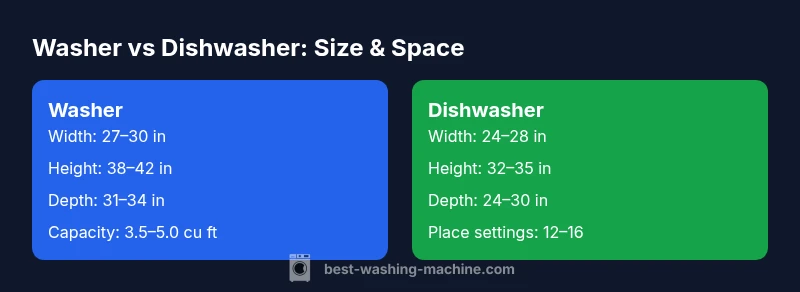
Most residential washers are designed around standard widths that range around 27 inches, with heights roughly 38-42 inches and depths around 30-34 inches. Dishwashers typically run a similar width in many models but are shallower and shorter, often 24-28 inches wide, 32-35 inches tall, and 24-30 inches deep. The result is that, while some models may share the same width, the overall volume and how the appliance fits into a space can differ substantially. The question is the phrase "is a washing machine the same size as a dishwasher" rarely applies to real installations because the differences in height and depth affect cabinet design, ventilation, and floor clearance. The Best Washing Machine team notes that if you’re renovating a kitchen to accommodate both appliance types, you may need to alter countertops or erect a raised platform to ensure door clearance and ergonomic loading. Additionally, consider that front-load washers often present different access angles than top-load variants, which can influence how you arrange nearby cabinetry and utilities. For most buyers, the key takeaway is that size compatibility is less about the label and more about the actual dimensions available in your space.
Plumbing, venting, and service access
Where a dishwasher connects to hot water lines and a disposal or drain differs from a washer’s dedicated drain and cold-water supply. The layout needed for a dishwasher often prioritizes under-sink plumbing access and a nearby vent or waste line, while the washer requires a robust water inlet and an unobstructed standpipe for drainage. If you’re comparing is a washing machine the same size as a dishwasher, you’ll notice the plumbing footprint can diverge even when widths look similar. In tight kitchens, it’s common to need new shutoff valves, larger supply lines, or repositioned cabinetry to create the required service clearance. The Best Washing Machine analysis emphasizes planning for future service access—leaks, hose changes, and filter maintenance—so that space remains usable over time rather than becoming a cramped bottleneck.
Installation spaces and door swing
Installation space is about more than width and height; door swing clearance and hinge placement influence how you can open the appliance without colliding with cabinets, walls, or pantry doors. A typical washer door may require a full 90-degree swing, while a dishwasher door often needs clearance in front of a sink or toe-kick area. If you’re evaluating space for both appliances in a shared laundry-kitchen zone, you might align the widths but still need to account for different door arcs and the space needed to pull out the racks. This distinction also affects how you position neighboring furniture, such as a countertop peninsula or a base cabinet, to maximize workflow. Careful measurement now saves rework later.
Capacity and loading differences
Capacity for washers is measured in cubic feet, while dishwashers use place settings as a proxy for load capacity. A common 27-inch-wide washer might offer 3.5–5.0 cu ft of drum space, translating to bulky items like comforters or sheets, while a standard dishwasher handles roughly 12–16 place settings per cycle with varying rack configurations. The footprint difference often means a washer requires a deeper cabinet cavity than a typical dishwasher, which can influence countertop depth and base cabinet design. If your kitchen or utility room must accommodate both appliances, you’ll need to plan storage and loading zones carefully to maintain efficient operation without compromising vertical or horizontal space.
Energy use and water considerations
From a consumption standpoint, washers and dishwashers operate on different scales, and energy labels reflect this. In many households, a typical washer uses more water per cycle than a modern dishwasher, but cycle options and engineering advancements have narrowed gaps. When you consider is a washing machine the same size as a dishwasher, you should also compare energy star ratings, standby consumption, and the impact of load size on efficiency. The Best Washing Machine Team points out that choosing the right cycle and load size for each appliance can yield meaningful savings, especially in smaller homes where every gallon and watt counts. Plan for a shared electrical circuit and dedicated outlets to avoid tripping breakers during heavy-use periods.
Practical layout scenarios for kitchens and laundry rooms
In practice, many homes dedicate distinct zones for laundry and dish washing, even when the two appliances share a generic width. For example, a small kitchen with a stacked option and a separate laundry alcove might place a compact washer in a full-height cabinet while the dishwasher sits beneath a counter with a front panel that matches cabinetry. When you’re weighing is a washing machine the same size as a dishwasher, think about door clearance, vibration isolation, and access to the detergent and cleaning supplies. A practical rule of thumb is to maintain a buffer around both appliances for service access and routine maintenance. In more open-plan layouts, you can unitize both appliances into a single appliance wall with mirrored cabinetry to create a cohesive look while preserving functional gaps for cords, hoses, and ventilation.
Measure, plan, and budget: a step-by-step approach
Before you buy, map out the exact footprints on grid paper or a home design app. Start by marking the width of your washer and dishwasher, then add the required clearance on all sides, plus door swing space. Check the floor underneath for levelness and consider whether you’ll need a base or raised platform for ventilation and ease of use. Budget for installation costs, including plumbing adapters, electrical work, and potential cabinet adjustments. As you plan, revisit the central question: is a washing machine the same size as a dishwasher? The answer will guide how you configure access, positioning, and the sequence of any remodel steps.
Comparison
| Feature | Washing Machine | Dishwasher |
|---|---|---|
| Footprint size (width × height × depth) | Washer typically 27-30 in W × 38-42 in H × 31-34 in D | Dishwasher typically 24-28 in W × 32-35 in H × 24-30 in D |
| Capacity / load measure | Washer: 3.5–5.0 cu ft typical drum space | Dishwasher: 12–16 place settings per cycle |
| Installation considerations | Washer requires water supply, drain, and level floor clearance | Dishwasher requires hot water line, drain, and sink proximity |
| Energy and water use | Washer efficiency varies by model and load size | Dishwasher energy/water use improves with efficient cycles |
| Typical price range | Washer: $400–$1500 | Dishwasher: $350–$900 |
| Best for | Laundry tasks and larger diameter items | Dishes and cookware with organized racks |
What's Good
- Clarifies space planning between laundry and kitchen areas
- Helps budgeting by highlighting footprint differences
- Improves remodel decisions for small spaces
- Supports energy and water-use considerations
Downsides
- Footprint assumptions can vary widely by model, causing estimates to shift
- Some compact washers or dishwashers blur the line in widths
- Perceived trade-offs between capacity and dimensions may complicate design
- Door swing differences can complicate adjacent cabinet layouts
Dedicated sizing drives the best fit for each function
Washer footprints typically demand more vertical and depth clearance, while dishwashers favor shallower, counter-aligned spaces. Choose based on actual space and your primary use cases; if space allows, keep separate zones for laundry and dishes. The resulting workflow will be more efficient and less frustrating day-to-day.
FAQ
Is a washing machine the same size as a dishwasher in standard homes?
Not usually. Washers tend to be taller and deeper, while dishwashers are often shallower. The difference in dimensions shapes how you plan a space and install each appliance.
Washers are typically taller and deeper than dishwashers, which are usually shallower. This matters for how you lay out a kitchen or laundry area.
Can a washer fit under a counter like a dishwasher?
Some compact or front-load washers can fit under a counter, but many standard models require more vertical space. Check your cabinet height and door clearance.
Some compact washers can fit under counters, but many standard ones need more height. Measure carefully.
What should I measure first when planning space?
Start with width, height, and depth for both appliances, then add required clearance for doors and ventilation. Don’t forget plumbing and electrical clearances.
Measure width, height, depth, and door clearance first, then plan plumbing and power needs.
Are there space-saving options that combine washing and dishwashing tasks?
There are compact or apartment-size units, but true combined units are rare. In tight spaces, stacking or peninsula layouts can optimize flow while keeping dedicated zones.
Compact units can help, but true combo appliances are rare; stacking can save space.
Do energy and water use differ significantly between the two?
Yes, but improvements in models have narrowed gaps. Compare energy star ratings and cycle options for the specific models you’re considering.
Energy usage varies, but compare energy star ratings and cycles to estimate efficiency.
Where can I find installation guidelines for space planning?
Consult manufacturer manuals, local building codes, and a licensed installer for precise requirements and safety considerations.
Check the manuals and codes, and hire a pro if needed.
The Essentials
- Measure both appliances precisely before planning
- Account for door swing and service clearances
- Separate laundry and dish zones if possible
- Choose compact options only when space is severely limited
- Plan plumbing and electrical with future maintenance in mind