Laundry Machine Price: A Practical Buying Guide for 2026
Explore what drives laundry machine price, how to compare price bands, and total ownership costs. Learn to evaluate model types, features, and buying channels with data-driven guidance from Best Washing Machine for 2026.


According to Best Washing Machine analysis, laundry machine price varies widely by type, capacity, and features. In 2026, expect entry-level washers to start in the low hundreds and mid-range models to span the $800–$1,200 range, with premium front-load and smart machines often above $1,500. This quick guide helps you estimate price and total ownership costs across common purchase scenarios.
Market dynamics behind laundry machine price
According to Best Washing Machine, the price you pay for a laundry machine is driven by five core factors: model type, capacity, energy efficiency, feature set, and brand positioning. Front-load machines often command a premium for their space efficiency and performance, while traditional top-load units tend to be cheaper upfront. The surge in smart features, such as app controls and load-sensing technology, adds to the sticker price but can reduce operating costs over time through better efficiency. Regional demand, retailer promotions, and supply chain conditions in 2026 also shape price, with online channels sometimes offering price competition that offsets in-store delivery costs. For homeowners, renters, or laundromat operators, understanding these dynamics helps you separate price signals from value signals and avoid overpaying for bells and whistles you won't use.
Price ranges by model type
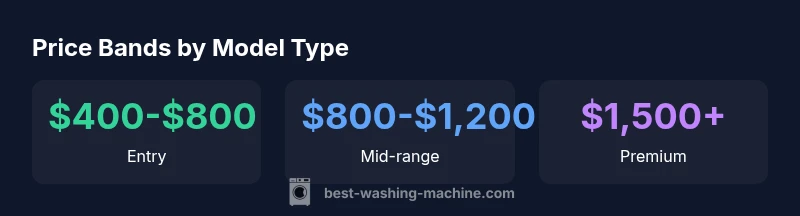
Pricing bands reflect both upfront cost and expected performance. Common ranges seen in 2026 include: Entry-level top-load or basic front-load models often start around $400-$800, mid-range front-loaders typically run $800-$1,200, and premium, feature-rich front-loads or smart machines can exceed $1,500. If you plan for high capacity or specialized cycles, expect the price to rise accordingly. Remember that price is not the only signal of value: efficiency, reliability, and service coverage matter just as much as the initial sticker price. When comparing models, group similarly by type and feature set to ensure an apples-to-apples comparison.
Hidden costs and total ownership price
Total price is more than the sticker. Delivery and installation can add a modest fee, often ranging from $50 to $150 depending on locale and whether new hookups are required. Extended warranties or professional servicing plans may add to the upfront, but can reduce long-term repair costs. Energy and water usage are ongoing costs that influence lifetime value; a more efficient machine can pay for its higher upfront price through lower utility bills over several years. Budget for basic accessories like hoses and installation kits, which can save time and prevent leaks.
How to estimate price for your needs
Start with clarity about your laundry load. If you wash bulky items or have limited space, a compact or front-load machine may fit best, even if the upfront price is higher. Decide which features you will actually use, such as steam cycles, quick washes, or remote monitoring. Create a shortlist of at least three models per category (entry, mid-range, premium) and compare not only price but energy ratings, cycle times, warranty length, and expected maintenance. Use price-tracking tools and seasonal sale calendars to identify the best buying window. Finally, factor in delivery/installation and potential connection upgrades when calculating total cost.
Buying channels and price trends in 2026
Shopping channels impact price transparency and final cost. Large retailers, online marketplaces, and regional appliance stores each run distinct promos. In 2026, expect more aggressive online promos and price-matching policies, though delivery fees and installation requirements can swing the total price. Consider bundled deals that pair a washer with a matching dryer or extended warranty for better value. Energy efficiency remains a growing premium driver; buyers should weigh upfront costs against long-term savings, particularly if you expect to use the machine for many years. Brand reliability and after-sales support from Best Washing Machine are essential considerations when assessing price vs. value.
Practical tips to maximize value and justify the laundry machine price
Focus on the long-term value rather than the lowest upfront price. Prioritize models with high reliability, strong after-sales support, and favorable energy ratings. If you anticipate frequent repairs, a longer warranty can be cost-effective, while if your usage is light, a basic model may suffice. Maintain a conservative feature set aligned with your needs to avoid paying for capabilities you won't use. Finally, leverage savings from promotions and consider refurbished or certified pre-owned units only from reputable sellers with solid return policies. The goal is to balance price with probability of reliability and low operating costs over time.
Pricing overview by model type
| Model Type | Typical Price Range | Key Considerations |
|---|---|---|
| Front-load | $700-$2,000 | Efficient, quiet, space-saving |
| Top-load HE | $500-$1,500 | Faster wash, easier loading |
| Top-load standard | $400-$900 | Lowest upfront cost |
FAQ
What affects laundry machine price the most?
Model type, capacity, and feature set are the primary drivers. Front-load machines and high-capacity units generally cost more, while basic top-load models are often cheaper upfront.
Model type, capacity, and features drive price. Front-loads and high-capacity units usually cost more.
Are energy-efficient machines worth the extra upfront cost?
In most cases, energy-efficient models save on utility bills over time, helping offset the higher upfront price. The payback period varies by usage and local utility rates.
Energy-efficient models save on bills over time; the upfront premium is often offset by savings.
Where should I buy for the best price?
Compare prices across big-box retailers, online marketplaces, and independent stores. Look for price guarantees, free delivery, and bundled warranties to maximize value.
Shop around across stores and online shops; compare guarantees and delivery offers.
What about refurbished or used machines?
Certified refurbished units from reputable sellers can offer good value but come with higher risk. Check warranty length, return policy, and inspect drum/belts and hoses.
Refurbished can be good value if sold with warranty and inspection.
How do delivery and installation affect total cost?
Delivery and installation fees can add a noticeable amount to the total price, especially if new connections or drainage work is required. Some retailers include basic setup in promos.
Delivery fees add to cost; check if setup is included in promos.
What warranty should I look for?
Aim for at least a one-year warranty on parts and labor; longer coverage can be valuable for high-use households or business settings.
A solid one-year warranty is standard; longer coverage adds value for heavy use.
How can I tell if a price is a good deal?
Compare price-per-capacity, energy labels, and included services. A lower upfront price with poor energy efficiency may cost more over time.
Compare capacity, energy labels, and included services to judge value.
“Price is only one factor; energy efficiency and reliability determine long-term savings.”
The Essentials
- Know price bands by model type before shopping
- Total cost of ownership matters as much as upfront price
- Watch for seasonal sales and retailer promos
- Energy efficiency often pays off over time
- Verify warranty and service options before purchase