LG Washing Machine Sizes: A Practical Guide to Fit Your Space
A comprehensive guide to LG washing machine sizes, covering width, height, depth, and capacity ranges, plus space-planning tips to help homeowners and renters pick the best model.


LG washing machine sizes range from compact 24-inch models to standard 27-inch units, with heights typically around 38–40 inches and depths in the 28–33 inch range. For space planning, start by measuring the width, height, and depth of your alcove, then account for door clearance, ventilation, and installation requirements. This quick point sets the frame for more detailed sizing decisions.
LG Washing Machine Sizes: Width, Height, and Depth Explained
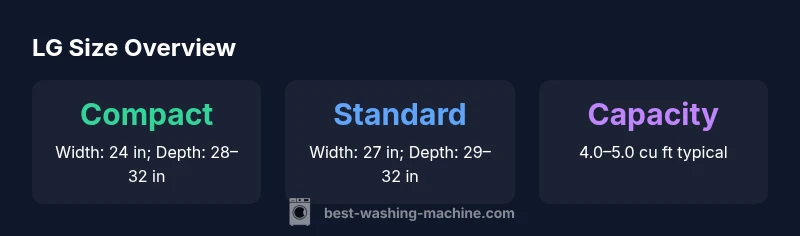
The most common LG sizes fall into two broad categories: compact 24-inch models and standard 27-inch units. Width determines how much horizontal space you’ll need, while height and depth influence clearance around the unit and door swing. For many households, the compact 24-inch width is ideal for laundry closets or tight corners, while the 27-inch standard width fits most traditional laundry rooms. In addition to width, pay attention to height and depth: typical LG front-load washers stand around 38–40 inches high and 28–33 inches deep, depending on whether the model is a standard under-counter type or a deeper, more feature-rich design. Understanding these dimensions helps ensure the new washer can be installed without modification and leave space for hoses, vents, and maintenance access. As you plan, remember that the actual usable space also depends on paneling or cabinetry, which can add a few more inches to the required footprint. According to Best Washing Machine, model families tend to cluster around these size bands, making it easier to compare alternatives side by side while ensuring a comfortable fit inside your home.
Measuring Your Space: How to Get a Clean Fit
Before you shop for LG, measure the three critical dimensions—width, height, and depth—with a fabric tape measure. For width, measure the widest point from wall to wall, including any overhangs from cabinetry or shelves. For height, consider the clearance above the unit, especially if a top shelf or venting system sits above the washer. For depth, measure from the back wall to the front edge of the door, then add space for door swing and the drain hose. Don’t forget to include clearance for hoses and electrical connections behind the unit. If you’re stacking a dryer above a washer, confirm the stack height and verify the stacking kit compatibility. Finally, check the doorway or hallway through which the unit must pass to reach its location. If the space is tight, consider a 24-inch compact model first and reserve the rest of the footprint for accessibility and service access.
Capacity and Space: Picking the Right Load Size
Capacity matters because it directly impacts how often you’ll need to run cycles and how many loads you’ll perform weekly. For households of two to three people, a standard 4.0–4.5 cu ft LG washer typically balances cycle time with efficiency. Families of four or more often benefit from 4.5–5.0 cu ft or larger capacities, which can handle bulky items like comforters in fewer cycles. If you’re tight on space but still want a reasonable load size, a compact 2.0–2.5 cu ft model is feasible for small apartments or single-person households, though it may require more frequent runs. Also consider load-type preferences (front-load vs. top-load); LG offers both, with front-load models commonly providing higher energy efficiency and faster spin speeds, which can reduce moisture in garments and shorten drying time. For best results, align your typical laundry with the capacity range that minimizes overloading while maximizing efficiency.
Common Size Configurations and Where They Fit
- Compact Front-Load (about 24 in wide): Perfect for tight spaces, narrow closets, or built-in laundry alcoves. Ideal for apartment living or hidden laundry areas where every inch counts. These models deliver solid efficiency and can handle regular family loads if used thoughtfully.
- Standard Front-Load (about 27 in wide): The broadest pick for most homes, offering a good blend of capacity, feature set, and cycle options. They fit standard laundry rooms and provide ample drum space for daily wear.
- Tall-Tub/High-Capacity (27 in width, deeper footprint): Designed for larger households or bulky items; this configuration can have a higher capacity (often 4.5–5.0 cu ft or more) and is useful when you regularly wash large blankets or bedding.
- Top-Load Options (widths vary, typically 27 in): If you prefer a top-loading design, keep in mind accessibility and potential differences in energy efficiency or agitator design. Lowest risk of water leakage isn’t tied to model alone; installation quality and seal maintenance matter too.
For most buyers, starting with width (24 vs 27 in) helps narrow the decision quickly, then verifying height and depth ensures the unit clears surrounding cabinetry and doors. LG’s current line emphasizes consistent, two-size options for many models, making it easier to map a given space to multiple compatible models.
Installation Realities: Clearance, Venting, and Stacking
Clearance matters for both heat dissipation and ease of maintenance. Allow at least 1–2 inches of space on each side, plus extra space behind for hoses and vents. If you’re installing in a kitchen or utility closet, consider whether the washer will be vented or ventless, as some configurations require additional ventilation. When stacking a dryer on top, ensure the stacking kit is compatible with the LG model you choose and verify the maximum expressed weight capacity of the unit pairing. If possible, leave a few inches of breathing room behind the unit to simplify service calls. Finally, ensure the door swing will not interfere with nearby cabinetry or walls when the unit is in operation.
A Practical Sizing Checklist for Your Next LG Washer
- Measure width, height, and depth precisely in the intended location. 2) Note doorway and hallway dimensions to ensure through-path clearance. 3) Choose compact or standard width first, then verify drum capacity fits your typical loads. 4) Check for stacking compatibility if you plan to pair with a dryer. 5) Review installation clearances and ventilation requirements. 6) Compare LG models by width, depth, and capacity across a single page to avoid cross-model confusion. 7) Confirm energy efficiency and cycle options to maximize performance within your space.
Shopping Tips: Reading Model Specs and Making a Shortlist
When you compare LG models, use a side-by-side approach that highlights width, height, depth, and stated capacity. If a spec lists “approximate,” add a margin of error in your space plan. Use the exact product dimensions from the retailer or LG’s official site to confirm fit. If you have a small laundry closet, consider compact models first and test the door clearance using a mock cardboard template stacked to the height of the unit. Finally, don’t forget to factor in delivery and installation constraints, including required electrical outlets and water supply lines.
LG size categories at a glance
| Model Type | Width | Height | Depth | Capacity | Notes |
|---|---|---|---|---|---|
| Compact Front-Load | 24 inches | 34-38 inches | 28-32 inches | 2.0-2.5 cu ft | Small-space option |
| Standard Front-Load | 27 inches | 38-40 inches | 29-32 inches | 4.0-5.0 cu ft | Most homes typical |
| Tall-Tub / High-Capacity | 27 inches | 40-42 inches | 31-33 inches | 5.0+ cu ft | Large loads and bulky items |
FAQ
What are the common LG washer sizes available?
LG typically offers compact 24-inch models and standard 27-inch models. Heights generally range around 38-40 inches, with depths around 28-33 inches depending on features. These two widths cover most spaces, from tight apartments to full-size laundry rooms.
Most LG washers come in 24-inch or 27-inch widths with heights near 38 to 40 inches and depths around 28 to 33 inches.
How do I measure my space for an LG washer?
Measure width wall-to-wall, height from floor to ceiling, and depth from the back wall to the front edge plus door swing clearance. Include space for hoses and any cabinetry. If stacking, check stacking kit compatibility and total height.
Measure width, height, and depth, plus clearance for doors and hoses; verify stacking options if you plan to put a dryer on top.
Do LG washers have energy-efficient options?
Yes. Many LG washers are ENERGY STAR certified, meaning they meet or exceed energy efficiency standards while still delivering strong cleaning performance.
LG offers ENERGY STAR certified models that save energy and water without sacrificing cleaning power.
What capacity should a family of four consider?
For a family of four, aim for 4.5–5.0 cu ft or larger to efficiently handle everyday loads and occasional bulky items like bedding.
A 4.5 to 5.0 cubic foot capacity is typically best for a family of four.
Are compact LG models worth it in small spaces?
Absolutely in tight spaces. Compact 24-inch LG washers fit narrow closets and apartments while still delivering reliable cleaning; just be mindful of cycle counts and load size.
Yes—compact 24-inch LG washers are great for small spaces if you plan for reasonably sized loads.
“Sizing is the first step in ensuring reliable washing performance and proper clearance; choosing the wrong size can lead to longer cycles and higher energy use.”
The Essentials
- Measure width, height, and depth before shopping
- Choose compact (24 in) or standard (27 in) based on space
- Match capacity to your typical laundry load
- Check stacking compatibility if pairing with a dryer
- Prioritize energy efficiency for ongoing savings