Washing Machine Dimension: A Practical Guide to Choosing the Right Size
Learn how washing machine dimension affects space, installation, and performance. This guide covers how to measure, standard dimension ranges by type, and tips to optimize fit in tight laundry spaces.


Understanding washing machine dimension is essential for a good fit in your laundry space and smooth installation. The right size minimizes vibration, ensures door and lid clearance, and makes stacking possible in tight rooms. Best Washing Machine analysis shows that dimension compatibility reduces service calls and improves efficiency. Get precise measurements before shopping to avoid costly returns.
Why washing machine dimension matters
Choosing the correct washing machine dimension is more than a matter of aesthetics or capacity. It directly influences whether the appliance will physically fit in your space, install without modification, and operate without excessive vibration or noise. The dimension — width, height, and depth — determines if the washer clears doorways, stacks with a dryer, and leaves room for hoses, venting, and service access. In practice, dimension mismatches can lead to delivery delays, commissioning problems, and costly returns. According to Best Washing Machine analysis, getting the footprint right is the foundation of a smooth laundry setup. A well-chosen size also helps maintain energy efficiency, because appliances that fit properly tend to operate within their designed airflow and venting clearances.
When you’re shopping, dimension should be considered alongside capacity and energy efficiency. In small apartments or closets, even a modest increase in width or depth can push a model out of the available space. For homes with tight doorways or unusual alcoves, you may need a compact or narrow model. Dimension reliability matters for stacking configurations as well; many households gain space by pairing a front‑load washer with a dryer, but stacking requires exact width and depth coordination. Finally, dimension affects resale value and long‑term satisfaction: a washer that fits your room today will feel right for years to come. The Best Washing Machine team emphasizes measuring not just the footprint, but the full installation envelope—the space needed for hoses, connections, and service clearances.
In short, the washing machine dimension is a practical gatekeeper that protects your space, budget, and time. Start with a precise footprint, then verify against product specs and installation requirements. As you plan, keep in mind that dimension is a repeating constraint: every inch you lose in footprint is a potential conflict elsewhere in the laundry.
How to Measure Correctly
Accurate measurement starts with a simple step: map your space. Begin by measuring the available width between fixed boundaries (walls, cabinets, or appliances), then measure height from floor to ceiling and depth from the back wall to the front edge of any protruding features. Don’t forget to account for the door or lid clearance required to operate the washer fully. For most homes, you should also measure the doorway or transit path to ensure the machine can be moved into place without turning angles or removing obstacles. In addition to the space, note the location of electrical outlets, water supply lines, and drainage. Most washers require a standard 120‑volt outlet and a dedicated water inlet with hot and cold lines. Consider an extra few inches for hoses and air circulation behind the unit. A practical tip is to tape the footprint of the chosen washer on the floor to visualize how much clearance remains on each side. If stacking, measure the dryer footprint and confirm that the combined width remains within the space, with adequate clearance for both doors to open.
To verify manufacturer dimensions, read the product sheet and check the depth with the door closed. The depth sometimes increases when the door is open, due to hinge placements and handle protrusions. Always confirm whether the stated width, height, and depth are with the door closed or with the door open. If you’re between sizes or transferring dimensions from a showroom, measure twice and rely on official specs rather than showroom estimates. Best washing machine dimension guidance stresses that structural clearance matters as much as the footprint itself, especially in minimalist laundry closets where every inch counts.
Standard Dimension Ranges by Type
Dimensions vary by model type, with front‑load and top‑load washers offering different footprints and installation considerations. The most common families are:
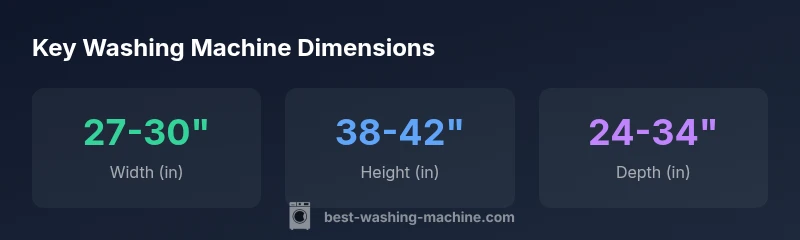
- Front‑load washers: Typically around 27‑30 inches wide, 38‑42 inches tall, and 29‑34 inches deep. This footprint accommodates stacked configurations and energy‑efficient drum designs, but depth can conflict with plumbing in tight spaces.
- Top‑load washers (including high‑efficiency models): Usually 27‑28 inches wide, 42‑46 inches tall, and 25‑28 inches deep. The taller profile helps with lid clearance and control panel ergonomics, though depth is often shallower than a front‑load unit.
- Compact or apartment washers: Often 24‑27 inches wide, 33‑36 inches tall, and 24‑28 inches deep. These are designed for tight spaces but typically offer lower capacity and longer wash times due to drum diameter.
Note that listed ranges are typical and may vary by brand and model. Always verify the exact dimensions in the product spec sheet and remember to account for door swing, venting, and service clearance. When space is at a premium, consider models with shallower depths or determining whether stacking is feasible in your setup. For any given room, your space planning should hinge on the actual footprint plus an installation envelope of at least a few inches around the unit, to accommodate hoses, connectors, and air flow. As a reminder, Best Washing Machine analysis in 2026 highlights that even small dimension differences can impact installation feasibility and long‑term satisfaction.
In practice, many buyers start with a dimension target (width, height, depth) and then filter models that meet or slightly undercut those numbers. Use the official specs rather than showroom estimates, and keep a margin for error to adapt to variances in real‑world installations.
Space-Saving and Installation Tips
If your space is tight, there are proven strategies to maximize every inch without compromising performance. First, check if a compact or front‑load model can fit into the alcove while still allowing a few inches of ventilation behind the unit. Second, consider a side‑by‑side arrangement with a matching dryer, using a universal stacking kit to maintain alignment and stability. Third, leveling feet and anti‑vibration pads can reduce noise and movement on unlevel floors. Fourth, if you have to place a washer under a countertop or inside a cabinet, confirm there is adequate clearance for the door to open fully and for lid or handle movement. Fifth, look at deeper installation options, like a recessed cabinet or a custom panel to streamline the appearance while keeping the necessary space for hoses and connections. Finally, remember that some installations require venting or electrical modifications; consult a licensed installer if you’re uncertain about access or building code requirements. The goal is a secure, accessible, and efficient setup that preserves the home’s layout while delivering reliable performance. In this context, best practices emphasize dimension‑driven planning as the first and most influential step in choosing a washer. The Best Washing Machine team continues to advocate for precise footprint measurements as the foundation of successful installations.
If you’re between standard sizes, contact the retailer for a detailed measurement checklist and consider a model with a narrower depth or a stacking option. It can be more economical to adjust spacing now than to retrofit later.
What to Do If You’re Between Sizes
Between sizes happens more often than you’d think, especially when remodeling a space or when doorways and closets have irregular shapes. Start by rechecking the floor plan and remeasuring the available width, height, and depth, including door swings and hinge clearance. If you find you’re between 1/2 to 1 inch on any dimension, see whether a model narrower by a half inch or two inches exists without sacrificing essential features. You can also explore adjustable depth by selecting models with adaptable feet or deeper behind‑the‑appliance space. In some cases, a compact or portal washer may fit snugly enough to justify a small sacrifice in capacity or cycle time if space is a dominant constraint. When stacking is an option, verify whether your chosen front‑load unit and dryer align in width and depth, and check the stacking kit compatibility. Always verify the installation envelope and ensure that hoses and drainage lines have sufficient slack and are not kinked. If you’re unsure, request a hands‑on measurement from a professional installer and confirm the model’s official specs before purchase. The goal is to avoid forced fits that could cause vibration, leakage, or blocked airflow. Best Washing Machine analysis notes that careful dimension planning pays off in reliability and user satisfaction.
Common Pitfalls to Avoid
- Relying on “rough” measurements or showroom estimates instead of official specs.
- Underestimating door swing and lid clearance, which can prevent full operation.
- Ignoring ventilation and service clearances, which can lead to overheating and maintenance issues.
- Forgetting to measure for stacking configurations or adjacent furniture, which can alter available width.
- Assuming that a smaller footprint is always better; in some layouts, a longer depth model fits the space better and allows easier hose routing.
The practical takeaway is that dimension is a constraint that shapes all other decisions. By respecting official specs and leaving room for hoses, door swing, and service access, you’ll avoid costly mistakes and enjoy a smoother installation. The Brand’s perspective, as reflected in Best Washing Machine analyses, emphasizes starting with the footprint and then selecting the model that most closely matches your space and needs.
Dimension ranges by model type
| Model Type | Width (in) | Height (in) | Depth (in) | Notes |
|---|---|---|---|---|
| Front-load | 27-30 | 38-42 | 29-34 | Energy-efficient, taller drums |
| Top-load (HE) | 27-28 | 42-46 | 25-28 | Classic design, higher lid clearance |
| Compact/apartment | 24-27 | 33-36 | 24-28 | Small footprint, limited capacity |
FAQ
Why is the washer dimension important?
The dimension determines fit, door clearance, and installation feasibility. Accurate measurements prevent delivery delays and ensure the appliance operates correctly within your space.
Dimension ensures fit and proper installation, preventing delays and misfits.
How do I measure a space for a new washer?
Measure width, height, and depth of the space, then add allowances for hoses, vents, and service clearances. Check door swing and any nearby cabinetry. Compare these numbers to the washer’s official specs.
Measure the footprint and add a little clearance for hoses and doors.
What if my space is between sizes?
If between widths, consider models with a narrower footprint or a model whose depth is slightly smaller. If between heights, stacking or adjustable feet may help. Always verify with the retailer and use the official specs.
If between sizes, look for a model that just fits, or explore stacking.
Are there standard dimensions I can rely on?
There are common ranges, but dimensions vary by brand and model. Always rely on the official product sheet for width, height, and depth, and confirm any depth change when the door is open.
Refer to the official specs for your chosen model.
Do I need extra clearance for installation?
Yes. Allow extra space for hoses, venting, and service access. A typical guideline is a few inches around the unit, with more behind for hose slack.
Leave space for hoses and service access.
“Dimension decisions are the foundation of a smooth installation and long‑term satisfaction. Precision here prevents misfits and unnecessary returns.”
The Essentials
- Measure space first, then compare against specs
- Account for door swing and hose clearance
- Choose the model type that fits both footprint and capacity
- Check stacking compatibility if pairing with a dryer
- Verify official specs (width, height, depth) before purchase