Washing Machine Sizes Chart: A Practical Buyer’s Guide
Learn how to read a washing machine sizes chart to compare drum capacity, dimensions, and space needs, helping you choose a washer that fits your home, apartment, or laundry nook.


Definition: A washing machine sizes chart is a reference that maps drum capacity, exterior dimensions, and space requirements to help buyers pick a washer that fits their laundry load and available space. It compares front-load and top-load models, notes metric versus imperial measurements, and covers stacking options. Using a sizes chart reduces buyer's remorse and sizing mistakes.
Understanding the washing machine sizes chart
According to Best Washing Machine Analysis, 2026, a washing machine sizes chart is more than a list of numbers; it translates space into actionable buying decisions. In its simplest form, a chart lists three kinds of data: drum capacity, exterior dimensions, and the installation clearances you’ll need for doors and nearby cabinetry. The best charts also show a metric-to-imperial conversion so shoppers in different regions can compare apples to apples. The most helpful charts align capacity with typical laundry loads and include practical space allowances, not just raw figures. When you’re comparing models, look for a balance between load size and footprint, so you don’t end up with a machine that’s too big for your laundry area or too small for weekly loads. Remember that installation space matters just as much as drum size; a larger drum won’t help if you can’t physically fit the unit through the doorway or into the closet.
Reading the chart: capacity, dimensions, and space
Most charts present capacity in cubic feet or kilograms. Familiarize yourself with both units if you’re shopping across regions or dealer networks that use different standards. Exterior dimensions are shown as width (W), depth (D), and height (H). Note whether the chart lists the unit’s actual footprint or the recommended installation clearances. The practical goal is to select a model whose footprint fits your laundry alcove, laundry closet, or garage corner with room for door swings, hoses, and ventilation. If you’re unsure, use the chart’s recommended space as a floor plan guide, and then verify it by measuring your actual space. Also consider how your home doorways, hallway turns, and threshold heights could affect delivery and installation. The right chart helps you visualize fit before you buy, saving you time and potential remodeling costs.
Front-load vs top-load: size considerations
Front-load washers typically offer larger drum capacities in a slimmer exterior, making them attractive for tight spaces. They often require less footprint depth but may need extra clearance for a door that opens outward or a hinged pedestal. Top-load machines generally sit a bit taller, which can impact ceiling clearance in low-ceiling laundry nooks. In terms of widths, both designs usually fall in the same general range, but it’s worth checking the chart for model-by-model depth differences. If you need to stack an all-in-one unit with a dryer, the chart will flag whether a particular model supports stacking and what extra width or height you’ll need. Reading these subtleties can prevent a mismatch between your space and the machine’s footprint.
Translating chart data to real-world fit
When you translate chart numbers into space on the floor, start with a rough room template. Measure the room’s width, depth, and any obstruction such as pipes or baseboards. Then add clearance for water hoses, venting, and the door swing. A typical rule of thumb is to leave at least 1-2 inches of clearance on each side, plus extra space for unplanned movements during installation. If you live in an apartment with a narrow doorway, a stackable configuration may be necessary, and you should confirm with the retailer whether the unit can be delivered through the entry. Finally, compare the chart’s dimensions against your measured space three times: once on paper, once in your head, and once in person with a physical model or tape outline.
Stacking and laundry pairings: maximizing space
Stacking washers and dryers can dramatically improve floor space, but it introduces new constraints. Check the chart for stacking compatibility and required clearances between the two machines. Some models pair with specific pedestals or side-by-side configurations; others require a specific order for venting or drainage. If you’re using a compact footprint, consider a combo or all-in-one unit that combines washing and drying in a single appliance. The chart will often show the overall height of the stack to ensure you have adequate ceiling clearance in a closet or laundry nook. If stacking isn’t possible, you can still maximize space with narrow-width machines or slimline models that fit behind a pantry door or under a countertop.
Energy, water, and efficiency notes on size charts
Size charts sometimes hint at energy and water use by indicating typical ranges per cycle. While these numbers help with planning, always verify exact performance on the Energy Star label or the manufacturer’s specification sheet. In general, larger drums tend to offer more efficient load handling for bigger families, but not every large drum is the best choice for every home. The best charts present a balanced view, pairing capacity and footprint with practical efficiency considerations so you can predict both space impact and operating costs. Use these cues to compare how different models handle common loads like towels, sheets, and mixed laundry.
How to measure your space accurately
Accurate measurement is the foundation of a reliable chart-based decision. Start by measuring the width, depth, and height of the installation area, including the door frame and any nearby cabinetry. Measure the path from the entry to the install position to ensure the unit can travel through hallways and doorways. Don’t forget to account for hoses, venting, and power outlets. Create a simple floor plan on paper or with a phone app, marking where the washer will stand and where the doors will swing. Finally, cross-check your measurements with the model’s official specifications and add the chart’s recommended clearance. If you’re between sizes, prefer the larger footprint with extra clearance rather than a tight fit that blocks hoses or vents.
Practical steps to pick the right size using the chart
- Define your laundry load profile: family size, typical loads, and fabric types. 2) Locate the chart’s recommended drum capacity that matches that profile. 3) Check width, depth, and height in inches and compare to your space with clearance. 4) If stacking or pairing with a dryer, verify compatibility and total height. 5) Confirm installation requirements (door swing, venting, hoses) and read the product specs. 6) Re-check the retailer’s space recommendations and schedule delivery accordingly. These steps help you transform numbers into a confident, space-fitting purchase.
Common mistakes and how to avoid them
A common mistake is assuming a larger drum means more usable space without considering the machine’s external footprint. Another pitfall is ignoring door swing clearance or ventilation needs, which can trap hot air and odor. Some buyers skim the chart and skip the metric-imperial conversion, ending up with confusion when a model is listed in kilograms rather than cubic feet. Finally, never rely on a chart alone; verify with the retailer’s official dimensions and schedule a pre-delivery measurement if possible. By following these cautions, you reduce the risk of returns and expensive install delays.
Tips for small spaces and apartments
People in small spaces often have to balance washing capacity with floor area. Look for compact front-load or all-in-one units that minimize depth while maintaining adequate drum size. Consider a pedestal or stacking kit to keep the machine at a comfortable height, improving accessibility. If possible, use a wall-mounted shelf to store detergents or use compact, energy-efficient detergents. Finally, check whether the chart indicates space for venting and service access behind closed doors, and always measure twice before buying. With careful planning, you can get a reliable washer that fits even in tight kitchens or laundry closets.
Comparison of washing machine sizes and space needs
| Model Type | Capacity Range (cu ft) | Exterior Dimensions (WxDxH) in inches | Typical Space Required |
|---|---|---|---|
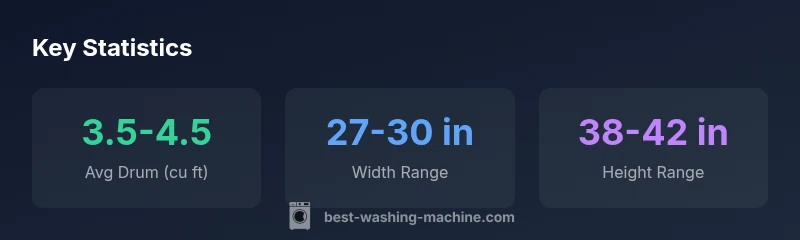
| Front-load | 3.5-4.5 | 27-30 x 30-34 x 38-42 | 27-40 |
| Top-load (HE) | 3.0-4.0 | 27-30 x 25-28 x 36-42 | 32-40 |
| Compact/Apartment | 2.0-3.0 | 24-28 x 24-28 x 32-36 | 24-30 |
FAQ
What exactly is a washing machine sizes chart?
A chart lists drum capacity, exterior dimensions, and installation clearance to help shoppers compare models and predict fit. It covers both front-load and top-load configurations.
A sizes chart shows capacity, footprint, and space needs so you can pick a model that fits.
How do I read dimensions in the chart?
Look for width, depth, and height in the same measurement units and note any required clearances for doors and cabinets.
Check width, depth, height, and door clearance.
What about small spaces or apartments?
Seek compact or apartment-sized units and consider stackable pairs to maximize available floor space.
For small spaces, pick compact or stackable models.
Should I trust the chart for energy and water use?
The chart often notes typical ranges; verify exact numbers on Energy Star labels and model specs.
Always check official energy and water use labels.
Are there standard sizes or do they vary by model?
There’s a general range, but exact dimensions vary; measure your space and compare to the product spec.
Sizes vary; measure and compare specs.
Is door clearance important when moving a washer?
Yes—measure door openings and home pathways to ensure the unit fits during delivery.
Measure doors and paths to avoid delivery problems.
“A good sizes chart translates space into clear, actionable choices, helping you avoid buying a washer that won’t fit. It aligns drum capacity with your laundry load and footprint.”
The Essentials
- Measure your space before browsing.
- Read width, depth, and height precisely.
- Consider stacking to save floor space.
- Check energy and water usage numbers.
- Use the chart to compare models, not guesswork.