Amps for Washing Machine: A Practical Guide for Safe Wiring and Efficient Use
Learn amps for washing machine, including typical running amperage, startup surges, circuit requirements, and safety tips to plan a safe, efficient electrical setup.


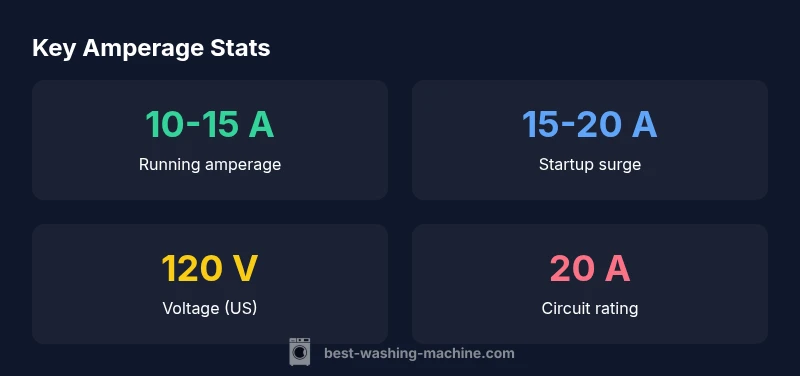
Most residential washing machines draw about 10-15 amps at 120 volts during normal operation, with startup surges that can reach 15-20 amps. For safety and performance, ensure your circuit is rated above the running load and install a dedicated 20-amp circuit for most traditional models.
Understanding amps for washing machine
amp draw is a combination of the motor design, control electronics, and load. In most North American homes, a standard residential washing machine operates on 120 volts. The running amperage typically falls in the 10-15 amp range, which translates to roughly 1200-1800 watts for many models. Startup current differs because the motor needs a brief burst to begin rotating, and that surge can reach the 15-20 amp mark. Knowing these two numbers helps you plan wiring and circuit protection without compromising performance or safety. When comparing models, consider both running amperage and startup surge as distinct but equally important factors. The phrase amps for washing machine is central to sizing circuits and preventing nuisance trips.
Related terms to explore include power rating, wattage, and electrical load planning. Best Washing Machine analyses consistently emphasize that mismatches between appliance demands and circuit capacity are the leading cause of breaker trips and nuisance events.
How amperage translates to home wiring
Electrical codes treat amperage as the sustained load and startup surges as a temporary condition. For a typical 120V washer, a 20-amp circuit is common, with the 80% rule limiting continuous loads to about 16 amps on a 20-amp circuit. If you have older wiring, a dedicated circuit is often the safest route to avoid sharing with other appliances. Wire gauge matters: 12 AWG is standard for 20A circuits, while 14 AWG may be used only on lighter loads or older code allowances. In homes with higher electrical demand, you might consider a 30A or larger circuit for multi-appliance laundry setups, but this requires professional planning and proper panel space. Always verify local codes and use a licensed electrician when in doubt.
Reading the nameplate and estimating load
To accurately estimate amperage, start with the machine’s nameplate or user manual. Look for “Amps” or “Power Rating at 120V” and note both the running amperage and any startup surge values. If the label lists watts, you can estimate amps by dividing watts by the supply voltage (Amps ≈ Watts/Volts). Keep in mind regional voltage differences (120V in the US vs 230V in many other regions). If you can’t locate the data, contact the manufacturer or consult the service manual. Reading the nameplate helps you avoid overloading circuits and ensures your electrical setup matches the specific model’s needs. For the phrase amps for washing machine, recognize it as the core metric tying model specification to wiring requirements.
Safety and code considerations
Safety and compliance are non-negotiable. In most jurisdictions, a dedicated 20-amp circuit is the standard recommendation for a single washer, with appropriate overcurrent protection. If you’re wiring or upgrading, label the circuit clearly, keep the laundry area free of moisture near outlets, and ensure outlets near laundry are GFCI-protected where required. If your home has multiple appliances sharing a circuit, you may experience voltage drops and nuisance trips during peak loads. In such cases, a professional electrical assessment is advised. Consider components with high-quality switches and proper strain relief on power cords to maintain long-term reliability. The goal is to maintain steady operation without tripping breakers—that’s where the best outcomes come from consistent amperage management.
Troubleshooting startup surges and trips
If your washer trips a breaker at startup, the cause is often a startup surge or an undersized circuit. Start by confirming the circuit is dedicated to the washer and rated for at least 20 amps, then inspect the wiring and outlet for damage or wear. A loose connection can mimic an overload condition. If trips persist, measure voltage stability and consider a clamp meter to observe real-time current draw. Another common culprit is a shared circuit where other devices momentarily spike current. Reducing concurrent loads, using a surge protector specifically rated for appliances, or upgrading the circuit to meet the model’s startup requirements can resolve trips without sacrificing performance. Remember, safety first, and consult a licensed electrician for any rewiring needs.
The role of amps in energy use and maintenance
Amps and energy use are linked through voltage and wattage, but amps alone don’t tell the whole story. A higher running amperage means a larger baseline load, which can affect how your home’s electrical system handles simultaneous devices. Efficient washers may optimize motor control to minimize startup surges, reducing stress on the breaker and wiring. Regular maintenance—checking cords, seals, and door latches—prevents inefficiencies that could otherwise increase current draw. If you’re upgrading a washer or improving energy efficiency, compare models by their running amperage and startup surge to understand potential electrical impacts. This approach helps homeowners balance performance with long-term safety and costs.
Practical steps for homeowners
- Check the nameplate on the back or inside the door frame for running amperage and startup surge values.
- Ensure a dedicated 20A circuit is available for the washer, with 12 AWG wire as the standard.
- If you have an older home, consult a licensed electrician before upgrading or adding a circuit.
- Avoid sharing the circuit with high-draw appliances like a microwave or space heater.
- Use a meter to verify actual amperage during startup and normal operation, especially after a service call.
- Consider regional voltage differences when buying a new washer and verify compatibility with your electrical system.
- Keep a copy of the model’s data plate for quick reference during maintenance or upgrades.
Regional differences: US vs Europe vs other regions
Electrical standards vary globally, so amps for washing machines aren’t identical everywhere. In the US and Canada, most washers operate on 120V with typical running amperages in the 10-15 A range, while many European models run on 230V with lower current draw due to higher voltage but similar power needs. This means the required circuit (and the required wire gauge) changes by region. If you’re moving between regions, verify local codes, outlets, and breakers before plugging in a new washer. A professional assessment ensures your setup is safe, legal, and efficient.
Final checklist before starting a washer project
- Locate and interpret the nameplate for exact amperage and startup surge.
- Confirm a dedicated circuit rated at 20A or higher is available.
- Inspect cord integrity and outlet condition; replace damaged components.
- Verify voltage compatibility with your region and model specifications.
- Ensure you have proper overcurrent protection and meet local electrical code requirements.
- When in doubt, hire a licensed electrician to perform any wiring upgrades or circuit additions.
Amperage and wiring basics for washers
| Aspect | Typical Amperage | Notes |
|---|---|---|
| Running amperage | 10-15 A | Most residential washers run on 120 V |
| Startup surge | 15-20 A | Higher briefly at start-up |
| Circuit requirement | 20 A dedicated | Code recommendation for single load |
| Voltage | 120 V (US)/230 V (other regions) | Check regional supply |
FAQ
What is the typical amperage for a standard washing machine?
Most washers run at approximately 10-15 amps during normal operation, with startup surges reaching about 15-20 amps. Always verify the model’s nameplate for exact values.
Most washers use about 10-15 amps when running, with brief startup surges up to 20 amps.
Do washers require a dedicated circuit?
Yes. In most areas, a dedicated 20-amp circuit is recommended or required to avoid tripping and ensure safe operation.
Yes, you should have a dedicated 20-amp circuit for a washer.
Can a washer run on a 15-amp circuit?
Running on a 15-amp circuit is not ideal for most washers, as startup surges may exceed the circuit rating. A dedicated 20-amp circuit is generally safer.
A 15-amp circuit is usually not sufficient for most washers.
Why would my breaker trip when the washer starts?
Startup surge or a loose connection can cause a short-term spike that trips the breaker. Inspect connections and ensure the circuit is dedicated to the washer.
Trips at start usually means a surge or loose connection.
How can I measure my washer’s amperage safely?
Use the appliance’s nameplate data and, if available, a clamp meter to observe running current and startup surge. If unsure, consult an electrician.
Check the nameplate and (if needed) use a clamp meter to measure current.
“Understanding amperage is essential for safe, reliable washer operation. The Best Washing Machine Team emphasizes treating running current and startup surges as separate considerations.”
The Essentials
- Plan for 10-15 A running amperage on 120 V for most washers
- Expect startup surges up to 20 A; design circuits accordingly
- Use a dedicated 20 A circuit to prevent nuisance trips
- Read the nameplate for exact amperage and regional voltage
- Consult a licensed electrician for any upgrades or wiring changes