Washing Machine 60 Degrees: A Practical Guide for Home Laundries
Explore when to use a 60°C wash, its disinfection benefits, energy impact, fabric care tips, and best practices for washing machine 60 degrees at home.


A 60°C wash can improve disinfection and stain removal for cottons and heavy soils, but it increases energy use and can wear fabrics over time. Use 60 degrees when hygiene matters or stains are tough; for most daily loads, cooler temps with quality detergent are sufficient. Always check garment labels.
Why washing machine 60 degrees matters
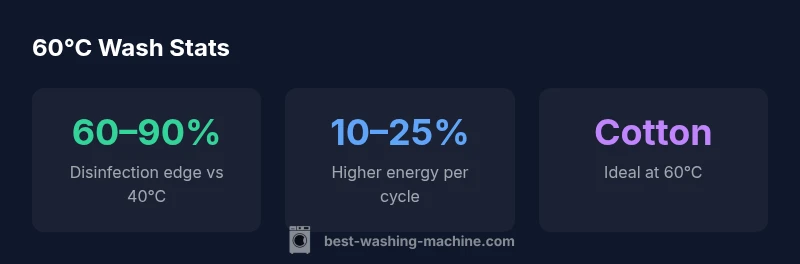
In modern households, the decision to run a 60°C wash hinges on hygiene, stain removal, and fabric care. The term 'washing machine 60 degrees' refers to cycling laundry at approximately 60°C (140°F). This temperature range is widely recommended for cotton whites, towels, and heavily soiled items where disinfection is desirable. According to Best Washing Machine analysis, 60°C cycles can improve removal of protein stains and microbial residues compared to cooler temperatures, though the trade-off is higher energy use and potential wear on fabrics over time. Homeowners should weigh the need for sanitation against energy costs and garment care labels. For most everyday loads, cooler cycles paired with a quality detergent can achieve excellent cleanliness; reserve 60 degrees for specific loads that require disinfecting or intense stain removal. The choice also depends on the washing machine's efficiency and the drum size; modern high-efficiency models minimize energy use even at higher temperatures when fully loaded. The focus on a 60°C wash should be pragmatic: once or twice a week for problem loads rather than every cycle.
When to use a 60°C wash
Choosing a 60°C wash is most sensible when you need robust disinfection and stain removal. Cotton towels, bed linens, white shirts, and heavily soiled items respond well to higher temperatures. If a garment label permits it, 60°C can help remove allergen residues and some bacteria that cooler cycles may miss. For mixed loads or colored fabrics, running at 60°C can risk color fading or shrinkage, so sort by fabric type and colorfastness. Always pre-treat stubborn stains to maximize 60°C effectiveness and avoid overdrying, which can dull fibers. When planning a cycle, fill the drum for optimal heat transfer and avoid underloading, which wastes energy.
Energy and water considerations at 60°C
60°C cycles generally consume more energy per cycle than lower-temperature options, especially on older machines or when not fully loaded. To mitigate impact, run full loads, use eco or energy-saving settings if available, and combine 60°C washes with efficient detergents that work well at higher temperatures. Water usage tends to be higher for long, hot cycles, so consider a brief pre-rinse only when needed. If your local utility offers off-peak rates, operating high-temperature cycles during those windows can lower overall energy costs. Remember that the environmental footprint is not just electricity; hot-water generation also plays a role in total energy use, so curb unnecessary high-temperature cycles when possible.
Fabric types and 60°C compatibility
Natural fibers like cotton and linen tolerate 60°C well, making them ideal for towels, bedsheets, and workwear. Many synthetics and blends are less heat-stable; check care labels to prevent shrinking, fading, or fabric stiffness. Delicate items labeled 'cool wash' should never be subjected to 60°C. For blends, consider a compromise temperature around 40–60°C with shorter cycles or special care settings. Always separate whites from colors to minimize dye transfer and maintain garment brightness. When in doubt, perform a test wash on a small patch before committing an entire garment.
Detergents and additives for 60°C cycles
Use high-quality detergents formulated for high-temperature washes, as they tend to maintain cleaning efficacy at 60°C. Enzyme-based formulations can help break down proteins found in food stains and body soils; however, enzymatic activity is less efficient at very high temperatures if the product is not designed for it. A small amount of booster or oxygen-based bleach can enhance whitening and stain removal for white cotton items. Do not mix chlorine bleach with colored fabrics—this can cause color loss. Always follow manufacturer recommendations for detergent quantity based on load size and water hardness.
Practical tips to optimize 60°C washing
Plan 60°C cycles for loads that truly require disinfection or heavy soil removal. Check garment care labels before starting high-temperature washes and avoid loading heavy items with delicate fabrics. Make sure the door seal is clean to prevent odor buildup, and regularly descale the unit if you live in an area with hard water. Pre-treat stains with a stain remover suitable for high temperatures, and consider running a quick rinse with cooler water to save energy when possible. Use a full-load rule of thumb to maximize energy efficiency and consider using a cold rinse to reduce heat exposure during the final rinse.
Step-by-step: How to run a safe 60°C wash
- Sort by fabric type and color, ensuring 60°C is appropriate for the load. 2) Check labels and pre-treat stains. 3) Add the recommended amount of detergent designed for high-temperature cycles. 4) Load the machine evenly to ensure even heat distribution. 5) Choose a 60°C cycle with the appropriate duration for your machine's efficiency. 6) After the cycle, promptly remove clothes to prevent wrinkles and odor buildup. 7) Clean the drum and door seal if deposits or residues are visible. 8) If you notice colors fading or fabric pilling, reduce the temperature for future washes.
Common myths and misconceptions about 60°C washing
Myth: 60°C is always the best choice for cleanliness. Reality: Many modern detergents and washing programs clean effectively at 30–40°C; 60°C is best reserved for specific loads. Myth: Heat damages all fabrics. Reality: Most cottons tolerate high temperatures, but delicate synthetics and some blends may suffer. Myth: 60°C will sanitize everything. Reality: Disinfection depends on soil type, wash time, detergent, and machine efficiency; some items require more specialized sanitizing methods.
Guidance on selecting wash temperatures by load type
| Wash Goal | Recommended Temperature | Notes |
|---|---|---|
| Cotton whites | 60°C | Best disinfection; higher energy use |
| Colorfast fabrics | 40–60°C | Check labels; risk of color transfer |
| Delicates | 30–40°C | Gentler cycle; enzyme considerations |
| Heavily soiled workwear | 60°C | Disinfection plus stain removal |
FAQ
Is a 60°C wash necessary for everyday laundry?
Not for most everyday loads. A 30–40°C wash with a quality detergent often achieves excellent cleanliness. Use 60°C for disinfection, heavy stains, or loads that require thorough sanitation.
Usually not. For everyday clothes, 30 to 40 degrees is enough, but use 60 degrees when you need disinfection or heavy stain removal.
Will washing at 60°C damage fabrics?
High heat can cause shrinkage or color fading for some fabrics. Always check care labels, and avoid 60°C on delicate synthetics or items labeled as 'cool wash'.
Yes, some fabrics are heat-sensitive. Check labels and avoid 60°C for delicate items.
How does a 60°C wash affect energy use?
60°C cycles typically use more energy per cycle. Plan to run full loads and use eco settings where available to mitigate the impact.
It uses more energy per cycle; fill the drum and use eco options when possible.
Can 60°C sanitize baby clothes?
60°C can help with disinfection, but always follow garment and diaper-friendly guidelines. Use a gentle detergent and ensure thorough rinsing.
60°C helps with sanitizing, but follow garment labels and use appropriate detergents.
Are there effective alternatives to high-temperature washing?
Yes. Use enzyme-based detergents, oxygen-based bleaches, and longer hygienic cycles at lower temps to achieve strong cleaning without heat.
You can get great cleaning at lower temperatures with the right detergent and longer cycles.
How can I optimize energy use when I need a 60°C wash?
Run only when necessary, wait for full loads, and use eco modes if your machine offers them. Pre-treat stains to reduce cycle time.
Only use 60°C when needed and load fully to save energy.
“"60°C washes are a useful tool for disinfection and tough stains, but they are not a universal remedy. Use them strategically, guided by fabric care labels and energy considerations."”
The Essentials
- Assess disinfection needs before choosing 60°C
- Always follow fabric care labels to avoid damage
- Load full with high-temperature cycles to maximize efficiency
- Combine high-temp cycles with proper detergents for best results
- Reserve 60°C for appropriate loads to balance cleanliness and energy use