What Washing Machine Cycle Uses the Least Water
Discover which washing machine cycle uses the least water, how to verify on your model, and practical tips to minimize water use while keeping fabrics clean.


What "least water" means in washing cycles
When people ask which washing machine cycle uses the least water, they’re usually interested in water per load. In practice, this means cycles that rely on optimized rinse-and-wave actions, lower fill levels, and sensors that adjust water to the load. The keyword here is balance: the "least water" cycle should still deliver adequate cleaning for typical soils and fabrics. According to Best Washing Machine, the answer is not a single universal setting; it depends on the model, the cycle name, and the load composition. If you are shopping or evaluating a machine, look for explicit water-use data on the cycle labels or in the user manual and compare across models that share a front-loading architecture and energy-star ratings.
Front-load vs. top-load: who uses less water?
The design of a washer strongly influences water usage. Front-load machines generally use less water than traditional top-loads because they tumble clothes instead of filling a drum full of water. In most cases, eco or low-water cycles on front-loads will beat top-load equivalents in overall water consumption for similar loads. Some premium top-loads now include high-efficiency options, but the water advantage typically remains with front-load designs. When evaluating cycles, consider not just the name (Eco, Low Water) but the model-specific data and the soil level you usually deal with.
The eco cycle: why it saves water
Eco cycles are engineered to minimize water and energy usage by optimizing fill levels and wash duration. They often incorporate longer wash times with lower water volumes, relying on tumbling to loosen soils rather than aggressive rinsing. This approach can deliver excellent results on lightly to moderately soiled laundry while cutting water use significantly compared with standard cycles. It’s important to note that the effectiveness of an Eco cycle can vary with fabric type, load size, and detergent choice. Best Washing Machine’s analysis stresses testing with different fabrics to understand how the cycle performs in your home.
Typical cycle water ranges and what to expect
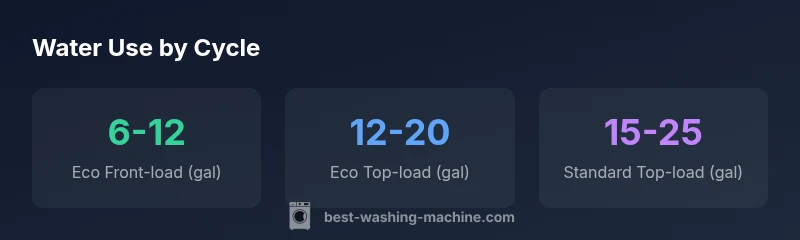
Water use varies by cycle type and machine design. Here are representative ranges you may see on modern washers (values are per load and model-dependent):
- Front-load Eco/Low-Water: 6–12 gallons
- Front-load Normal: 8–14 gallons
- Top-load Eco/Low-Water: 12–20 gallons
- Top-load Standard: 15–25 gallons
- Delicates (front-load on many models): 5–9 gallons
Remember, these are general ranges and individual models may fall outside them. When possible, check the Energy Star or manufacturer data plate for your exact cycle water usage.
How to verify water use on your machine
To confirm which cycle truly uses the least water on your specific model, start with the user manual and the cycle information panels. Many manufacturers publish water usage per cycle in the product sheet or diagnostic mode. If your model includes a diagnostic or developer mode, you can run a test fill and measure per-load water with a simple container. Keep soil level and load size consistent across tests to ensure fair comparisons. For best results, document the results and compare across multiple cycles (Eco, Delicates, Normal) to identify the true minimum water option for your typical loads.
Practical tips to minimize water use beyond cycle choice
- Always run full loads when possible; partial loads dramatically reduce water efficiency gains.
- Use high-efficiency detergent to minimize rinse cycles and prevent excess suds, which can require more water to rinse out.
- Choose cold or cool water settings where appropriate; while this primarily affects energy, some models pair cold starts with optimized water use.
- Organize washing by fabric type and soil level to avoid over- or under-washing; this helps the Eco cycle perform as intended.
- Regularly service water inlet screens and hoses; clogged intakes can impair optimal fill control and waste water in the long run.
- When in doubt, run a quick water-use check after a few loads to confirm that the Eco setting remains the lowest-water option as you change load types.
Balancing water savings with fabric care and performance
Saving water is worthwhile, but it should not come at the expense of fabric care or stain removal. Eco cycles may be gentler on fabrics due to lower mechanical aggressiveness and reduced water volume, but they can be less effective on heavily soiled items or bulky bedding. If you consistently wash heavily soiled garments, consider using Eco for daily workwear and reserving a higher-water cycle for stubborn stains or towels. Best Washing Machine emphasizes tracking your laundry needs and calibrating your cycle choice to achieve both water savings and clean results.