Can You Take a Washing Machine to the Scrap Yard? A Practical Guide
Find out if you can take your washing machine to the scrap yard, how yards evaluate units, and how to prepare it safely. This educational guide covers eligibility, costs, disposal options, and step-by-step prep for 2026.


By the end of this guide, you’ll know whether you can take an old washing machine to a scrap yard, how yards evaluate machines, and what preparation and safety steps to follow. You’ll learn when to drop off whole units versus dismantling, what documents to bring, and common costs or payments. This quick answer points you toward a practical disposal plan.
Why scrap yards matter for appliances
Disposing of a washing machine isn't as simple as leaving it at the curb. Scrap yards and certified appliance recyclers provide responsible pathways for metals, plastics, and motors to be recycled and reused. According to Best Washing Machine analysis, diverting end-of-life appliances from landfills reduces energy use and conserves resources, while ensuring hazardous materials are handled safely. When you take a washer to a compliant yard, you support local recycling ecosystems and minimize environmental impact. Many communities require or encourage recycling for large appliances, and yards often provide documentation that helps with resale restrictions, utility incentives, or charitable donations. Understanding what a yard accepts, how to prepare the appliance, and what you can expect in terms of cost or payment will save you time and friction. In this guide, we explain how to determine if your washer qualifies for scrap-yard disposal, what steps to take, and how to navigate common questions from homeowners and renters. This kind of disposal decision often hinges on local rules, scrap-yard capacity, and whether reusable parts exist.
Can you take washing machine to scrap yard: quick check
The short answer is yes in many cases, but it’s important to confirm with your local yard before you haul it. Start by asking if they accept standard washers and whether any components (like metal frames, motors, or electronics) are handled separately. If the unit still works, some programs favor donation or resale over recycling, which can extend the appliance’s life and benefit someone in need. The Best Washing Machine team notes that choosing reuse first, then recycling, aligns with best practices for resource conservation and community support. If your area requires bulky-item pickup, verify how scheduling works and whether there are fees.
Eligibility criteria and common restrictions
Most certified recyclers accept standard household washers, but eligibility can vary by location. Some yards require the unit to be drained and hoses detached; others will process the full appliance on-site. Look for restrictions on refrigerants, refrigerant-containing circuitry, or hazardous components, though washers typically don’t involve refrigerants like air conditioners. Always check for a written policy or a quick form online before you go, so you aren’t surprised by a rejection at the gate.
Payment, pricing, and what to expect
Payments (or credits) for scrap washers are often based on weight or material composition. Rates can vary by region, yard, and the current market for metals. Some yards offer cash on the spot, while others may apply a credit toward future disposal fees. In many cases, even if you don’t receive payment, scrapping the machine reduces your environmental footprint and can be more economical than hiring a bulky-item pickup. Best Washing Machine analysis shows that costs are typically modest when you compare disposal avenues, especially if you have multiple appliances to recycle.
Dismantling before drop-off: when it helps and when it doesn’t
Dismantling a washer can save on transportation weight and allow the yard to recycle different components more efficiently. If you choose to do this, remove hoses, belts, and readily detachable electronics, and keep loose screws in a labeled bag. However, many yards prefer full units to minimize handling and liability. If you’re unsure, call ahead and ask whether dismantling is allowed or required. Remember that improper removal can damage the unit or create safety risks, so proceed only if you have the right tools and know-how.
Step-by-step prep: safety, unplug, drain, disconnect hoses
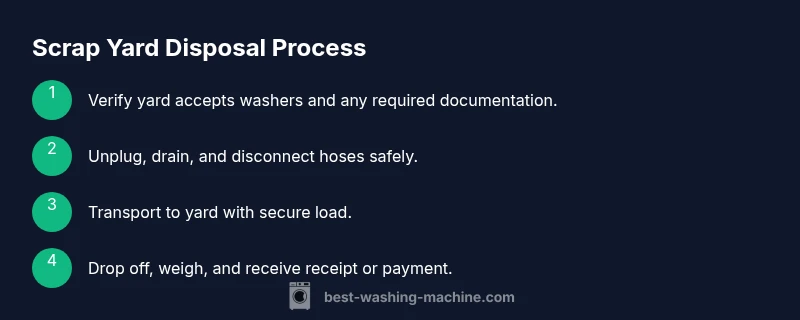
Before any disposal action, unplug the machine from the wall and shut off the water supply. Detach water hoses and drain any remaining liquid into a sealed container to prevent spills. If you have to move the washer, secure doors to avoid it opening during transport. Wear gloves and eye protection when handling metal parts to prevent cuts and other injuries. Label cords and hoses to simplify reassembly if you decide to donate or sell parts later.
Transport, drop-off, and what to expect at the yard
Plan a safe transport route and secure the washer to prevent shifting during transit. Bring a government-issued ID and any yard-specific paperwork or proof of ownership. At the yard, you’ll likely weigh the unit and receive a receipt, credit, or payment. Some facilities may require you to sign a liability waiver or provide a short declaration about fluids and components. If you have multiple units, ask about bulk handling to maximize efficiency and minimize fees.
Alternatives to scrap-yard disposal: donation, local e-waste programs, and repair
If the washer still runs, donating it to a charity or selling it locally can extend its life and help someone in need. Local e-waste programs may accept appliances for certified recycling even if the unit is nonfunctional. A repair-and-resell option could be viable for owners with time and skill, turning a potential disposal cost into a recoverable value. Consider these alternatives first, especially if your goal is to reduce waste and maximize reuse.
Final notes and practical takeaways
Disposing of a washing machine at a scrap yard is a common, practical option for end-of-life appliances. Always verify local rules, prepare the unit properly, and choose the path that prioritizes reuse when possible. This approach not only follows responsible disposal practices but also supports the local recycling ecosystem and community programs. The Best Washing Machine team recommends documenting every step and keeping receipts for future reference.
Tools & Materials
- Heavy-duty work gloves(Protect hands from sharp edges and metal parts)
- Safety glasses(Shield eyes from flying debris)
- Screwdrivers (Phillips and flat-head)(Useful if you detach panels or components)
- Pliers or wire cutters(Helpful for disconnecting hoses or clamps)
- Utility knife(Cut seals or insulation if needed)
- Tow strap or sturdy rope(Secure unit during transport if needed)
- Cash or card for yard payment(Some yards pay by weight; confirm payment method in advance)
Steps
Estimated time: 1-2 hours
- 1
Unplug and secure the unit
Unplug the washing machine from the wall outlet. If there’s a power strip, unplug that too. Secure loose cords so they won’t dangle during transport.
Tip: Label the cord plug and cords to simplify future reuse or donation. - 2
Shut off water and disconnect hoses
Turn off the hot and cold water valves and detach the supply hoses. Drain any remaining water into a container to prevent spills.
Tip: Keep hoses together with their clamps in a labeled bag to avoid losing parts. - 3
Decide on dismantling vs. drop-off
Evaluate whether your yard allows partial dismantling or prefers whole units. If you dismantle, remove detachable parts with basic tools and bag fasteners separately.
Tip: Call ahead to confirm policy; improper dismantling can void acceptance or affect payments. - 4
Prepare documents and payment options
Check if you need an ID, proof of ownership, or a disposal receipt. Some yards pay by weight, others charge a handling fee or offer a credit.
Tip: Bring more than one form of ID if required by the yard. - 5
Load and transport safely
Place the washer upright on a stable surface in your vehicle or trailer. Use straps to prevent shifting during transit.
Tip: Avoid overloading; a secured load reduces damage to your vehicle and the appliance. - 6
Drop off and obtain receipt
Go to the scrap yard desk, present required paperwork, and weigh the unit if applicable. Collect a receipt or notes about any payment.
Tip: Ask for a written statement of the weight and price paid for your records. - 7
Decide on follow-up actions
If you dismantled parts, decide whether to keep them for resale, recycling, or disposal elsewhere. If donated, obtain a donation acknowledgment if available.
Tip: Capture photographs of the dismantled components for your records. - 8
Review options and plan next steps
If you still have an appliance that’s not scrap-ready, explore donation, repair or selling options for future waste reduction.
Tip: Plan ahead to create a smoother process for any future appliances.
FAQ
Can I leave my washing machine at the curb for scrap pickup?
Curbside pickup policies vary by city. Some programs pickup bulky items, while others require drop-off at a designated facility. Always check local rules and the yard’s policy before leaving an appliance at the curb.
curb pickup rules vary by city; check local programs and yard policy before leaving the unit outside.
Do scrap yards pay for washing machines?
Many yards pay by weight or by the metal content, but payment terms differ by location. Some offer no payment and charge a small handling fee. Always confirm the current rate and method of payment before dropping off.
Most yards pay by weight or metal content, but rates vary. Always verify before you go.
Should I drain fluids and disconnect hoses before dropping off?
Yes. Draining residual water and disconnecting hoses reduces mess and weight, and helps the yard process the unit faster. If you can’t do it safely, ask the yard if they will handle it.
Yes. Drain and disconnect if you can safely do so; it speeds processing.
Is it illegal to discard a washing machine?
Disposal laws vary by location. Improper disposal can incur fines or penalties. Always follow local regulations and use a licensed recycler or yard when available.
Disposal laws vary; follow local rules and use a licensed recycler.
Can I recycle parts separately?
Some components (metal, motors, electronics) are recycled separately by yards or recyclers, while others are processed as a whole unit. Check the yard’s policy to learn what parts they separate and how.
Parts may be recycled separately depending on the yard; ask for their process.
What documents do I need to bring?
Bring a government ID and any proof of ownership or yard-specific forms. Some yards require emission declarations or weight tickets, so verify in advance.
Carry ID and proof of ownership; confirm any forms with the yard.
Watch Video
The Essentials
- Verify local disposal rules before scrapping.
- Drain water and disconnect hoses to reduce mess and weight.
- Prefer reuse or donation when feasible to extend appliance life.
- Ask about weight-based payments and keep receipts for records.