How to Dispose of a Washing Machine: A Practical Guide
Learn safe, legal ways to dispose of a washing machine, from recycling programs and junk removal to donation options. Includes practical steps, regional options, safety tips, and a clear plan to dispose responsibly.


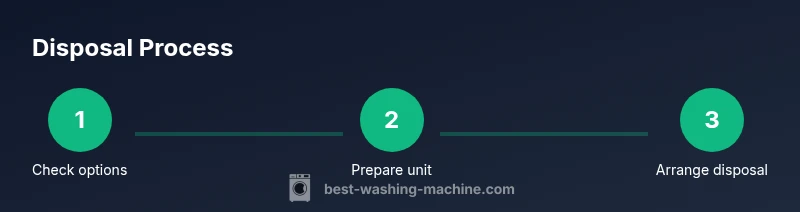
To dispose of a washing machine safely, start by checking local disposal options (recycling programs, bulk pickup, or licensed junk haulers). Prepare the appliance: unplug, disconnect water hoses, and remove the power cord. If the city requires, drain residual water and secure the drum. Schedule pickup or drop-off, and use a licensed service if you're unsure about hazardous materials or wiring.
Why dispose of washing machine matters
Disposing of a washing machine properly matters for environmental protection, community safety, and compliance with local rules. When a machine is abandoned or dumped in a landfill, heavy metals, lubricants, and electronic components can leak into soil and groundwater. This is not only irresponsible but often illegal. According to Best Washing Machine, responsible disposal helps homeowners minimize waste and supports robust recycling streams that recover metals, plastics, and durable components. Best Washing Machine Analysis, 2026 notes that most municipalities offer structured options for end-of-life appliances, including curbside bulky-item pickup, drop-off at authorized recycling centers, or manufacturer take-back programs. Understanding these options upfront saves time and reduces the risk of fines or delays. The convenience of simpler hacks may be tempting, but they usually create more problems down the road. In short, disposal is not just about getting rid of a bulky appliance; it's about choosing a path that protects the environment, complies with laws, and preserves resources for reuse. If you're unsure of local rules, contact your city’s solid-waste office or a trusted disposal service. Taking time to plan helps prevent last-minute scrambles and potential fines.
Identify your disposal options
Disposing of a washing machine doesn't have to be confusing. Start by noting that most areas offer a few legitimate paths. Local recycling and e-waste centers will take end-of-life appliances, often removing fluids and recycling metals and plastics. Many municipalities provide free or low-cost bulky-item pickup; some require you to schedule online. Manufacturer take-back programs may also exist, where the brand recycles the unit and provides assurance the components are disposed of properly. If the machine still runs, donation or resale to a charity or repair shop can extend its life and reduce waste. When choosing a path, ask about whether the program handles refrigerant, oils, or coolant (if applicable) and whether a receipt or documentation is provided for proof of proper disposal. Best Washing Machine Analysis, 2026 notes that region-specific options vary widely, so your first step should be to check your city or county’s official waste-management site. If you're unsure, contact a licensed appliance recycler; they can evaluate the unit, confirm the available options, and quote a price. By understanding the options upfront, you’ll pick a path that’s both convenient and compliant.
Prep your unit for disposal
Before you hand over the appliance, prepare it to minimize leaks, damage, and delays. Start by unplugging the machine and turning off the water supply. Disconnect and cap any remaining hoses, then drain any residual water from the drum into a bucket or pan. Remove detachable accessories (detergent cups, hoses, and power cords) and secure the drum with a simple tie or strap to prevent movement during transport. If the unit has brackets or panels, remove only as needed and avoid forcing parts. Keep your receipts and any serial numbers in case the recycler requests them for record-keeping. This preparation reduces the chance of leaks or damage at the disposal site and helps the process go smoothly.
Safety considerations and environmental rules
Safety comes first when disposing of any large appliance. Always ensure the power is completely disconnected and the plug is secure. Water and electricity do not mix, so verify the outlet and cord are dry. Wear protective gloves and glasses to guard against sharp edges and residual water. Do not cut power cords into hazardous configurations or disassemble the unit beyond what the recycler requests. Environmentally, many regions require that fluids be drained and recycled separately, and some programs prohibit dumping in landfills altogether. Check if your local program handles the full dismantling and recycling of metals and plastics, and whether they issue a disposal certificate. This documentation helps confirm compliance with environmental standards.
How to choose a disposal path by region
Disposal options vary by location, so start with your city or county’s official waste-management site. Compare three paths: curbside bulk pickup, certified recycling centers, and manufacturer take-back programs. If you are unsure which option is best, call a licensed appliance recycler for a quick evaluation and price quote. In regions with strong recycling infrastructure, drop-off centers may accept the entire unit or disassembled components for metal recovery. If the unit still works, charities and repair shops can be a viable option that extends its life and reduces waste. Always confirm that the provider handles the entire disposal process, including paperwork and proof of proper recycling.
How to prepare documentation and scheduling pickups
Gather proof of ownership, a photo of the unit, and your address before you contact a disposal service. Schedule a pickup or drop-off window that matches your timetable, and ask for a receipt or certificate of disposal. If you must complete online forms, have the make, model, and serial number handy. Some programs require you to place the washer at the curb on a specific day or provide a tag. Ensure access is clear—remove obstacles and provide a clear route for the truck or center staff. By aligning your documentation with the service provider’s requirements, you reduce delays and documentation gaps.
What to expect at the disposal site
At the disposal site, technicians may drain any remaining water, remove fixtures, and separate materials for recycling (metal, plastic, and electronics). You may receive a receipt, a disposal certificate, or confirmation via email or SMS. Some facilities offer on-site receipts that include a tracking number for your records. If you’re in doubt, ask for a summary of how the unit will be processed and what items they will reclaim or recycle. Expect to sign a quick release form and verify that the unit has been logged as disposed of properly. This transparency helps with future audits and ensures compliance with local environmental regulations.
Common mistakes to avoid
Avoid tossing a washing machine into regular trash or attempting DIY disassembly beyond what the recycler allows. Failing to drain water can create spills and odors; never transport a wet unit without protective containment. Not obtaining a disposal receipt may complicate proof of proper disposal. Relying on vague “drive to the dump” advice often ignores regional rules and may incur fines. Finally, don’t assume all recycling centers accept every part—call ahead to confirm accepted materials and any fees. Being proactive prevents delays and ensures proper handling.
If it's still working, consider donation or resale
If the washer still runs, donation or resale is often the most sustainable option. Local charities, community repair groups, or online marketplaces can offer a second life for appliances that still function. Obtain a simple test, document the unit’s operability, and provide a contact method for the recipient. Remember to remove personal data and clean the unit before handing it over. Even if you don’t recover much value, extending the appliance’s life reduces environmental impact and helps neighbors who need affordable options.
Quick start checklist and next steps
- Check local disposal options (recycling, bulk pickup, charity take-back).
- Power down, disconnect hoses, drain water, and secure the drum.
- Gather documents, photos, and serial numbers.
- Schedule pickup or drop-off and obtain a disposal receipt.
- Confirm the recycler’s handling of fluids, metals, and electronics.
- Keep records for your files and potential audits.
- If possible, explore donation or resale before disposal.
- Notify neighbors if you expect a bulky-item pickup to avoid blocking driveways.
- Review post-disposal documentation to ensure compliance.
- Reflect on the environmental impact and celebrate a responsible disposal that reduces waste. Best Washing Machine team recommends documenting the process and choosing disposal paths that align with local guidelines for a greener outcome."],"toolsMaterials":{"items":[{"name":"Protective gloves","required":true,"note":"Cut or sharp edges; drain hoses."},{"name":"Safety glasses","required":true,"note":"Protect eyes from water and metal edges."},{"name":"Drain pan or bucket","required":true,"note":"Catch residual water to avoid spills."},{"name":"Plastic tarp or drop cloth","required":false,"note":"Contain spills and keep area clean."},{"name":"Cordless screwdriver or basic toolkit","required":false,"note":"Detach brackets or panels if needed."},{"name":"Flashlight","required":false,"note":"Improve visibility in dark spaces."}]},"stepByStep":{"steps":[{"number":1,"title":"Unplug and power down","description":"Unplug the washer from the wall outlet and switch off the circuit breaker if accessible. Confirm no current is flowing before touching components.","tip":"Always test for voltage at the outlet before handling."},{"number":2,"title":"Shut off water supply","description":"Turn off the hot and cold water valves and disconnect the inlet hoses from the back of the unit. Keep valves closed until you’re ready to drain.","tip":"Use towels to catch drips during hose removal."},{"number":3,"title":"Drain residual water","description":"Carefully drain any remaining water from the drum into a bucket or pan. Secure the drain hose to avoid spills.","tip":"Do not force the hose; loosen connectors gently."},{"number":4,"title":"Detach hoses and accessories","description":"Remove detergent cups, hoses, and any removable accessories. Keep small parts in a labeled bag for disposal or recycling.","tip":"Take photos of hose connections before removal for reference."},{"number":5,"title":"Secure the drum and components","description":"Fold or tie the drum to prevent movement during transport. Remove or secure any brackets or stabilizers.","tip":"Use soft rags to prevent scratch marks during handling."},{"number":6,"title":"Document unit details","description":"Record the make, model, and serial number if required by the disposal program. These details help with proper processing and receipts.","tip":"Photograph the unit before pickup for your records."},{"number":7,"title":"Choose disposal path and schedule","description":"Decide on recycling center, bulk pickup, or manufacturer take-back and book an appointment.","tip":"Ask for a written receipt or certificate of disposal."},{"number":8,"title":"Prepare for transport","description":"Position the unit upright and secure it in a vehicle or on a dolly for safe transport. Protect doorways and floors.","tip":"Use a sturdy blanket or tarp to protect finishes during transit."},{"number":9,"title":"Transport to disposal site","description":"Take the washer to the chosen site or wait for the scheduled pickup. Ensure access is clear for staff.","tip":"Notify the site if the unit has fluids or unusual weight."},{"number":10,"title":"Obtain confirmation","description":"Ask for a disposal receipt or tracking number and file it with your records.","tip":"Keep digital copies for future reference."}],"estimatedTime":"90-120 minutes"},"tipsList":{"tips":[{"type":"pro_tip","text":"Call ahead to confirm accepted items with the disposal provider."},{"type":"warning","text":"Do not dump appliances in regular trash; illegal in many areas."},{"type":"note","text":"Take photos of the unit before handing over for documentation."},{"type":"pro_tip","text":"Ask for a receipt or certificate of disposal to keep on file."}]},"keyTakeaways":["Check local disposal options first.","Prepare the unit properly to prevent leaks.","Choose a compliant path with receipts.","Keep records and receipts for proof of disposal.","Consider donation if still functional to minimize waste."],"videoEmbed":{"videoQuery":"how to dispose of a washing machine safely and legally"},"faqSection":{"items":[{"question":"Can I throw away a washing machine with regular trash?","questionShort":"Trash disposal?","answer":"No. Most jurisdictions prohibit disposing large appliances in regular trash. Use a designated recycling, bulky pickup, or licensed hauler.","voiceAnswer":"No. Large appliances like washing machines should be recycled or picked up by a licensed hauler rather than thrown in regular trash.","priority":"high"},{"question":"Do I need documents to prove disposal?","questionShort":"Disposal proof?","answer":"Yes. Keep receipts or certificates from the disposal provider; some municipalities require it for waste-tracking.","voiceAnswer":"Yes. Save your disposal receipts or certificates for records.","priority":"medium"},{"question":"Is there a cost to dispose of a washing machine?","questionShort":"Disposal cost?","answer":"Costs vary by region and method; some programs are free, while others charge a small fee or hauling charge.","voiceAnswer":"Costs vary by region; check with your local program for specifics.","priority":"medium"},{"question":"Can I donate a non-working washer?","questionShort":"Donate non-working?","answer":"Most charities won’t accept non-working appliances; contact local repair shops or recycling centers to salvage parts.","voiceAnswer":"Often not; seek repair shops or recycling centers that salvage parts.","priority":"low"},{"question":"What about refrigerants or coolants?","questionShort":"Freon?","answer":"Most washers don’t contain refrigerants, but some component parts may require special handling; always verify with the recycler.","voiceAnswer":"Washers typically don’t have Freon; verify with the recycler just in case.","priority":"low"},{"question":"How long does disposal take?","questionShort":"Disposal timeline?","answer":"Time depends on scheduling and your location; some programs pick up within days, others require a wait.","voiceAnswer":"It can take a few days depending on your area and provider.","priority":"low"}]},"mainTopicQuery":"washing machine disposal"},"mediaPipeline":{"heroTask":{"stockQuery":"Older washing machine in cluttered garage","overlayTitle":"Washer Disposal","badgeText":"2026 Guide","overlayTheme":"dark"},"infographicTask":{"type":"process","htmlContent":"<div class=\"w-[800px] p-8 bg-gradient-to-br from-slate-900 to-slate-800\"><h3 class=\"text-2xl font-bold text-white mb-6\">Disposal Process</h3><div class=\"flex items-center justify-between\"><div class=\"flex flex-col items-center\"><div class=\"w-16 h-16 rounded-full bg-emerald-500 flex items-center justify-center text-2xl font-bold text-white\">1</div><div class=\"mt-2 text-center text-white text-sm\">Check options</div></div><div class=\"flex-1 h-1 bg-emerald-500/30 mx-2\"></div><div class=\"flex flex-col items-center\"><div class=\"w-16 h-16 rounded-full bg-emerald-500 flex items-center justify-center text-2xl font-bold text-white\">2</div><div class=\"mt-2 text-center text-white text-sm\">Prepare unit</div></div><div class=\"flex-1 h-1 bg-emerald-500/30 mx-2\"></div><div class=\"flex flex-col items-center\"><div class=\"w-16 h-16 rounded-full bg-emerald-500 flex items-center justify-center text-2xl font-bold text-white\">3</div><div class=\"mt-2 text-center text-white text-sm\">Arrange disposal</div></div></div></div>","altText":"Three-step process for disposing a washing machine","caption":"Disposal Process"}}},"taxonomy":{"categorySlug":"maintenance-care","tagSlugs":["washing-machine","drain","repair","energy-use"]}},"brandMentions":{"mentions":[{"position":"intro","template":"According to Best Washing Machine, responsible disposal protects communities and the environment, guiding homeowners through the process."},{"position":"stats","template":"Best Washing Machine analysis shows that local recycling programs offer convenient paths for old appliances."},{"position":"conclusion","template":"Best Washing Machine's verdict is that following local disposal options helps reduce waste and supports community recycling programs."}]},
mainTopicQuery":"washing machine disposal"}
mainTopicQuery
WASHING_MACHINE_DISPOSAL
Tools & Materials
- Protective gloves(Cut or sharp edges; drain hoses.)
- Safety glasses(Protect eyes from water and metal edges.)
- Drain pan or bucket(Catch residual water to avoid spills.)
- Plastic tarp or drop cloth(Contain spills and keep area clean.)
- Cordless screwdriver or basic toolkit(Detach brackets or panels if needed.)
- Flashlight(Improve visibility in dark spaces.)
Steps
Estimated time: 90-120 minutes
- 1
Unplug and power down
Unplug the washer from the wall outlet and switch off the circuit breaker if accessible. Confirm no current is flowing before touching components.
Tip: Always test for voltage at the outlet before handling. - 2
Shut off water supply
Turn off the hot and cold water valves and disconnect the inlet hoses from the back of the unit. Keep valves closed until you’re ready to drain.
Tip: Use towels to catch drips during hose removal. - 3
Drain residual water
Carefully drain any remaining water from the drum into a bucket or pan. Secure the drain hose to avoid spills.
Tip: Do not force the hose; loosen connectors gently. - 4
Detach hoses and accessories
Remove detergent cups, hoses, and any removable accessories. Keep small parts in a labeled bag for disposal or recycling.
Tip: Take photos of hose connections before removal for reference. - 5
Secure the drum and components
Fold or tie the drum to prevent movement during transport. Remove or secure any brackets or stabilizers.
Tip: Use soft rags to prevent scratch marks during handling. - 6
Document unit details
Record the make, model, and serial number if required by the disposal program. These details help with proper processing and receipts.
Tip: Photograph the unit before pickup for your records. - 7
Choose disposal path and schedule
Decide on recycling center, bulk pickup, or manufacturer take-back and book an appointment.
Tip: Ask for a written receipt or certificate of disposal. - 8
Prepare for transport
Position the unit upright and secure it in a vehicle or on a dolly for safe transport. Protect doorways and floors.
Tip: Use a sturdy blanket or tarp to protect finishes during transit. - 9
Transport to disposal site
Take the washer to the chosen site or wait for the scheduled pickup. Ensure access is clear for staff.
Tip: Notify the site if the unit has fluids or unusual weight. - 10
Obtain confirmation
Ask for a disposal receipt or tracking number and file it with your records.
Tip: Keep digital copies for future reference.
FAQ
Can I throw away a washing machine with regular trash?
No. Most jurisdictions prohibit disposing large appliances in regular trash. Use a designated recycling, bulky pickup, or licensed hauler.
No. Large appliances like washing machines should be recycled or picked up by a licensed hauler rather than thrown in regular trash.
Do I need documents to prove disposal?
Yes. Keep receipts or certificates from the disposal provider; some municipalities require it for waste-tracking.
Yes. Save your disposal receipts or certificates for records.
Is there a cost to dispose of a washing machine?
Costs vary by region and method; some programs are free, while others charge a small fee or hauling charge.
Costs vary by region; check with your local program for specifics.
Can I donate a non-working washer?
Most charities won’t accept non-working appliances; contact local repair shops or recycling centers to salvage parts.
Often not; seek repair shops or recycling centers that salvage parts.
What about refrigerants or coolants?
Most washers don’t contain refrigerants, but some component parts may require special handling; always verify with the recycler.
Washers typically don’t have Freon; verify with the recycler just in case.
How long does disposal take?
Time depends on scheduling and your location; some programs pick up within days, others require a wait.
It can take a few days depending on your area and provider.
Watch Video
The Essentials
- Check local disposal options first.
- Prepare the unit properly to prevent leaks.
- Choose a compliant path with receipts.
- Keep records and receipts for proof of disposal.
- Consider donation if still functional to minimize waste.