How to Remove GE Washing Machine Agitator: A Step-by-Step Guide
Learn how to safely remove a GE washing machine agitator with a clear, step-by-step method. This guide covers safety, tools, and reassembly to diagnose clogs, worn components, or a not-spinning issue without guesswork.


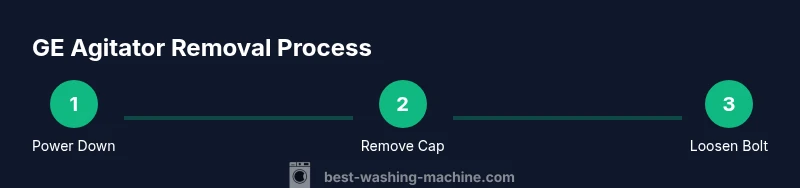
You can remove the GE washing machine agitator to clear clogs or inspect the drive system. Start by unplugging the unit, shutting off the water, and removing the fabric softener dispenser and agitator cap. Then locate and remove the retaining bolt or clip, lift the agitator straight up, and inspect the shaft. Reassemble with care and test with a short run.
Assessing the need to remove the agitator
Knowing when to remove a GE washing machine agitator helps you avoid unnecessary disassembly. Common signs include clothes not cleaning properly, persistent odor after a wash, or an unusual grinding sound during agitation. If you notice metal shards in the tub or a recurring jam, agitator removal may be required to inspect the inner components and clear obstructions. This process is most relevant when diagnosing a not-spinning issue that isn’t resolved by simple belt checks. By understanding the symptoms, you can decide whether to proceed or opt for professional service.
Safety prerequisites before you begin
Safety should come first. Unplug the washing machine from the wall outlet and shut off the hot and cold water supplies to prevent leaks. Move the unit away from walls to access the back and sides. Have a shallow drain pan and towels ready in case water pockets are present. Wear non-slip gloves and avoid metal tools that could scratch the tub. If you smell burning insulation or observe exposed wiring, stop immediately and seek professional help.
GE agitator designs and tool needs
GE washers use different agitator configurations, including bolt-on and snap-in styles. Some models feature a removable cap over a locking bolt, while others rely on a friction-fit cap. Understanding the design helps you choose the right tools, such as a screwdriver set for screws, pliers for clips, and a potential socket wrench for bolts. Have a camera or note-taking app handy to document each step for reassembly. If you are unsure of your model’s configuration, consult the user manual or GE’s support site for model-specific guidance.
Preparation and workspace setup
Clear your workspace and lay towels or a soft mat on the floor to cushion components. Remove any loose items from the washer drum and ensure there is adequate lighting. Prepare protective gear: gloves, eye protection, and a gentle mallet if you need to loosen stubborn fittings—but avoid hammering. Have a magnetic tray to keep small fasteners organized and labeled so nothing gets mixed up during reassembly.
Common pitfalls and how to avoid them
Two frequent mistakes are forcing a stubborn agitator without verifying attachment points and misplacing parts during disassembly. To prevent this, take photos at each step, keep parts in labeled bags, and avoid prying with metal tools that could nick the shaft. If you encounter resistance, pause, check for hidden clips, and reassess the model’s design. By moving deliberately, you minimize damage to the tub and drive components.
Aftercare: testing and maintenance
After removing and reinstalling the agitator, run a short cycle with no clothes to verify proper operation. Listen for unusual noises, check for leaks, and confirm the drum rotates smoothly. If issues persist, re-check the agitator alignment and fasteners. Regular maintenance—such as cleaning the agitator voids and inspecting the drive system every 12–18 months—helps prevent future failures.
Tools & Materials
- Safety gloves(Non-slip and electrical-insulated if possible)
- Screwdriver set(Phillips and flat-head for caps and screws)
- Socket wrench or nut driver(Appropriate size for the retaining bolt (varies by model))
- Pliers (needle-nose)(Useful for removing clips or small fasteners)
- Drain pan or towel tray(To catch any residual water when you open housings)
- Camera or notebook(Document steps for reassembly)
- Soft cloth or microfiber towel(Wipe down the shaft and parts to remove detergent residue)
Steps
Estimated time: 30-60 minutes
- 1
Power down and prep area
Unplug the washer and shut off water supplies. Move the unit slightly to access the back and sides. Place towels nearby to catch any spills and protect the floor.
Tip: Take a quick photo of the control panel before unplugging to aid reassembly. - 2
Access the agitator cap
Remove the fabric softener dispenser or cap from the top of the agitator. If your model has a hidden locking bolt, locate and remove the cap to expose it.
Tip: Work slowly to avoid cracking the cap; some models have a stubborn cap that requires gentle prying with a plastic tool. - 3
Remove the retaining bolt or clip
Use the appropriate screwdriver or socket to remove the retaining bolt or clip securing the agitator to the transmission shaft. Keep the fastener in a labeled container for easy reassembly.
Tip: Hold the inner basket steady to prevent it from turning as you loosen the bolt. - 4
Lift the agitator
Grip the agitator firmly and pull straight up. If it’s stubborn, gently twist while pulling. Do not force if you feel unusual resistance.
Tip: If the agitator sticks, pause and re-check for any hidden fasteners or clips. - 5
Inspect and clean the shaft
Carefully inspect the shaft for wear, rust, or detergent buildup. Wipe clean with a microfiber cloth and remove any obstruction that could hinder reassembly.
Tip: Take a photo of the shaft orientation before cleaning to ensure correct reattachment. - 6
Reassemble the agitator
Place the agitator back on the shaft, align it with the drive post, and re-tighten the retaining bolt or clip. Reinstall the cap and any dispensers, then run a test cycle with no load.
Tip: Avoid over-tightening; snug is usually sufficient for a secure fit.
FAQ
Is removing the agitator safe for DIY novices?
Yes, with proper precautions: unplug the unit, turn off water, and follow a model-specific guide. If you encounter resistance or uncertainty, stop and seek professional help.
Yes, it can be a DIY task if you follow safety steps and your model guide.
Do I need special tools to remove GE agitator?
Most models require a screwdriver set and a socket or wrench for the retaining bolt. Some may use a clip or cap that needs a plastic pry tool.
Mostly common tools; a screwdriver and wrench cover most models.
Will removing the agitator void my warranty?
Warranty terms vary by model and region. Check GE’s policy and consult authorized service if you’re under warranty or unsure.
It depends—check the warranty terms and consider professional service if in doubt.
How do I know if the agitator is the actual problem?
If you experience not-spinning issues, grinding, or clothes not cleaning after a cycle, the agitator or drive components could be the culprit. A diagnostic inspection helps confirm.
If the washer isn’t spinning or cleaning well, the agitator or drive system could be involved.
What if the agitator won’t come off after removing the bolt?
Stop applying force and re-check for hidden clips or adapters. If it remains stuck, professional service is recommended to avoid tub damage.
If it won’t budge, don’t force it—there may be hidden parts; call a pro.
Watch Video
The Essentials
- Unplug and prep the work area before starting
- Identify cap and fastener types specific to your GE model
- Document each step to facilitate accurate reassembly
- Test run with no clothes to verify operation