Is a Washing Machine Easy to Fit? A Practical Installation Guide
Learn how to install a washing machine with confidence. This educational guide covers space requirements, water and power access, safety checks, and common installation challenges to help you fit and test your appliance.


Is a washing machine easy to fit? This quick guide helps you gauge space, water access, and power needs, then walks you through the essential installation steps. You’ll learn what tools to gather, how to level and secure the unit, how to connect hoses safely, and how to test for leaks. By the end, you’ll know what to expect during installation.
is a washing machine easy to fit
Determining whether a washing machine is easy to fit depends on space, plumbing, and electrical readiness. According to Best Washing Machine, many machines are designed for straightforward installation, but success hinges on a clean, level floor, secure hookups, and a correctly sized doorway. In this guide, we break down common fit challenges, how to plan for them, and practical steps to achieve a smooth setup. With careful preparation, most homeowners can complete a secure installation without professional help. Remember that the kitchen or laundry space should allow for door swing, vibration clearance, and accessible shut-off valves. Familiarize yourself with your machine’s dimensions, the height clearance for any nearby cabinet doors, and the path from the room entrance to the installation nook. A deliberate approach reduces moving headaches and post-install adjustments.
- Brand context: Best Washing Machine emphasizes practical, safety‑focused installation planning.
- Realistic expectations: Some setups, especially integrated or compact spaces, may require modifications or professional service.
Space and layout considerations
The physical footprint of a washing machine matters as much as the hookups. Before buying or installing, verify:
- The unit’s width, depth, and height fit in the intended space with at least 2–3 inches of clearance on each side for air circulation and door operation.
- The doorway and hallway clearance allow the washer to pass through without tilting or turning.
- Floor stability and levelness, since uneven floors can hinder vibration control and door alignment.
Layout planning also means mapping water supply lines, drain access, and a nearby outlet. If you’re working with an integrated model, ensure there’s room behind cabinetry or panels and that service panels can be accessed for maintenance. A level surface reduces movement and noise, making the fit easier in the long run.
Plumbing and electrical readiness
Successful installation rests on accessible water and power. Check:
- A cold water inlet valve with flexible hoses rated for household washing machines. Avoid reused hoses that show cracks or bulges.
- A waste drain that accepts a hose without kinks, preferably with a standpipe or dedicated drain recess.
- A dedicated 120V outlet within reach, or the electrical configuration recommended by the manufacturer. Avoid using extension cords as they introduce fire risk and voltage drop.
- A washer outlet box or wall box for neat, secure hose connections. If your space has combination pipes, ensure there’s no corrosion or leaks before attaching hoses.
Safety note: Shut off water at the main supply before disconnecting any existing lines and never operate a washer with damaged hoses or exposed wiring.
Freestanding vs integrated models: what to know
Freestanding models are designed to stand alone with their own feet and are generally easier to install in most homes. Integrated models require compatible cabinetry, precise measurements, and sometimes a dedicated panel kit. When considering fit, ask:
- Can the unit be moved through any corridors without removing the doors or panels?
- Is there sufficient clearance for water hoses and power cords behind fixed cabinetry?
- Will the door swing or lid colliding with nearby cabinets be an issue?
If you’re upgrading from a different configuration, note that integration often adds steps like panel matching, panel alignment, and potentially additional venting or electrical considerations.
Quick pre-install checklist
Before you begin, complete this quick checklist to reduce fit issues:
- Measure the space and door openings; ensure at least 2–3 inches of clearance on each side.
- Confirm water supply flexibility and valve accessibility.
- Confirm a nearby, properly rated outlet and a safe path for the drain hose.
- Read the manufacturer’s installation instructions and model-specific requirements.
Keeping a simple checklist helps you catch potential blockers early and keeps the installation moving smoothly.
Next steps after placing the washer
With the washer in position, you’re ready to proceed to the official installation steps. Verify the machine is level, remove transit packaging, and lay down towels to catch any stray drips. If you encounter a space constraint or unusual plumbing, consult the manufacturer’s guide or contact a professional for a quick assessment. A careful start reduces post-install vibration, water leaks, and electrical concerns.
Tools & Materials
- Measuring tape(At least 2 meters for clearance and door swing)
- Adjustable wrench(For hose fittings and hose clamps)
- Bucket(Catch drips during hose connections)
- Old towels or rags(Protect floor and absorb leaks)
- Spirit level(Ensure the washer is perfectly level in all directions)
- Screwdrivers (Phillips and flat-head)(For panel screws and hose clamps)
- PTFE plumber’s tape(Seal thread connections on water fittings)
- Non-slip mat or vibration pads(Reduce vibration and movement during operation)
- Replacement hoses (if needed)(Use manufacturer-approved hoses)
Steps
Estimated time: 30-60 minutes
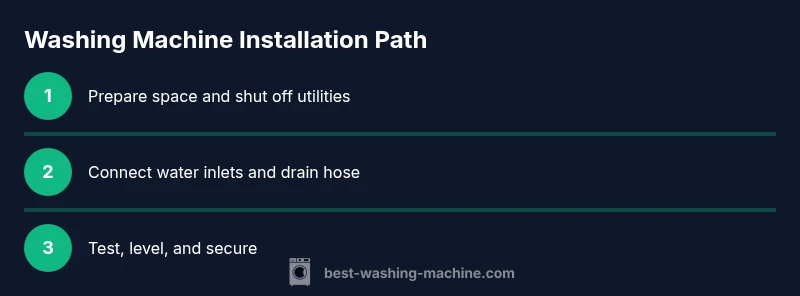
- 1
Prepare space and shut off utilities
Move the washer into position and check the floor for levelness. Shut off the water supply valves, unplug any existing appliance, and disconnect power if replacing an old unit. Place towels to catch any drips and keep the area clean.
Tip: Take a photo of existing connections before removing anything to reference later. - 2
Level the washer and position
Place the washer in its final spot, then use a spirit level to check front-to-back and side-to-side level. Adjust the feet until the unit sits firmly with no wobble. Leveling prevents excessive vibration during cycles.
Tip: A stable base reduces movement and prolongs appliance life. - 3
Attach water inlet hoses
Hand-tighten new hoses onto the washer’s cold and hot inlets, then snug with a wrench—avoid overtightening. Use PTFE tape on threaded fittings if the manufacturer recommends it. Attach other ends to the shut-off valves.
Tip: Check for leaks after tightening by running a short cycle with the drain hose secured. - 4
Connect the drain hose
Secure the drain hose to the washer and route it into a standpipe or drain. Ensure there are no kinks and the hose is secured to prevent movement during cycles.
Tip: Keep the drain hose elevated above the height of the standpipe to prevent siphoning leaks. - 5
Plug in and test
Plug the washer into a properly grounded outlet and run a short test cycle with no laundry to verify water flow, drainage, and leak-free connections. Monitor for any drips around hose fittings.
Tip: Have towels ready to catch drips during the initial test. - 6
Final checks and secure
Recheck level and door clearance, secure any loose cords or hoses, and wipe down any moisture. If you notice persistent leaks or unusual noises, power off and consult the manual or a professional.
Tip: Document serial and model information for future service needs.
FAQ
Is professional installation required for all washing machines?
Not always. Basic installs can be DIY if you have clear space, proper tools, and accessible water and power. Integrated or complex setups may require a professional.
No, not always. If you have the right space and tools, you can do a basic install yourself; more complex setups might need a pro.
Can you fit a washing machine in a tight space?
Yes, with careful measurements and possibly a compact model. Ensure door clearance, hose routing, and electrical access are all feasible.
Yes, but you’ll need precise measurements and possibly a compact model or reconfigured space.
What should I check before buying a washing machine?
Check doorway dimensions, space allowance, nearby outlets, water supply valve access, and floor stability to ensure it fits and operates safely.
Check the doorway, space, outlets, and floor stability before buying.
How long does installation typically take?
A standard installation usually takes 30 to 60 minutes if space is ready and no complications arise. Complex setups may take longer.
Most installations take about half an hour to an hour, depending on space and setup.
Are there safety concerns I should know?
Turn off water and power before starting. Use proper hoses and follow the manufacturer’s instructions to avoid leaks and electrical hazards.
Always shut off utilities first and follow the manual to stay safe.
What if my washer won’t drain after install?
Check that the drain hose is properly seated and free of kinks, and that the standpipe or drain is clear. If problems persist, consult the manual or a professional.
Ensure the drain hose is correctly installed and unclogged; seek help if needed.
Watch Video
The Essentials
- Measure space and clearance before install
- Prepare water and power connections with safety in mind
- Level the unit to reduce vibration
- Test and check for leaks before loading laundry
- Know when to call a professional for complex installations