Washing Machine to Septic Tank: Safe Laundry Guidelines
Learn how to manage washing machine wastewater safely for septic systems. This guide covers septic-safe detergents, load sizing, and routine maintenance to protect your drain field and septic tank.


You're about to learn how to safely manage the washing machine to septic tank flow. This guide covers septic-safe detergents, load sizing, and routine maintenance to protect drain fields and reduce clog risks. Follow the steps to keep your washer and septic system healthy, while understanding where residential wastewater goes and how best to treat graywater.
Understanding how septic systems handle laundry wastewater
Your septic system is designed to treat household wastewater, including graywater from laundry. When you run a washing machine, the effluent travels through your home's plumbing and eventually reaches the septic tank and drain field. The volume and composition of laundry wastewater can affect tank settling, scum layers, and the drain field's absorption capacity. The phrase washing machine to septic tank describes this everyday connection, and understanding it helps you protect the system while keeping clothes clean.
According to Best Washing Machine, a typical home septic system relies on bacteria in the tank to break down organics, while the drain field disperses treated water into the soil. Heavy loads or loads with harsh chemicals can disrupt this balance. By understanding where the wastewater goes, you can make informed choices that minimize disruption to the septic process.
Key septic health considerations for wash day
To keep your septic system healthy when washing clothes, focus on reducing suds, controlling chemical loads, and avoiding harsh drain cleaners. Septic-friendly detergents are typically low-suds and biodegradable. Avoid mixing additives such as solvents or bleach that can disrupt the natural bacterial balance inside the tank. Regularly check for signs of trouble (slow drains, gurgling, odors). Best practices include running full loads to maximize efficiency and spacing laundry across the week to avoid sudden wastewater surges.
Best Washing Machine analysis shows that mindful detergent choices and load planning can reduce stress on the septic system while preserving washing performance. Keeping a simple log of when you run the washer helps anticipate peak wastewater times and coordinate with septic pumping schedules.
Detergents, additives, and what to avoid
Choosing detergents formulated for septic systems is essential. Look for labels like septic-safe, biodegradable, and low-suds. Avoid chlorine bleach, solvent-based additives, and non-biodegradable softeners, as these can harm bacteria or accumulate in the tank. Fabric softeners often contain oils and fragrances that linger in the system; limit or avoid them entirely where possible. Do not pour hot solvents or cleaning products down the drain. If you do use additives, choose ones recommended by septic professionals and always in small quantities. This is particularly important when the goal is to protect the washing machine to septic tank pathway from contamination.
Best Washing Machine notes that consistent use of septic-friendly products helps maintain microbial balance and reduces sludge buildup in the tank.
Washing habits that minimize stress on the septic system
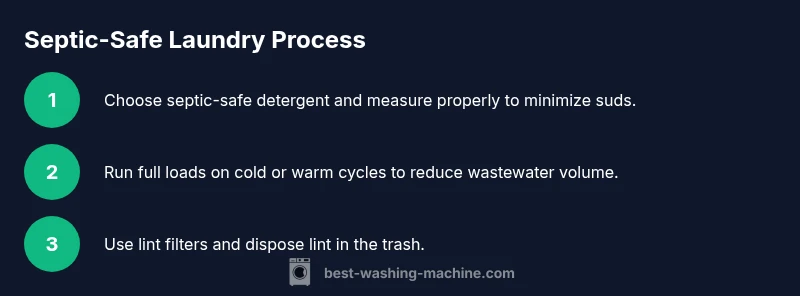
Smart wash habits reduce the overall load on your septic tank. Run full loads whenever possible to maximize water efficiency and reduce the frequency of wastewater entering the system. Prefer cold or warm cycles over hot ones to conserve energy and limit chemical use. Use the recommended detergent quantity; overdosing can lead to excess suds and incomplete breakdown. Space out heavy laundry days to prevent large, abrupt wastewater surges and avoid using the disposal or sink for large quantities of water during peak septic activity. These habits make the washing machine to septic tank pathway gentler on the drain field.
Maintenance practices that support a healthy septic system
Regular septic maintenance is crucial when you run a washing machine. Schedule periodic septic tank pumping based on household size and wastewater volume. Use lint filters or fine mesh screens to catch loose fibers and dispose of lint in the trash rather than the septic system. Keep an eye on backflow signs like slow drains, gurgling, or odors, and address them promptly with a professional. Consider a routine septic tank inspection every few years to verify baffle integrity and overall health. These practices sustain the long-term compatibility between your washer and septic system.
Front-loader vs top-loader: impact on septic health and best practices
Front-load washers tend to use less water per cycle, which can be gentler on septic systems when paired with septic-safe detergents. Top-load models often use more water but can be balanced with appropriate cycle choices and load management. Regardless of the machine type, the key is to minimize suds, choose biodegradable products, and avoid harsh additives. If you’re transitioning from one type to another, monitor septic performance closely during the first few months and adjust detergents and cycle settings as needed.
Tools & Materials
- Gloves(Protect hands during maintenance and handling chemicals)
- Septic-safe laundry detergent(Choose biodegradable, phosphate-free labels)
- Mesh lint filter or fine mesh bag(Optional to reduce lint reaching septic tank)
- Measuring cup(Use for consistent detergent dosing)
Steps
Estimated time: 60-90 minutes
- 1
Confirm septic codes and capacity
Review local codes and assess your septic tank capacity relative to laundry wastewater. This ensures changes won’t overwhelm the system and helps you plan appropriate wash patterns.
Tip: Consult a local septic professional if you notice backups or slow drains. - 2
Switch to septic-safe detergent
Replace regular detergents with septic-safe, biodegradable options. Use the recommended amount; excess detergent increases suds and can stress the tank.
Tip: Keep a small jar of your detergent for consistent dosing. - 3
Run full, cold or warm loads
Aim for full loads to maximize water efficiency and reduce total discharge frequency. Avoid hot cycles, which can alter pH and increase chemical impact on the septic ecosystem.
Tip: If possible, align wash days to avoid back-to-back heavy loads. - 4
Minimize additives and solvents
Limit chlorine bleach and other additives. If you must use them, do so sparingly and only when necessary.
Tip: Prefer oxygen-based alternatives when available. - 5
Catch lint and fibers
Use a lint filter or mesh bag and dispose lint in the trash. Small fibers can accumulate in the septic tank and drain field over time.
Tip: Regularly clean the lint filter to maintain effectiveness. - 6
Schedule septic maintenance
Plan septic tank pumping and inspection on a cyclical basis. Regular maintenance helps detect issues before they become major repairs.
Tip: Keep records of pumping dates and system inspections.
FAQ
Is every detergent safe for septic tanks?
Not all detergents are septic-safe. Look for labels that indicate biodegradability and low suds. If in doubt, choose products specifically marketed as septic-safe.
Not all detergents are safe for septic tanks. Look for biodegradable, low-suds options and avoid products that aren’t labeled septic-safe.
Does washing clothes affect how often I should pump my septic tank?
Frequent large loads can increase wastewater volume entering the system. Maintain regular pumping schedules based on household size and water use, rather than relying on guesswork.
Big or frequent laundry days mean more wastewater. Stick to a regular pumping schedule based on your household size and water use.
Can I drain laundry water into a separate drain for septic compatibility?
In many areas, laundry wastewater goes to the septic system through the home’s drain. Always follow local codes and avoid creating backflow risks. A septic-safe approach is to keep laundry connected to the main system with proper detergents.
Usually laundry wastewater goes to the septic system through the home drain; follow local codes and avoid backflow risks. Use septic-safe products.
What are common signs my septic tank needs pumping?
Slow drains, gurgling sounds in pipes, or wastewater odors are common indicators. If you notice these, consult a septic professional promptly and avoid running more loads until inspected.
Slow drains, gurgling pipes, and foul odors usually mean it’s time to pump or inspect the septic tank.
Do front-load and top-load washers differ for septic impact?
Front-load washers typically use less water, which can be gentler on septic systems when you use septic-safe detergents. Regardless of type, focus on low-suds products and proper load sizes.
Front-loaders use less water, which helps septic systems when paired with septic-safe detergents; same rules apply to top-loaders.
Watch Video
The Essentials
- Choose septic-safe detergents and avoid harsh additives.
- Run full loads and favor cold or warm cycles to limit wastewater surges.
- Use lint filters and dispose lint in the trash to protect the drain field.
- Schedule regular septic maintenance to prevent failures.
- Monitor for signs of trouble and adjust washing habits accordingly.