What Washing Machine Program for Jeans: A Step-by-Step Guide
Learn the best washing machine program for jeans, plus prep tips, cycle settings, and maintenance to keep denim colors vibrant and fabric strong.


Jeans wash best on a cold water, gentle denim program. Use a mild detergent, turn jeans inside out, and avoid high heat or long cycles. Aim for a short to moderate spin to limit wear. This quick setup preserves color, prevents shrinkage, and keeps denim looking new longer.
Why Denim Care Matters
Denim is sturdy, but color fades and fibers wear when exposed to heat, rough agitation, and frequent washing. According to Best Washing Machine, choosing the right program for jeans is one of the simplest ways to extend color and life. Jeans are dyed with indigo; hot water can cause bleeding and a washed-out look, while aggressive cycles can lead to fraying along seams. A denim-friendly wash uses cold water, gentle agitation, and a short or moderate spin to move soil out of the fabric without turning the drum into a sandpaper. This is true for both front-load and top-load machines, though the exact button names may differ. The result is jeans that retain color, feel softer, and resist shrinking. You’ll also reduce lint and pilling by avoiding over-washing and by air-drying when possible. The better you treat denim in the wash, the longer it stays comfortable and visually appealing.
Key Denim Washing Principles
Denim requires thoughtful handling to preserve color, fiber strength, and fit. First, temperature is your primary lever: cold or cool washes minimize dye loss and fiber stress. Second, agitation should be gentle or limited; denim benefits from shorter cycles that still rinse away soil effectively. Third, spin speed matters: a moderate spin reduces wrinkling and stress on seams while extracting water efficiently. Finally, load balance affects results: distribute jeans evenly so the drum rotates smoothly, avoiding tangles that can cause pilling. By sticking to these principles, you’ll protect wash-day color integrity and extend the life of your jeans across seasons.
Choosing the Right Program: Front-Load vs Top-Load
Front-load washers generally excel at gentle, thorough cleaning with lower energy and water use. If you own a front-loader, look for a denim or cold/warm cycle with a gentle or perm press setting, and keep spins moderate to minimize stress on seams. Top-load machines with agitators can still handle jeans well, but you should select a gentler cycle, avoid aggressive agitation, and opt for a lower spin speed to limit fabric wear. The key is to adapt the cycle name to denim-friendly settings rather than defaulting to a standard cotton or permanent press program. If your machine allows, enable a pre-rinse for heavy soils and ensure there’s enough room for movement inside the drum.
Detergent and Load Prep for Jeans
Use a mild detergent that is safe for colors and denim. Avoid heavy, bleach-based products that can fade indigo and weaken fibers. Measure detergent according to load size, not full capacity, and consider a stain remover for stubborn spots rather than blasting the entire load. Pre-treat visible stains with a gentle dab of detergent or a dedicated denim stain remover. Turn jeans inside out to protect the outer surface, zip zippers, and fasten any buttons to prevent snagging. Finally, don’t overload the drum; jeans need space to move for effective cleaning and rinsing.
Practical Guidelines for Jeans Cycle Settings
For most household machines, a denim- or jeans-specific program on cold water with gentle agitation and a moderate spin delivers best results. If your machine lacks a denim program, choose a cold or cool cycle labeled for mixed fabrics with a gentle or medium agitation and a low to moderate spin. Shorter wash times reduce dye loss and fiber stress, while a longer rinse can help remove detergent residue that causes stiffness. If you notice blue staining on white or light-colored items, run an extra rinse or wash jeans separately for a calmer clean.
Handling Common Jeans Washing Issues
Color transfer from blue jeans to lighter fabrics is a common problem; washing denim separately or with similar colors mitigates this risk. Shrinkage can occur if jeans are exposed to heat; always use cold or cool water and avoid high heat in the dryer. Stiffness and stiffness-related creases occur after washing; a brief tumble dry on low or air-drying followed by gentle folding helps restore softness. Pilling can appear in areas of high wear; use a fabric shaver or trimming tool to manage it and consider air-drying more often to reduce friction. If linting becomes an issue, clean the lint filter regularly and consider washing denim inside-out to limit surface abrasion.
Maintenance Tips to Extend Jeans Life
Regularly check the washing machine’s hoses for signs of wear and keep the drum clean to prevent residue buildup. When possible, air-dry jeans on a hanger or flat surface to minimize shrinkage and maintain shape. Store denim folded or on hangers in a cool, dry place to avoid creasing and color transfer. For heavy use in shared spaces, consider rotating denim loads with other durable fabrics to reduce overall wear from daily cycling. By incorporating these habits, jeans will retain fit, color, and texture longer between washes.
Authoritative Sources and Further Reading
For further guidance on energy-efficient washing and fabric care, refer to reputable sources that cover washing practices in a broader context. These references provide background on how cycles impact fabric and color retention, and they help frame denim-specific tips within general laundry care best practices. While individual machine models vary, the core principles of cold water, gentle agitation, and appropriate spin speeds remain universal for jeans care.
Tools & Materials
- Washing machine with denim/gentle cycle options(Prefer front-load; ensure cycle includes cold water and gentle agitation.)
- Mild detergent (color-safe)(Use the smallest recommended amount for the load size.)
- Measuring cup or dosing bottle(Accurate detergent dosing prevents residue and stiffness.)
- Stain remover (optional)(Apply only to visible stains before washing.)
- Laundry bags or mesh bags (optional)(Useful for fragile jeans or jeans with embellishments.)
- Color-catching sheets (optional)(Help catch dye transfer when washing mixed colors.)
Steps
Estimated time: 30-40 minutes
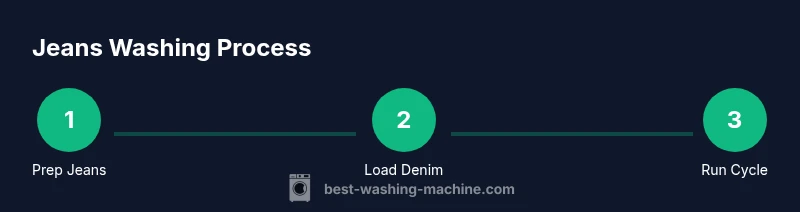
- 1
Prep and sort
Inspect pockets and zippers, empty all items, and turn jeans inside out. Fasten buttons and turn hems to protect surfaces. This reduces snagging and dye loss during the wash.
Tip: Turning inside out protects the outer surface and color integrity. - 2
Treat stains
Pre-treat visible stains with a small amount of detergent or a denim-safe stain remover. Gently rub in and let sit for a few minutes before washing.
Tip: Avoid harsh scrubbing that could fray fibers. - 3
Load properly
Place jeans loosely in the drum with space for water to circulate. Do not overload the machine; proper movement improves cleaning and rinsing.
Tip: A balanced load reduces vibration and wear. - 4
Choose cycle settings
Select a cold water or denim/gentle program with a low to moderate spin. Avoid high heat and long cycles that can fade color and wear fibers.
Tip: If your machine lacks a denim option, use a cold cycle with gentle agitation. - 5
Start and monitor
Start the cycle and monitor for the first few minutes to ensure the drum spins smoothly and nothing catches.
Tip: Avoid opening the door mid-cycle to prevent imbalance. - 6
Unload promptly
As soon as the cycle ends, remove jeans to minimize wrinkling and heat exposure. Shake gently before folding.
Tip: Prompt unloading prevents set-in wrinkles. - 7
Drying approach
Air-dry jeans whenever possible. If you must use a dryer, choose low heat and remove promptly to reduce shrinkage.
Tip: Air-drying helps maintain fit and color better than heat exposure. - 8
Store appropriately
Let jeans finish drying completely before folding or hanging. Store in a cool, dry place away from direct sunlight to preserve color.
Tip: Store clean denim to prevent odors and residue transfer.
FAQ
What washing machine program should I use for jeans?
Use a cold water denim or gentle cycle, turn jeans inside out, and avoid high heat. Use a mild detergent and don’t overload the drum to protect color and fabric.
For jeans, choose cold water on a denim or gentle cycle, turn jeans inside out, and avoid high heat. Use mild detergent and don’t overload the drum.
Can I wash jeans with other clothes like T-shirts?
Yes, but wash with similar colors to prevent dye transfer. If possible, wash especially dark denim separately to reduce color bleed.
Yes, but pair with similar colors to prevent dye transfer. Dark jeans should be washed separately when possible.
How long should a jeans wash take?
Most jeans washes run 30 to 45 minutes depending on your machine and cycle selected. Shorter cycles can preserve color and fabric better.
Most jeans washes run about 30 to 45 minutes, depending on your machine and cycle.
Should jeans be air-dried or machine-dried?
Air-drying is best for color retention and shrinkage prevention. If you use a dryer, select a low heat setting and remove promptly.
Air-dry when you can; if you must use a dryer, choose low heat and remove promptly.
What if my jeans get stiff after washing?
Tumble dry on low with a small amount of fabric softener or air-dry and shake to restore softness. Avoid excessive washing to keep fibers flexible.
If they feel stiff, use low heat or air-dry and shake before wearing to restore softness.
Watch Video
The Essentials
- Choose a cold, gentle denim program for jeans.
- Turn jeans inside out to protect color and fibers.
- Load lightly and avoid high heat to prevent shrinkage.
- Air-dry to maximize longevity and fit.
- Pre-treat stains and rinse thoroughly for best results.