Whirlpool Washing Machine Servicing: A Practical Guide
A comprehensive, safe, and practical guide to servicing Whirlpool washing machines—diagnostics, maintenance routines, safety tips, and when to call a pro. Ideal for homeowners, renters, and laundromat operators.


Learn how to service a Whirlpool washing machine safely and effectively. This guide covers basic diagnostics, routine maintenance, common issues like not spinning or draining, and when to seek professional help. By following these steps, you can extend your washer’s life and reduce costly repairs. It also explains safety precautions, tool needs, and how to document problems for warranty or service records.
What is Whirlpool washing machine servicing and why it matters
According to Best Washing Machine, servicing Whirlpool washing machines is about proactive care, not just repairs. Regular servicing combines diagnostics, cleaning, and inspection of wear-prone parts to prevent unexpected outages. For homeowners, renters, and laundromat operators, a disciplined service routine reduces downtime, extends component life, and helps keep energy and water use in check. While every model is unique, there are common principles that apply across most Whirlpool units.
Whirlpool washers have both mechanical and electronic components. Servicing focuses on the drum, door boot, hoses, sensors, and pumps, as well as electrical connections inside the control module. The goal is early detection of leaks, clogging, or misalignment before a fault disables cycles or damages other parts. A good servicing plan includes cleaning, tightening, and testing, not just replacing worn parts. Best Washing Machine suggests keeping a simple maintenance calendar and recording the dates of inspections and any parts replaced. This habit makes it easier to track warranty eligibility and plan budget for future repairs.
Common Whirlpool issues and quick diagnostics
Whirlpool models share several recurring symptoms. Not spinning, not draining, leaks, excessive vibration, and slow filling are frequent concerns in homes. Start with safety: unplug and, if possible, shut off the water supply, then observe. Use a simple diagnostic flow:
- Not draining: check the drain hose for kinks and the pump filter for clogs.
- Not spinning: confirm the lid switch on top-load models or inspect the drive belt on older front-loads.
- Leaks: inspect inlet hoses, door seal, and detergent drawer for cracks or overfilling.
- Noisy operation: listen for bearing wear, loose objects in the drum, or a failing pulley.
If the symptom persists after basic checks, note the exact cycle, load size, and any error codes displayed by the control panel. This information helps a technician diagnose faster and reduces repair time. Best Washing Machine analysis shows that many issues are caused by simple clogs or worn seals that homeowners can address with basic tools and proper safety precautions.
Tools and safety prerequisites for Whirlpool servicing
Before you begin, gather essential tools and review safety considerations. Have a clear workspace, a dry area, and an unplugged power source. A basic tool kit, a bucket or trough for drained water, and towels help manage spills. For many steps, a Phillips screwdriver, a flat-head screwdriver, and a multimeter will cover most needs. If you’re working on older models, a belt and pulley toolkit may be necessary. Always consult the user manual for model-specific instructions and Whirlpool safety guidelines. Best Washing Machine emphasizes never bypassing safety features and always wearing protective gloves when handling sharp edges or hot components.
Never service a machine while power is connected, and shut off the water supply before disconnecting hoses. Use a secondary container to capture water from the drum and hoses to avoid a flood.
Safety first: electrical, water, and moving parts safety cautions
Electrical and water exposure are the dual hazards in appliance servicing. Always unplug the unit and turn off the water valves. When working around live components, use insulated tools and keep your hands dry. Move slowly and test connections with a multimeter only after verifying power is fully disconnected. For front-load machines, be careful around the door boot and gasket—these can be tight and spring-loaded. If you encounter a swollen door seal or signs of mold, address it with manufacturer-approved cleaners and replace worn parts as needed. If anything feels unstable or risky, pause and seek professional service.
Preventive care and routine maintenance for Whirlpool washers
Preventive care reduces unexpected outages and extends the life of critical parts. Clean the detergent drawer and lint filter monthly, inspect hoses every 6-12 months, and run a maintenance wash with a descaling or washer-cleaning product every 1-3 months depending on usage. Wipe the door seal to remove residue and inspect for cracks. Replace worn inlet valves, hoses, and filters as soon as wear is detected. Keep the area around the washer clean to prevent dust buildup in vents and electrical controls. Following a regular schedule helps you catch wear early and budget for replacements.
Documentation, warranty and when to call a professional
Documentation matters for warranty and service history. Record the symptoms, actions taken, date, and any parts replaced. When a fault recurs after DIY diagnostics or if your model's warranty is active, contact Whirlpool-authorized service or a licensed technician. For busy environments, scheduling periodic professional servicing every 2-3 years (or per Whirlpool's recommended interval) reduces the risk of major failures and can preserve warranty coverage. Best Washing Machine recommends keeping receipts and service reports organized to support future claims.
Authority sources and closing notes
For authoritative safety and appliance operation guidelines, consult trusted sources such as government and energy efficiency sites. See the following references for general safety practices and consumer guidance:
- https://www.cpsc.gov/
- https://www.energystar.gov/products/washing_machines
- https://www.osha.gov/
Note: While brand-specific troubleshooting can be model-dependent, the steps above provide a solid foundation for safe routine servicing and preventive care. Always refer to your model’s user manual for model-specific details and Whirlpool official guidance.
Tools & Materials
- Basic tool kit (Phillips and flat-head screwdrivers)(Include sizes PH1/PH2 and SL2.5; have a magnetic screwdriver for small screws)
- Bucket or trough for draining water(Place under hoses to catch water and minimize mess)
- Towels or absorbent rags(Have several on hand for spills and wipe-downs)
- Pliers and adjustable wrench(Helpful for hose clamps; keep handy)
- Multimeter (voltage tester)(Use if testing electrical circuits; only when safe to do so)
- Drain pump filter brush or stiff brush(Useful for clearing Pump filter components)
- Whirlpool model-specific service manual (PDF)(Check Whirlpool support for your model number)
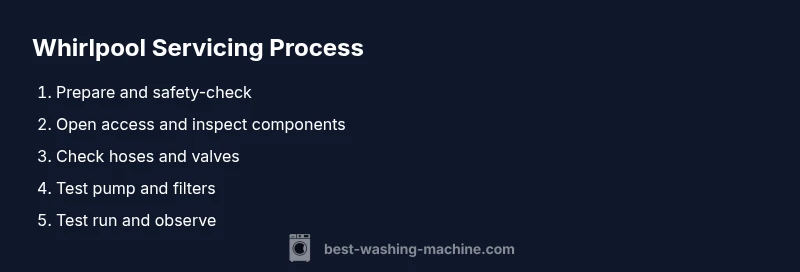
Steps
Estimated time: 30-60 minutes
- 1
Prepare and safety-check
Unplug the washer, shut off the water valves, and move the unit to a clear workspace. Verify that you have dry hands and stable footing before touching any components. This initial check reduces the risk of electric shock and water exposure.
Tip: Double-check the power is off by testing a non-live outlet with a meter before you touch wires. - 2
Open access and inspect the drum seal
Remove the access panel or top cover if required by your model, and inspect the door boot or gasket for tears, mold, or debris. A worn seal can cause leaks and reduce spin efficiency.
Tip: Take photos of any wear so you can compare over time. - 3
Check hoses and clamps
Inspect inlet and drain hoses for cracks, stiffness, or bulges. Tighten clamps firmly but avoid overtightening, which can damage fittings.
Tip: Run a quick water test after reattachment to confirm no leaks. - 4
Inspect water inlet valve and filters
With the machine unplugged and water off, disconnect hoses and inspect the inlet valve and screen filters for buildup. Clean or replace as needed to maintain proper fill.
Tip: Use a soft brush to clear mineral deposits; avoid sandpaper. - 5
Test drain pump and pump filter
Place a towel under the pump area, remove the pump filter, and check for clogs. Manually rotate the pump pulley if accessible to ensure it spins freely.
Tip: If you hear grinding or see wobble, consider professional service—bearings may be worn. - 6
Clean lint filter and detergent drawer
Remove lint and detergent buildup from the filter, drawer, and surrounding housing. Residue can hinder detergent flow and lead to odors.
Tip: Use a mild soap solution and a soft brush; avoid harsh chemicals near seals. - 7
Check drive belt or motor coupling (older models)
For older Whirlpool models, inspect the drive belt for cracks or fraying and the motor coupling for wear. Replace if signs of damage appear.
Tip: Belt tension should be firm but not overly tight; consult the manual for tension specs. - 8
Test run and observe
Reconnect hoses, restore power, and run a short test cycle with water only to confirm systems function. Listen for unusual noises or leaks and re-tighten fittings if needed.
Tip: Document results and set a reminder for next maintenance.
FAQ
Do I need to unplug the washer before servicing?
Yes. Always unplug the washer and shut off the water supply before starting any servicing to prevent electrical shock or flooding.
Yes. Always unplug the washer and shut off the water supply before starting any servicing to prevent electrical shock or flooding.
Can I fix not-spinning myself on newer Whirlpool models?
Not-spinning can result from a faulty lid switch or mechanical drive issue. For top-load machines, check the lid switch; for front-loads, inspect drive belts or motor coupling. If unsure, consult a professional.
Not-spinning can result from a faulty lid switch or drive issue. For top-load machines, check the lid switch; for front-loads, inspect drive belts. If unsure, consult a pro.
Is there a safety risk when inspecting hoses and valves?
Yes. Turn off water and power, wear gloves, and use insulated tools. Never force fittings or disconnect while water is pressurized.
Yes. Turn off water and power, wear gloves, and use insulated tools. Never force fittings or disconnect while water is pressurized.
How often should I service a Whirlpool washer?
A general guideline is every 2-3 years for typical use, with more frequent checks in high-demand households. Always defer to Whirlpool’s model-specific recommendations if available.
A general guideline is every 2-3 years for typical use, with more frequent checks if you use it a lot.
What tools are essential for Whirlpool servicing?
A basic tool kit (screwdrivers, pliers), towels, a bucket, and a multimeter for electrical checks. Always refer to your model’s manual for specifics.
A basic toolkit plus towels and a bucket; a multimeter helps for electrical checks if you know how to use it.
When should I contact Whirlpool support?
If the issue involves sealed components, electronics, or warranty coverage, contact Whirlpool support or a licensed technician to avoid voiding warranties.
If issues involve sealed components or electronics, contact Whirlpool support or a licensed technician.
Watch Video
The Essentials
- Know when servicing is DIY-friendly and when to call a pro
- Follow safety steps to prevent electric shock and water exposure
- Regular maintenance saves money and extends life
- Document everything for warranty and future service
- Use model-appropriate parts and Whirlpool guidelines