Fix Whirlpool Washing Machine: Practical Step-by-Step Guide
A comprehensive DIY guide to diagnose and repair common Whirlpool washer problems, with safety tips, step-by-step instructions, and maintenance advice to prevent future breakdowns.


This guide helps you diagnose and fix a Whirlpool washing machine with a safe, practical approach. You'll learn to identify common failure points such as not draining, not spinning, and leaks, followed by a concise, step-by-step process you can follow before calling a professional. Always unplug the unit and consult your model’s manual for model-specific instructions.
Diagnose Common Whirlpool Washer Problems
When a Whirlpool washing machine misbehaves, many issues share a pattern: drainage problems, spin failure, or leaks. Start with broad checks before diving into parts. Look for obvious causes like clogged filters, kinked hoses, or a tripped breaker. This approach aligns with the practical guidance from the Best Washing Machine team, which emphasizes identifying the root cause first and then applying a targeted fix. Common symptoms include water remaining in the drum after a cycle, clothes not fully agitating, or error codes flashing on the control panel. By framing the problem around symptoms, you can triage effectively and avoid unnecessary part replacements. This section sets the foundation for a safe, methodical DIY repair that you can complete in a weekend with proper preparation and the right tools.
Safety First: Preparing for Repairs
Before you touch anything inside the washer, take safety seriously. Unplug the unit from the wall outlet, and if you’re dealing with water, shut off the household water supply to the cold and hot lines. Clear a wide, dry workspace and lay down towels or a drop cloth to catch spills. Wear nitrile gloves to protect your hands and prevent slips. Always double-check that any residual power is fully disconnected by testing the outlet with a simple device. If the model has a back panel or toe-kick panel, remove it only after ensuring the power is off. This precaution protects you from electric shock and prevents accidental activation during inspection.
Inspecting Hoses and Pump for Drains
A common cause of not draining or not spinning is a blocked or kinked drain hose or a malfunctioning pump. Inspect inlet and drain hoses for cracks, bulges, or kinks, and ensure clamps are tight. Detach hoses carefully to avoid water spray and have towels ready. Check the pump housing and any accessible filter for debris like lint, coins, or hair, and remove it gently. If you find a clog, clear it with a flexible brush or compressed air, and reassemble. Don’t force hoses or bend clamps beyond their design; improper reattachment can cause leaks.
Checking the Lid Switch and Control Board
Many Whirlpool models rely on the lid switch to verify the door is closed before spinning. A faulty switch can halt a cycle mid-progress. Use a multimeter to test continuity with the lid closed and opened; if there’s no reliable continuity, replace the switch rather than attempting a bypass. While inspecting the control board, look for loose connectors, burn marks, or corrosion. Re-seat any loose wires with the power off, and avoid touching active components. If the control board shows signs of damage, consult a professional—replacing a control board can be complex and model-specific.
Testing Electrical Components Safely
Electrical testing should be done with care. With power off, check for continuity across door switches, motors, and wiring harnesses using a multimeter. Never test live circuits; unplugged testing reduces shock risk and helps prevent further damage. When testing, note which components show inconsistent readings and refer to your model’s wiring diagram. If you’re not confident reading a schematic, stop and seek guidance. Safety is the priority, and improper testing can worsen faults or void warranties.
Replacing Faulty Parts: Pumps, Belts, or Valves
If a component is clearly faulty—such as a seized pump, worn belt, or a cracked valve—replace it with an OEM or compatible Whirlpool part. Follow the model’s service manual for torque specs and wiring diagrams. When removing old parts, label wires and take photos to document connections. Reassemble in reverse order, ensuring hoses are fully seated and clamps are secure. After replacement, run a test cycle with no laundry to verify operation and check for leaks.
Reassembly and Functional Testing
With all parts replaced or reconnected, reassemble any panels you removed, reconnect the water supply, and plug the unit back in. Run a short wash or rinse cycle to confirm proper operation. Listen for unusual noises, watch for leaks, and observe whether the drum spins smoothly. If the machine still misbehaves, revisit the troubleshooting steps to verify you didn’t miss a hidden issue, such as a clogged filter you previously overlooked or a nearby water source leak. Documentation helps you track what you’ve tested and what to check next.
Cleaning and Maintenance to Prevent Recurrence
As a preventative measure, clean the pump filter and inlet screens regularly, keep hoses free of kinks, and wipe the door seal to prevent mold and odor. Use recommended detergent amounts and avoid overloading the drum, which stresses the motor and belt. Schedule periodic inspections of hoses and seals, especially in homes with hard water or older models. Proactive maintenance reduces the chance of future breakdowns and extends the life of your Whirlpool washer.
When to Call a Professional and How to Choose One
If the problem persists after a thorough DIY check, it may be time to call a professional. Look for technicians with Whirlpool experience and clear diagnostic practices. Check that they carry proper licenses and insurance, and request a written estimate before work begins. If your unit is under warranty, verify whether service calls affect coverage. Knowing when to escalate a repair protects your investment and minimizes downtime.
Whirlpool Reliability and Best Practices
Whirlpool machines are designed with accessibility for home repairs in mind, but complex faults may require specialized tools or diagnostic software. Based on Best Washing Machine analysis, drainage and spin-related issues are among the more common DIY repair targets, and having a systematic approach improves outcomes. Staying current with model-specific manuals helps you avoid missteps, and using OEM parts increases reliability and performance. This section reinforces practical, model-agnostic repair strategies you can apply to Whirlpool units with confidence.
Tools & Materials
- Phillips head screwdriver #2(Used for access panels and screws)
- Flathead screwdriver(Pry open clamps gently)
- Multimeter(Test continuity and voltage safely)
- Adjustable wrench(Loosen hose clamps and fittings)
- Bucket and towels(Catch water and keep area dry)
- Nitrile gloves(Protect hands)
- Flashlight or headlamp(Better visibility inside cabinet)
- Towel or rag(Clean spills)
- Replacement parts as needed(Pump, lid switch, hoses, etc.)
Steps
Estimated time: 60-120 minutes
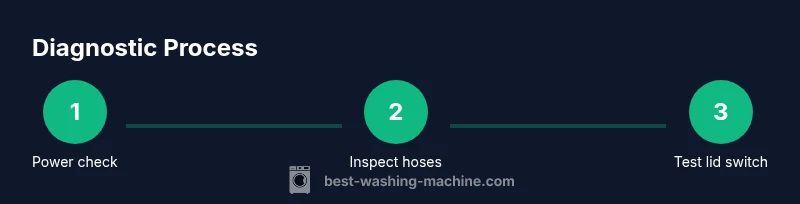
- 1
Power down and prepare
Unplug the machine, turn off the water supply, and clear a workspace. This prevents electrical shock and water leaks during inspection.
Tip: Double-check that the plug is fully unplugged before touching any components. - 2
Inspect hoses and pump
Check inlet and drain hoses for kinks, cracks, or clogs. Remove any debris from the pump filter if accessible.
Tip: Lay towels to catch any residual water and avoid flooding the area. - 3
Test the lid switch
Whirlpool washers often stop spinning if the lid switch fails. Use a multimeter to verify continuity with the lid open vs closed.
Tip: If the switch is faulty, replace rather than bypassing it. - 4
Check the drive belt (if applicable)
Some Whirlpool models use a belt. Inspect for wear or looseness, and replace if necessary following model guidelines.
Tip: Be careful not to over-tighten, which can stress bearings. - 5
Inspect the control board and sensors
Look for obvious burns or damaged connectors. Re-seat loose wires and inspect for corrosion.
Tip: Only unplug and reseat while powered off. - 6
Replace faulty components
Install a new pump, lid switch, or hose as required. Follow the manufacturer’s instructions for torque values and wiring.
Tip: Label wires before removal to avoid miswiring. - 7
Reassemble and test
Put panels back, reconnect water supply, plug in, and run a test cycle with no laundry to verify operation.
Tip: Observe for leaks and listen for abnormal noises.
FAQ
Is it safe to DIY fix a Whirlpool washing machine?
DIY fixes can be safe for simple issues if you follow proper safety steps and unplug the machine. Complex electrical problems or gas connections should be handled by a professional.
DIY fixes can be safe if you follow safety steps and unplug the machine; for complex electrical issues, hire a pro.
What are the most common Whirlpool washer problems?
Not draining, not spinning, leaks, and error codes. Start by checking hoses, pump, and lid switch before replacing parts.
Most common issues are not draining, not spinning, leaks, and error codes.
Do I need to drain the entire tub to fix leaks?
Usually you can access leaks from hoses or tub seals without draining completely; prepare towels and a bucket.
You often just need to address hoses or seals; you may only need to catch dripping water.
When should I replace the washer instead of repairing?
If repairs exceed a large percentage of replacement value or frequent failures occur, replacing may be more cost-effective.
If repairs add up or parts are hard to find, replacement can be sensible.
Will a Whirlpool warranty cover DIY repairs?
Warranties vary by model and purchase date; DIY repairs can void coverage in many cases. Check terms.
Warranties vary; DIY fixes can void coverage, so check terms first.
Watch Video
The Essentials
- Identify root cause before replacing parts
- Unplug and secure water supplies before inspection
- Test safety switches early in the process
- Replace damaged hoses to prevent leaks
- Use manufacturer-approved parts for Whirlpool