How to Remove the Maytag Agitator: Step-by-Step Guide
Learn how to remove the agitator from a Maytag washing machine with a clear, safe, step-by-step guide. Includes tools, safety tips, model considerations, and reassembly checks.


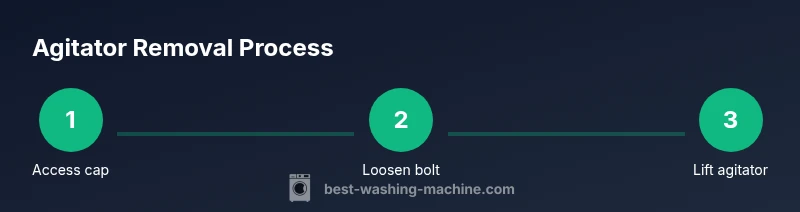
Removing the agitator from a Maytag washing machine is a straightforward maintenance task when you follow the right steps. Start by unplugging the machine, then remove the top cap, and loosen the retaining bolt underneath. Lift the agitator straight up to remove it, inspect the gear assembly, and clean any debris before reassembly.
Understanding the agitator and why removal is sometimes necessary
In this guide on how to remove the agitator from a maytag washing machine, you’ll learn when removal is needed, what parts are involved, and how the process helps with deep cleaning, gear-motor inspection, or clearing jams. The agitator sits atop the wash basket and engages with the drive mechanism below. Some Maytag models use a removable cap and a hidden bolt; others have a bolt accessed under a central post. Knowing the general layout helps you plan the steps and avoid unnecessary disassembly. This section distinguishes between two common styles (impeller-driven vs. traditional post agitator) and explains why you might need to access the gearcase or anti-vibration components after removal. By understanding the purpose and function of the agitator, you’ll make safer decisions about repair, maintenance, and possible part replacements.
Safety first: prepare your workspace and power-down
Safety is the foundation of any repair. Before you touch the washer, unplug it from the wall and move it to a dry, well-lit area. Keep towels or a shallow basin handy to catch any residual water. Wear gloves to protect your hands from sharp edges and rotating components. Never attempt work with a plugged-in or wet appliance. If you must use tools, keep them organized in a tray to prevent losing small fasteners. A little planning now prevents costly mistakes later.
Model variations: what to expect
Not all Maytag washers use the same fasteners or cap configurations. Some models hide the retaining bolt under a center cap; others have a visible cap with a single bolt underneath. A few top-load models use an impeller instead of a traditional agitator; the removal technique differs slightly, especially when reassembling. Check your model’s service manual or a trusted guide to confirm the bolt size, cap removal method, and any hidden set screws. Understanding these variations reduces the risk of damaging splines or the drive system during disassembly.
Tools and fasteners you’ll encounter
Typical tools include a flat-head screwdriver for cap removal, a hex driver or appropriate socket (often 7/16" or similar) for the retaining bolt, and a socket wrench for leverage. Have a towel ready to catch spills, gloves for protection, and a magnetic tray to keep small bolts organized. For some models, you’ll need a small pry tool to lift the cap without scratching the surface. Documenting bolt locations with a quick photo helps during reassembly and reduces the chance of misalignment.
Step-by-step workflow overview
Below is a practical sequence to approach removal safely and efficiently. Start with power-down, access the cap, remove the bolt, lift the agitator straight up, inspect the drive assembly, and then reassemble in reverse order. If you encounter resistance, stop and reassess the bolt or any hidden screws. Maintaining proper alignment prevents transmission damage and ensures a smooth reassembly.
Reassembly checks and testing after removal
Reassembly should follow the reverse order of removal. Tighten the bolt firmly but do not over-tighten, reseat the cap, and confirm there are no loose parts. Run a short test cycle with towels in the drum to verify there are no leaks and that the agitator spins smoothly. If unusual noises occur, power off, recheck bolt tightness, and inspect for damaged splines or misaligned components. Proper testing ensures longevity and reduces the chance of early failure.
Tools & Materials
- Flat-head screwdriver(Pry caps if present; use gently to avoid scratches.)
- 7/16 inch hex driver or appropriate socket(For the agitator retaining bolt; exact size varies by model.)
- Socket wrench set(Helps loosen bolts and drive assembly.)
- Towel or absorbent rag(Catch residual water and keep area dry.)
- Gloves(Protect hands from sharp edges.)
- Magnetic parts tray(Keeps small bolts organized.)
- Camera or smartphone(Document bolt orientations for reassembly.)
- Owner's manual or model-specific guide(Helpful for model-specific bolts.)
Steps
Estimated time: 30-60 minutes
- 1
Power down and prepare
Unplug the washer and move it away from walls. Clear a dry workspace and have towels ready. This reduces the risk of electric shock and water spills.
Tip: Double-check the power cord and unplug the unit at the wall outlet. - 2
Access the agitator cap
If present, remove the fabric softener cap by turning counterclockwise. Some models have a center cap that hides the retaining bolt. Use a flat-head to gently loosen the cap without scratching.
Tip: Keep the cap in a labeled container for easy reinstallation. - 3
Remove the center bolt or clip
Under the cap, locate the retaining bolt or clip and loosen it with the correct driver. Do not remove other components.
Tip: Note bolt orientation and place the bolt in a safe place. - 4
Lift the agitator
Grip the top of the agitator and pull straight up with steady pressure. If it sticks, wiggle slightly while maintaining alignment to prevent rotor damage.
Tip: If there's a set screw under the cap, remove it and verify there's no hidden fastener. - 5
Inspect the drive and gear assembly
Examine the gear face and drive shaft for wear or damage. Wipe away moisture and debris to assess condition before deciding on replacement.
Tip: Take photos for reference when ordering parts. - 6
Reassemble and test
Reverse the disassembly: align the agitator, reinstall the bolt, cap, and any clips, then run a short test cycle with towels to check for leaks.
Tip: Ensure everything is snug but not over-tightened.
FAQ
Is it safe to remove the agitator myself?
Yes, for most top-load Maytag washers, provided you disconnect power and follow the steps in a model-specific guide.
Yes, you can remove it yourself if you follow safety steps.
What tool size is typically needed for the retaining bolt?
Most models use a hex bolt sized 7/16 inch or similar; check your model's service manual.
Commonly a 7/16 inch hex, but verify first.
How do I know if the agitator needs replacement?
Look for cracks, excessive wobble, or damaged splines after removal and inspection; replace if worn.
Watch for wear or wobble indicates replacement.
Will removing the agitator affect the drive belt?
Improper handling can disturb the belt alignment; reassemble carefully and test.
Yes, handle with care to avoid belt issues.
Do I need to drain the washer before removal?
Usually not for top-load agitator removal; have towels ready for incidental spills.
Not usually required, but be prepared.
What safety precautions should I follow?
Unplug the machine, dry the area, and wear gloves; avoid forcing parts.
Power off and protect yourself.
Watch Video
The Essentials
- Power down before starting and protect yourself with gloves.
- Cap and bolt locations vary by Maytag model; verify on your unit.
- Lift the agitator straight up to avoid damaging the shaft.
- Inspect the drive gear for wear and replace parts as needed.