Replace Drive Belt in a Washing Machine: Step-by-Step Guide
Learn to replace the drive belt in a washing machine with a clear, step-by-step guide. Safety, tools, belt selection, installation, and testing guidance from Best Washing Machine.


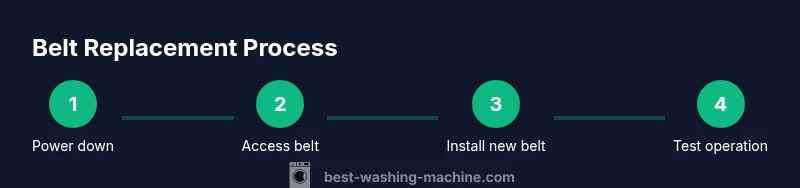
This guide walks you through replacing the drive belt on a washing machine. You’ll identify belt wear, gather the right belt, safely disassemble to access pulleys, install the replacement, and run a test cycle to confirm proper operation. Includes safety reminders, a complete tool list, and troubleshooting tips.
Understanding Drive Belts and Their Role
In most washing machines, the drive belt connects the motor pulley to the drum or transmission pulley. When the belt is worn, cracked, or stretched, it can slip, slip-spin, or even break, leaving the drum unable to turn or the machine unable to reach the spin cycle. Belts come in a few common types (V-belt and poly-V belt) and sizes that depend on the model. Understanding the belt’s function helps you diagnose problems beyond just a broken belt, including pulley wear, misalignment, and motor issues. Regular inspection during maintenance can prevent unexpected breakdowns and extend the life of your washer.
When you replace a belt, you’re not just swapping a worn part—you’re restoring the drive train’s efficiency. The right belt should sit snugly in the grooves, without twists, and maintain proper tension to keep the drum spinning smoothly during cycles.
Symptoms That Point to a Worn Belt and When to Replace
Not every unusual sound means a belt needs replacement, but several warning signs collectively point in that direction. Listen for a high-pitched squeal or chirp during operation, a thunking or thudding noise when the drum starts, or a drum that fails to spin during the wash or spin cycles. You might notice clothes taking longer to dry after a cycle, or the drum feeling stiff and difficult to rotate by hand when the machine is unplugged. Visible wear includes fraying edges, cracks, glazing, or a belt that feels unusually slack when you press on it. If the drum does not turn at all or the machine stops mid-cycle, a belt problem is a plausible cause to investigate after safety checks.
Belt Compatibility and How to Choose a Replacement
Belt selection is model-specific. The belt width, length, and number of ribs or grooves determine compatibility. The best approach is to locate the model number on the washer (usually on a label near the door opening, back, or bottom frame), consult the user manual, or remove the old belt to compare length and type. If you don’t have access to the manual, bring the old belt or a photo to a parts retailer and confirm the exact replacement. Remember that a belt with the wrong length or a mismatched groove pattern can slip, slip-spin, or wear unevenly, leading to rework.
Accessing the Belt: Front-Load vs Top-Load Layouts
Access methods vary by washer design. Front-load machines often require removing a lower front panel or toe-kick, while top-load models may need side panels or a rear access panel. Before you begin, unplug the machine and shut off the water supply if accessible. Have towels or a shallow tray ready to catch any remaining water. Take photos or sketch routing diagrams before disassembly so you can re-create the belt path precisely. Some models use a belt guard; you must remove it to reach the belt.
Reassembly, Testing, and Troubleshooting After Replacement
Reassembly should be deliberate and orderly: reattach pulleys, route the belt correctly, reinstall guards, and secure all screws. After reinstalling, plug the unit back in, restore water connections if applicable, and run a short wash or spin cycle to verify belt operation. Listen for smooth operation without grinding or whirring noises and check for leaks around seals or hoses. If the belt slips or the drum doesn’t rotate, recheck alignment and tension, then inspect pulleys for wear or damage. Keeping a simple log of the belt replacement can help with future maintenance.
Note: This guide emphasizes safety and does not replace the manufacturer’s service instructions. If you encounter a seized pulley, a warped drum, or motor issues beyond belt wear, consult a professional technician.
Tools & Materials
- Replacement drive belt (model-specific)(Bring old belt or note the model number to ensure correct size and type)
- Flat-head screwdriver(For removing front or back panels)
- Phillips screwdriver(Screw removal and panel reassembly)
- Needle-nose pliers(To remove tension clips or small fasteners)
- Gloves(Protect hands during disassembly)
- Towels or a shallow tray(Catch residual water when panels are removed)
- Flashlight or headlamp(Improve visibility inside cabinet)
Steps
Estimated time: 60-90 minutes
- 1
Power down and unplug
Unplug the washing machine and, if possible, shut off the household water supply. This eliminates the risk of electric shock and water spray during panel removal.
Tip: Always verify the outlet with a tester before starting. - 2
Access the belt area
Remove the lower front panel or back panel according to your model to expose the belt and pulleys. Keep track of screws and small parts so nothing is lost.
Tip: Label screws or store them in a labeled tray. - 3
Document belt routing
Observe how the belt sits on both pulleys. Take photos or draw a simple diagram to replicate the path during reassembly.
Tip: A correct routing prevents belt misalignment after reassembly. - 4
Release tension and remove old belt
Loosen the tensioner or move pulleys to free the belt, then slide it off the pulleys. Do not force the belt or damage bearings.
Tip: Inspect the old belt for cracks, glazing, or fraying. - 5
Install the new belt
Loop the belt over the motor pulley first, then seat it on the drum or transmission pulley, following the exact routing you documented.
Tip: Make sure the belt sits in the pulley grooves and is not twisted. - 6
Reassemble and secure panels
Reattach the belt guard and any panels. Tighten screws in a crisscross pattern to avoid panel torque and ensure a snug fit.
Tip: Avoid overtightening; test for interference with moving parts. - 7
Reconnect power and run a test cycle
Plug in the machine and run a short cycle to verify belt operation and absence of leaks. Observe the drum rotation and listen for unusual noises.
Tip: If the drum doesn’t rotate, recheck belt tension and routing. - 8
Final check and cleanup
Wipe up any spills, ensure there are no loose tools inside the cabinet, and document the maintenance for future reference.
Tip: Keep a belt replacement log with the date and model number.
FAQ
Do I need to unplug the washer before starting the belt replacement?
Yes. Disconnect power and, if possible, shut off the water supply. This prevents electrical shock and water leakage during disassembly.
Yes, unplug the washer and shut off water when possible before starting.
How do I know which belt to buy?
Check the model number on the washer, consult the manual, or remove and measure the old belt to match length, width, and groove type.
Check the model number or bring the old belt to the store to find an exact match.
Can I replace the belt without moving the drum?
Access methods vary by model. Some require removing panels to reach the belt; others allow access from the back. Always refer to the manufacturer's guidance for your model.
Some models need panel removal; others let you access from the back. Check your manual.
What if the pulleys or motor are worn?
If pulleys show glazing or cracks, or the motor shaft is worn, plan for additional component replacements or professional service.
Check pulleys for wear and replace if damaged to prevent future issues.
How long does belt replacement take?
Most homeowners complete the replacement in about 60 to 90 minutes, depending on access and model.
Typically around an hour and a half, if you have the right tools.
Is belt replacement covered by warranty?
Warranty coverage varies by manufacturer and model. Check your warranty terms and service options before starting.
Warranty depends on your brand and plan; read terms before starting.
Watch Video
The Essentials
- Identify the correct belt size before purchase.
- Follow belt routing exactly to avoid misalignment.
- Test the washer after replacement to confirm proper operation.
- Inspect pulleys and tensioner for wear and replace if needed.