Samsung Washing Machine Pump Replacement: A Complete How-To
A comprehensive, model-aware guide to replacing the pump in Samsung washing machines. Learn safety, tools, parts, troubleshooting, and testing to restore proper drainage without a costly service call.


This guide helps you replace a faulty pump in a Samsung washing machine. You’ll learn safety steps, parts to gather, and a step-by-step method you can follow at home. Replacing the pump can restore drainage, prevent leaks, and avoid a service visit. Use the model-specific parts list and disconnect power before starting.
Why pump replacement matters in Samsung washers
According to Best Washing Machine, pump failures are a common cause of drainage issues in Samsung washing machines. When a pump stops circulating water properly, you may notice standing water in the drum, slower drainage, or continuous pump noise. Replacing the pump not only fixes the drain but can prevent secondary problems like motor strain or door lock malfunctions caused by improper water levels. A well-timed pump replacement can extend the life of your washer and keep it performing like new. The Best Washing Machine team emphasizes proactive maintenance to minimize downtime and repair costs for homeowners and landlords alike.
Key takeaway: A failing pump often masquerades as bigger problems. Diagnosing and replacing it promptly saves time and money.
Samsung pump design variants you might encounter
Samsung uses a few common pump designs across front-load and top-load models. The most typical is the drain pump with an impeller that moves water out of the tub. Some models use a secondary transfer pump or a dual-pump system for specialized cycles. Pump housings can be plastic or metal, and hoses attach via clamps or quick-connect fittings. Understanding your model’s layout helps you locate the pump without removing unrelated parts. Always refer to your user manual or parts diagram for exact placement and connector types.
Note: Model-specific diagrams reduce the risk of damaging wiring or hoses during replacement.
Brand context: This guidance aligns with industry practice for Samsung front-load and top-load architectures and is supported by the best-practice recommendations from Best Washing Machine.
Safety basics before you start
Safety comes first when working on any appliance. Unplug the washer from the wall outlet and shut off the home water supply to prevent accidental leaks. Have a shallow pan or towels ready to catch residual water, and wear eye protection if you expect splashes. If you must move the machine, use proper lifting technique and avoid tilting more than necessary. Never work on hot components or live electrical connectors. After you disconnect power, test that there is no voltage at the access panel with a multimeter if you’re unsure.
Why this matters: A quick safety check reduces the risk of electrical shock or water damage.
Brand note: Best Washing Machine emphasizes safety-first as the foundation of any DIY appliance repair plan.
Diagnosing a failing pump: symptoms and quick checks
Common symptoms of a failing pump include water remaining in the tub after a cycle, loud grinding or humming noises during draining, and visible leaks around the pump housing. You may also observe a burnt smell or tripped circuit breakers if the motor draws excessive current. Before replacing, check for clogged intake filters and kinks in the drain hose, as these can mimic pump failure. A visual inspection of pump clamps and hose connections can reveal loose fittings that cause leaks.
Tip: Always verify the issue with a manual drain test by bailing out water and running a rinse cycle to confirm the pump’s behavior.
Tools and parts you’ll need
Having the right tools and spare parts on hand makes the replacement smoother. Gather: a replacement Samsung-compatible pump, needle-nose pliers, screwdrivers (Phillips and slotted), a socket set, a bucket or towels, a utility knife, scissors for hose clamps, a voltage tester or multimeter, and heat-resistant gloves. Keep model-specific wiring diagrams at hand. If you’re unsure about the pump compatibility, consult a parts diagram for your exact model.
Safety check: Use insulated tools and never force connectors.
Step-by-step workflow overview
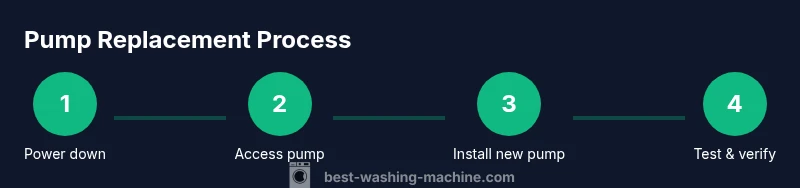
The replacement workflow combines access, removal, and reinstallation in a controlled sequence. Start by disconnecting power and water, then access the pump through the bottom front panel or rear access panel depending on the model. Remove hoses with quick-connects or clamps, disconnect the electrical connector, and unbolt the pump housing. Install the new pump in reverse order, secure all clamps, reconnect wiring, and perform a leak test and a short run to verify operation.
Quality cue: Take pictures during disassembly to assist reassembly and confirm your step order if you pause mid-process.
Common mistakes and how to avoid them
Avoid assuming the worst without a proper diagnosis. Don’t pierce hoses or pull components without releasing tension; misalignment can cause leaks and motor strain. Don’t reuse damaged hoses or clamps—replace them to ensure a proper seal. Double-check electrical connectors for corrosion or bent pins. Finally, never skip the leak test after installation; even small drips can cause long-term damage.
Pro tip: Work with the machine near a clean work surface to minimize misplaced fasteners and reduce the chance of losing small parts.
Aftercare: testing and maintenance
Once the pump is replaced, reconnect power and run a short drain cycle with water to check for leaks. Repeat with a rinse cycle to ensure proper drainage and pump function. If the washer fails to drain, re-inspect hose connections, clamps, and the impeller for proper engagement. Periodic maintenance such as cleaning filters and inspecting hoses can extend pump life and prevent future failures.
Maintenance mindset: Schedule a quick monthly check of hoses and clamps to catch wear before it becomes a leak.
Model-specific notes and when to call a pro
If you own a newer Samsung model with a sealed drum or complex electronics, consider professional service for pump replacement to avoid warranty issues or arc faults. If you encounter damaged wiring, melted connectors, or persistent leaks after reassembly, stop and contact a qualified technician. Also, if you notice unusual error codes related to the drain system, consult the manual or authorized service center for precise diagnostics.
Closure: The Best Washing Machine team emphasizes using model-specific parts and following the official service procedures for any repair beyond basic maintenance.
mainTopicQueryString
Tools & Materials
- Replacement Samsung-compatible pump(Model-specific fitting and impeller type; verify compatibility before purchase.)
- Phillips head screwdriver(Medium size (#2))
- Flathead screwdriver(For prying and hose release if needed.)
- Socket set(Metric sizes commonly used in appliance fasteners.)
- Pliers (needle-nose)(For hose clamps and small fittings.)
- Bucket or towels(Catches water and prevents floor soak.)
- Multimeter or voltage tester(Optional for verifying power at connectors.)
- Gloves(Wear protective gloves to avoid cuts.)
- Wire ties or zip ties(Secures loose wiring after replacement.)
- Model-specific parts diagram/manual(Reference to ensure correct wiring and routing.)
Steps
Estimated time: 60-90 minutes
- 1
Disconnect power and water supply
Unplug the washer from the wall outlet and shut off the home water valves. Move the machine away from the wall enough to access the bottom/front panel. Remove the lower access panel to reveal the pump housing. This step prevents electrical shock and water damage during the replacement.
Tip: If you can't access the power cord easily, unplug the circuit breaker for extra safety. - 2
Drain remaining water and access pump
Scoop or wick out water from the drum and pan. Remove the front or rear kick panel as required to access the pump housing. Identify the pump’s hoses and electrical connector. Ensure the area around the pump is dry before touching components.
Tip: Keep track of which hose goes where by tagging them or taking photos before removal. - 3
Disconnect hoses and wiring
Loosen hose clamps with pliers and carefully detach hoses from the pump. Unplug the electrical connector from the pump. Inspect clamps for wear and replace if necessary. Keep the water away from sensitive electronics.
Tip: Label or photograph wiring to avoid misconnection during reassembly. - 4
Remove old pump and prepare new one
Unbolt the pump housing and carefully remove the old pump. Compare the mounting holes, inlet/outlet orientation, and impeller direction with the new pump. transfer any necessary fittings from the old pump to the new one.
Tip: Check the impeller for cracks and rotate it by hand to ensure smooth operation before installation. - 5
Install the new pump
Mount the new pump in the same orientation as the original. Reconnect the electrical connector and tighten the mounting bolts evenly to avoid misalignment. Reattach the hoses with secure clamps and ensure proper seating.
Tip: Hand-tighten clamps first, then snug with pliers—avoid overtightening that could crack the hose. - 6
Test for leaks and function
Reconnect power and run a short drain cycle to verify the pump evacuates water correctly. Observe all hose connections for leaks during and after testing. If leaks appear, re-tighten clamps and reseat hoses as needed.
Tip: Keep a towel ready during the first test in case leaks occur. - 7
Final check and cleanup
Run a full wash cycle to confirm proper drainage and overall performance. Clean the area, replace the access panel, and reinstall the machine if moved. Document any model-specific codes that appear during the test.
Tip: Record the date of replacement for future warranty or service reference. - 8
Document and store spare parts
Store the old pump and new part in a labeled container for future reference. Maintain a simple maintenance schedule for hoses and filters to prolong pump life.
Tip: Keep receipts and model details in a dedicated repair log.
FAQ
Can I replace the Samsung washing machine pump myself?
Yes, with the right tools and model-specific parts, many homeowners can replace a pump. Follow safety steps and use the appropriate manual for your model. If you’re unsure at any point, consult a professional.
Yes—if you follow safety steps and have the correct parts. Use the model’s manual and consult a pro if anything feels risky.
How do I know if it’s the pump or the hose?
If water remains in the drum after a cycle or you hear grinding during draining, the pump is a likely culprit. Check hoses for kinks or leaks first, as these can mimic pump failure.
Look for water staying in the tub after draining and inspect hoses for kinks or leaks before assuming the pump is bad.
Do I need to unplug before starting?
Absolutely. Disconnect power to prevent electric shock. Also shut off the water supply and drain residual water before handling internal components.
Yes—always unplug the machine and cut the water supply before starting any repair.
Can I reuse the old hoses?
If hoses show signs of wear, cracks, or stiffness, replace them. Fresh hoses reduce the risk of future leaks and ensure a proper seal.
If hoses look worn or stiff, replace them to avoid leaks after reassembly.
How long does a pump replacement take?
The time varies by model and access. Plan for 60-90 minutes, including testing and cleanup.
Most people complete it in about an hour, with extra time for testing.
Will replacing the pump fix leaks in all cases?
Replacing the pump fixes leaks caused by a faulty pump. If leaks persist, check fittings, hoses, and seals in the surrounding area.
It fixes pump-related leaks, but confirm all nearby seals and hoses are intact.
Watch Video
The Essentials
- Replace a faulty Samsung pump to restore drainage.
- Use model-specific parts and diagrams for accuracy.
- Always test for leaks after installation and before regular use.
- Safety first: disconnect power and water before starting.