How to Put a Washing Machine in a Bathroom: A Complete Guide
Learn how to install a washing machine in your bathroom with safe layout, proper drainage, ventilation, and electrical considerations. This 2026 Best Washing Machine guide covers planning, code basics, and practical steps for a compliant, moisture-conscious setup.


Installing a washing machine in a bathroom is feasible with careful planning and safety checks. You’ll need clearances for door swing and service access, proper drainage and venting, a grounded electrical outlet with GFCI protection, and moisture controls. This quick guide outlines the essential steps, safety considerations, and best practices to keep within code while preserving bathroom usability.
Defining the concept and safety considerations
Installing a washing machine in a bathroom is feasible with careful planning and safety checks. If you're wondering how to put a washing machine in a bathroom, this guide helps you plan safely from the start. The goal is not simply to fit a bulky appliance; it's to integrate a utility device into a humid space without creating new risks. Bathrooms pose moisture hazards, so you must maintain protective barriers between water sources, electrical components, and the wall substrates. A safe installation prioritizes three things: reliable drainage, predictable moisture control, and accessible shutoffs.
From a risk-management perspective, you should think about slip prevention, water pooling, and mold growth. Use moisture-resistant surfaces where possible, seal penetrations, and install a drip pan with an overflow path if you can. Ensure there is enough space for routine maintenance and screen-access to the back of the machine for hose checks. The Best Washing Machine Team emphasizes that early planning and adherence to safety norms reduce headaches later on. If you proceed, you’ll need to choose a compatible washer type and design that complements your bathroom’s layout while preserving daily function.
Planning your bathroom layout for a washer
A solid plan begins with measuring every relevant dimension: door clearance, washer width and depth, cabinet or vanity space, and access to the nearest water shutoffs and electrical outlets. The goal is to create a workflow where loading, unloading, and routine maintenance can happen without moving around furniture or bending in awkward angles. Best Washing Machine analysis, 2026 notes that planning for space, door swing, and service access reduces installation headaches and improves long-term reliability. Sketch a layout on paper or use a simple app to visualize paths for hoses and venting. Consider whether the washer will be installed side-by-side with a sink, under a countertop, or near a vented wall. If your bathroom is small, you might opt for a compact or stackable model that minimizes footprint while keeping access clear. Always verify that the chosen location allows a standpipe connection to the drain, a GFCI outlet nearby, and room to safely route hoses without kinks or pinch points. In short, meticulous preparation pays off when you start the actual installation.
Local codes and permitting basics
Local codes govern how and where appliances can be installed in residential bathrooms. Start by checking with the local building department or authority having jurisdiction (AHJ) to confirm permissible configurations, required clearances, and whether a permit is needed. In many regions, you’ll need a GFCI-protected outlet located in an appropriate bathroom zone, proper drain connections, and enough ventilation to manage humidity. The goal is to ensure the installation is safe, auditable, and compliant with electrical, plumbing, and fire-safety standards. If you rent or live in a multi-unit building, obtain written approval from building management before proceeding. Documented compliance matters not only for safety but also for insurance and resale considerations. While these steps add upfront effort, they reduce the risk of costly retrofits and code violations later on.
Choosing a washing machine placement: clearances and plumbing
Placement decisions influence performance, maintenance, and reliability. In a bathroom, you’ll want to leave space for door swing, hose routing, and service access. Front-load machines often fit better in narrow spaces, while top-load models may require more vertical clearance. Ensure there is a path for the drain hose to enter a standpipe or drain without kinks and that water supply lines are easily reachable for shutoffs. Consider proximity to a vent or exhaust to minimize humidity buildup. If your bathroom layout constrains options, a compact or stackable unit can preserve floor space while still delivering full laundry capability. Make sure the chosen location allows for level installation and does not sit on an unprepared, uneven surface that could transfer vibration into walls.
Drainage and venting basics
A secure drainage setup is critical when placing a washer in a bathroom. A proper standpipe and trap arrangement helps prevent backflow and sewer gas ingress. Route the drain hose into a standpipe that is tall enough to prevent siphoning, and avoid bending the hose sharply, which can impede drainage. Venting is often managed by the home’s existing plumbing stack, but in some cases you may need an additional vent line or a compliant exhaust path if the bathroom is poorly ventilated. If a drain pan is installed, ensure it has a clear overflow path to divert any incidental leaks away from the wall or floor. The aim is to maintain a clean, dry environment around the appliance and reduce potential water damage.
Electrical considerations and GFCI requirements
Electrical safety is non-negotiable in bathrooms. Install a GFCI-protected outlet within reach of the washer, observing zone distances and clearance requirements. Do not use non-GFCI outlets or extension cords in a bathroom. If there isn’t a suitable outlet nearby, hire a licensed electrician to install one that meets local code. Keep electrical connections dry and away from direct exposure to water. Use conduit or protected wiring where appropriate and avoid running cords through wet areas. Regularly inspect outlets and plugs for signs of moisture or wear. The goal is to minimize shock risk and ensure a reliable power source for daily operation.
Water supply connections and shutoffs
Locate hot and cold water supply lines in a position that is easy to reach for regular maintenance. Install shutoff valves that permit quick isolation of the washer without moving or disassembling the unit. Use proper fittings and anti-corrosion hardware to reduce leaks and ensure a secure connection. Route hoses cleanly to avoid cross-contact with sharp edges or hot surfaces. Label valves for quick recognition during a leak or service call. If you cannot access shutoffs from the washer’s side, consider relocating valves or using flexible hoses with quick-connect fittings to simplify future service.
Installing a washer in a bathroom: step-by-step overview
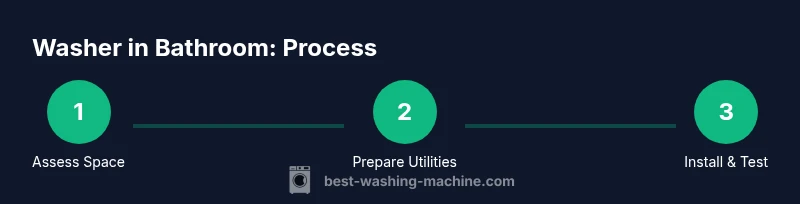
This section provides a high-level overview of the major actions you’ll take during installation. Begin with a careful assessment of space, electrical readiness, and drainage paths. Move the appliance into place with help, then level it on a stable surface. Connect water supply lines and the drain hose to the appropriate fixtures, securing all connections. Finally, test for leaks, verify drainage, and ensure that the area remains dry and uncluttered after every cycle. For the detailed, numbered steps, refer to the STEP-BY-STEP block which provides explicit actions and pro tips.
Water protection and moisture management
Moisture control is essential in bathroom installations. Use waterproof sealants around penetrations, install a drip pan where feasible, and maintain good ventilation to prevent mold growth. If your bathroom lacks an exhaust fan, consider adding a vent or desiccant solution to manage humidity. Regularly wipe down the floor and walls where moisture tends to accumulate, especially near the washer. By prioritizing moisture management, you protect walls, flooring, and cabinetry from long-term damage and preserve the bathroom’s functional aesthetics.
Aesthetics, ventilation, and finishing touches
A clean, integrated look helps a bathroom feel calmer and more spacious. Use matching panels or a compact enclosure to hide hoses and pipes, and select a pedestal or risers to align the unit with surrounding furniture. Ensure there is adequate ventilation and that any gaps around the washer are sealed to prevent moisture intrusion. Label and store maintenance supplies nearby, and create a simple routine for cleaning lint traps, hoses, and the drain. A well-planned finish keeps the installation practical, attractive, and durable for years.
Tools & Materials
- Washing machine (front-load or top-load)(Choose energy-efficient model suited for bathroom clearance)
- Flexible braided water supply hoses(Ensure 3/4-inch or 1/2-inch connections match valves)
- Drain hose and standpipe or laundry drain kit(Standpipe height should align with washer outlet)
- Anti-vibration pads or mats(Reduce movement and noise on hard floors)
- Silicone sealant (mastic) and caulk gun(Waterproof seals around hoses and edges)
- Level and measuring tape(Ensure appliance is perfectly level)
- Adjustable feet shims or washer pedestal(Stabilize on uneven floors)
- Drip pan with overflow (optional but recommended)(Contain minor leaks and aid drying)
- Stud finder and pipe/line locator(Avoid locating outlets and plumbing behind walls)
- GFCI-protected outlet or circuit(Install or verify in bathroom zones)
- Ventilation solution (bathroom exhaust fan or dehumidifier)(Reduce humidity buildup)
- Safety gear (gloves, eye protection)
Steps
Estimated time: Estimated total time: 2-4 hours
- 1
Assess space and requirements
Survey the bathroom; measure floor area, door clearance, and nearby utilities. Decide on front-load vs top-load based on space and door swing. This ensures an efficient workflow and reduces later moves.
Tip: Use a tape measure and picture the door swing with the washer in place. - 2
Check electrical readiness and circuit capacity
Identify a GFCI-protected outlet within reach of the washer. If none exists, hire an electrician to install one that meets local code. Do not rely on a non-GFCI outlet.
Tip: Never use an extension cord in a bathroom. - 3
Plan water supply shutoffs and valve accessibility
Locate hot and cold shutoff valves for quick isolation. If none exist, install accessible shutoffs ahead of the washer connections and label them clearly.
Tip: Keep shutoffs visible and within easy reach. - 4
Prepare floor and waterproofing
Inspect the floor for levelness and moisture tolerance. Install a drip pan under the washer if possible and seal gaps with silicone to prevent water seepage.
Tip: Seal all penetrations to prevent water intrusion. - 5
Position the washer and level the unit
Move the washer into place, ensuring clearance for hoses and door swing. Use a level to adjust feet so the machine sits evenly to reduce vibration.
Tip: Place anti-vibration pads under the feet. - 6
Connect water supply hoses and drain hose
Attach hoses to valves with proper fittings. Route the drain hose into the standpipe or drain properly and secure to prevent movement.
Tip: Check for kinks and tighten clamps securely. - 7
Test for leaks and proper drainage
Turn on water supply and run a short test cycle. Inspect connections for leaks and verify the drain empties without backflow.
Tip: Have towels handy to catch minor spills during testing. - 8
Finalize safety checks and maintenance plan
Confirm ventilation, outlet protection, and hose integrity. Create a simple maintenance schedule for filters and seals.
Tip: Note installation date for warranty and future service.
FAQ
Is it legal to install a washing machine in a bathroom?
In many regions, yes, but local codes vary. Check with the local building department or AHJ for required clearances, outlets, and drainage norms.
Yes, but check local codes to confirm requirements for outlets and drainage.
What outlet type is required near a bathroom washer?
A GFCI-protected outlet is typically required in bathroom installations. Do not rely on non-GFCI outlets or extension cords.
Usually a GFCI outlet is needed; avoid extension cords.
Do I need a drain vent or standpipe for the washer in a bathroom?
Yes, a standpipe with a proper trap and a vent path is usually required to prevent backflow and sewer gas entry.
Most setups require a standpipe with venting.
How far should the washer be from the tub/shower?
Keep the washer away from direct splash zones and leave space for access and maintenance. Provide several inches of clearance.
Keep space around the washer for access.
What if space is extremely limited?
Choose a compact or stackable model and consider professional advice to maximize safety and usability.
A compact or stackable model can help; consult a pro.
How do I prevent mold and moisture after installation?
Ventilate the bathroom, use moisture barriers, and maintain a routine to dry surrounding areas after laundry.
Ventilate and dry the area after use to prevent mold.
Watch Video
The Essentials
- Plan utilities and access before buying the washer
- Install a GFCI outlet and proper drainage
- Ensure adequate ventilation to control moisture
- Use a drip pan and moisture barriers
- Test thoroughly and document the setup