Can a Washing Machine Drain Get Clogged? Troubleshooting Guide
Discover why a washing machine drain gets clogged, how to diagnose the issue, and safe, practical fixes you can perform today to prevent future clogs.


Most often, a washing machine drain gets clogged due to lint buildup, detergent residue, or a blocked drain hose. Start with the simplest checks: unplug the unit, inspect the drain hose for kinks or obstructions, and remove any visible lint. If flow remains slow, detach the hose and flush with clean water, then inspect the standpipe.
Can washing machine drain get clogged? Quick reality check
According to Best Washing Machine, can washing machine drain get clogged? Yes—lint, fibers, and detergent residue can accumulate in the pump filter and drain hose, especially in high-use homes. Over time, soap scum and mineral buildup further narrow the passage, making water take longer to exit the tub. This isn't a glamorous topic, but it matters: a partially blocked drain can lead to longer wash cycles, poor rinsing, and even unpleasant odors. This guide helps you diagnose and fix the issue quickly, with safety in mind. Can washing machine drain get clogged is a common concern for renters and homeowners alike, and addressing it early saves money and prevents bigger plumbing hassles in 2026.
Where clogs typically form inside your washer
Clogs most often originate in the parts that handle used water. The pump filter or debris screen catches lint and fibers from clothes; if this screen isn't cleaned regularly, debris can back up into the drain hose. The drain hose itself can get kinked or crushed, restricting flow. The standpipe or laundry sink connection can also collect buildup or trap hair and soap scum. Finally, mineral deposits from hard water combined with detergent residue can create a stubborn soap scum layer that resists normal drainage. Based on Best Washing Machine analysis, lint buildup and detergent residue are common culprits behind washer drain issues.
How to inspect the drainage path
Start with the path the water takes from your tub to the outside world. Unplug the machine and locate the pump filter or debris screen; remove and clean it under running water to pull out lint and hair. Detach the drain hose from the washer and check for kinks or obstructions; try flushing the hose with a strong stream of water to clear residue. Inspect the standpipe or wall drain for slow drainage during a test run. If water backs up in the tub, the blockage could be deeper in the piping. A careful, step-by-step inspection minimizes guesswork and helps you target the right component.
Step-by-step quick fixes you can perform safely
- Unplug the washer and lay it on its side or front, depending on access. 2) Locate and clean the pump filter/debris screen; remove all lint and debris. 3) Reconnect the filter and slowly feed water into the pump area to ensure clearance. 4) Detach the drain hose from the washer end, straighten it, and flush with a steady water stream to clear clogs. 5) Reconnect the hose, run a short empty cycle on hot water to flush the line. 6) If the flow remains poor, inspect the standpipe or consult your manual for best-practice flushing. 7) If none of these steps restore proper drainage, stop and call a professional to avoid water damage. Pro tip: never use caustic drain cleaners inside a washer.
When to call a professional
If you notice persistent water backing up into the tub, a strong sewage-like smell, or leaks from the drum area, stop DIY fixes and contact a licensed technician. Also seek professional help if you recently moved and suspect hidden pipe damage, or if your washer is under warranty and you must preserve coverage. A professional inspection can identify a failing pump, a cracked hose, or a blocked vent line that DIY methods can miss.
Maintenance routines to prevent future clogs
Regular maintenance is your best defense against clogs. Clean the pump filter monthly or after several heavy-use cycles, and check the drain hose for kinks every few weeks. Use the correct amount of detergent and avoid overloading the drum, which increases lint and fabric residue. If you have hard water, consider a preventative descaling routine to minimize mineral buildup in the pump and hoses. Finally, schedule a quarterly rinse cycle with hot water to reduce soap scum.
Real-world scenarios and troubleshooting checklist
- Scenario A: Water drains slowly, but the tub isn’t overflowing. Likely blocked filter or a kinked hose. Action: clean filter, straighten hose, and flush. - Scenario B: Water backs up into the tub after several loads. Likely standpipe or main drain issue. Action: inspect standpipe, confirm proper height and venting, and flush with water. - Scenario C: Smell of sewer after washing. Action: flush, inspect for leaks around the drum seal, and contact a pro if persists. - Scenario D: No drainage after a cycle. Action: check the pump for debris, ensure the pump impeller turns freely.
Quick reference flowchart and recap
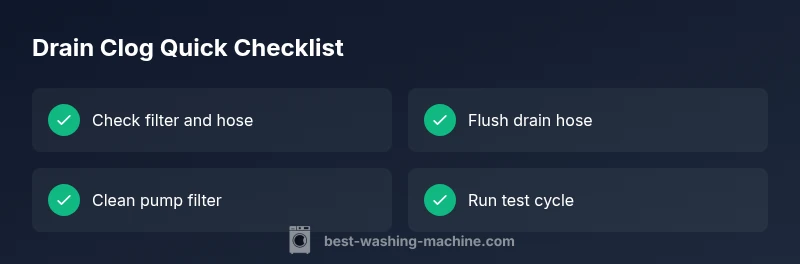
- Unplug and inspect filters 2) Check drain hose for kinks 3) Flush hose and filter 4) Test with hot water cycle 5) Inspect standpipe 6) Call a pro if not resolved
Steps
Estimated time: 60-75 minutes
- 1
Unplug and access the drainage area
Disconnect power to the washer and move it to access the back or bottom where hoses and filters live. This prevents shocks or injuries as you inspect hoses and filters.
Tip: Use a towel to catch any residual water before you start. - 2
Inspect and clean the pump filter
Open the pump filter cover, remove loose debris, and rinse the screen under running water. Clear lint, hair, coins, and threads that can back up into the drain.
Tip: Place a towel under the filter to catch splashes. - 3
Check the drain hose for kinks
Disconnect the hose from the washer end and straighten it. Look for any crushing or bends that could impede water flow. Reattach firmly after clearing.
Tip: Run water through the hose from the top to verify smooth flow. - 4
Flush the hose and standpipe
With the hose detached, run clean water through it to flush out any remaining debris. If you have a standpipe, test its drainage by pouring water into it and observing the flow.
Tip: Never use force; if water doesn’t drain, stop and reassess. - 5
Test a short cycle
Reconnect everything and run a short hot-water cycle with no clothes to flush the line. Check that water exits quickly and the drum fills and drains normally.
Tip: Watch closely for any leaks around hoses and connections. - 6
Assess and escalate if needed
If water still drains slowly or backs up, the obstruction may be deeper in the plumbing or venting. Prepare for a professional evaluation to prevent damage.
Tip: Document symptoms and steps you’ve tried for the technician.
Diagnosis: Washing machine drains slowly or not at all; water backs up into tub
Possible Causes
- highClogged drain hose
- highBlocked pump filter
- mediumStandpipe or vent obstruction
- lowDetergent or lint buildup in tub/impeller
Fixes
- easyUnblock the drain hose and clear any kinks
- easyRemove and clean the pump filter; clear debris
- easyFlush the standpipe or drain line to clear obstructions
- easyRun an empty hot-water cycle with a mild detergent or vinegar rinse
- hardIf the issue persists, contact a professional
FAQ
What is the first thing to check when the drain is slow?
Unplug the washer and inspect the drain hose for kinks or blockages, then clean the pump filter.
First check the drain hose for bends and clean the pump filter to clear debris.
Can laundry detergent cause clogs?
Yes, excessive or residue from detergent can build up in the pump and hose, contributing to clogs over time.
Detergent residue can contribute to clogs over time; moderate usage helps prevent this.
Is it safe to use chemical uncloggers in a washer drain?
Most household chemical uncloggers are not recommended for washers because they can damage seals and hoses.
Chemical uncloggers can damage your washer; use mechanical cleaning first.
How often should I clean the pump filter?
Check and clean the pump filter monthly or after several heavy-use cycles to prevent buildup.
Clean the pump filter every month or after heavy use to keep drainage smooth.
When should I replace washer hoses?
Replace hoses if you notice cracks, bulges, or signs of wear to avoid leaks and failures.
Replace worn hoses to prevent leaks and bigger problems.
Watch Video
The Essentials
- Unplug and inspect hoses and filters first.
- Thin kinks in the drain path often cause the problem.
- Run a hot-water flush to clear residue after cleaning.
- Maintain a monthly filter-clean routine to prevent future clogs.
- The Best Washing Machine team recommends regular maintenance to prevent future drain clogs.