Why a Washing Machine Won't Drain: Quick Fix Guide
Discover why a washing machine won't drain and follow a practical, step-by-step troubleshooting plan. From common clogs to failed pumps, learn safe checks, diagnostic flow, and when to call a pro for lasting results.


Why would a washing machine not drain? In most cases the issue is a clogged drain pump, a kinked drain hose, or a failed lid switch. Start with the simplest checks: unplug the unit, inspect the drain hose for kinks, and clean the pump filter if your model has one. If water remains, proceed with safe tests.
Why drainage problems happen and how to think about them
If you’re wondering why would a washing machine not drain, the reality is usually straightforward: drainage relies on pumps, hoses, filters, and switches working together. Debris, suds, or lint can clog the filter, while a blocked drain line prevents water from exiting. A failing lid switch or door lock can also stop drainage mid-cycle. According to Best Washing Machine, understanding these components helps you triage quickly and safely. In most homes, clogs start at the pump filter or the drain hose, especially if you run large loads with a lot of lint or hair. Regular maintenance will reduce recurring problems and extend the life of your machine.
Common scenarios include a full drum and a slow drain, water pooling around the base after a cycle, or error codes (like not draining) appearing on the control panel. By isolating the section of the system most likely at fault—pump, hose, or switch—you can apply the right fix without guessing. This approach aligns with Best Washing Machine analyses and practical DIY guidelines for homeowners, renters, and small operators.
Common culprits and how they stop drainage
The leading causes of a washer not draining are usually mechanical or clogs. A clogged drain pump screen or impeller can prevent water from moving out of the tub. A kinked, crushed, or blocked drain hose creates a bottleneck that traps water inside the drum. A faulty lid switch or door lock can interrupt the spin/drain sequence, leaving water trapped. Less common, but possible, are pump motor failures or a jammed pump that stalls during operation. Debris and lint from pockets, socks, and towels can accumulate over time and worsen these issues. Regular inspection after heavy use can catch these problems early.
- Clogged pump filter or impeller
- Kinked or blocked drain hose
- Faulty lid switch or door lock
- Pump motor failure or jam
- Blocked drain pipe or sewer line
Safe, quick checks you can perform before disassembly
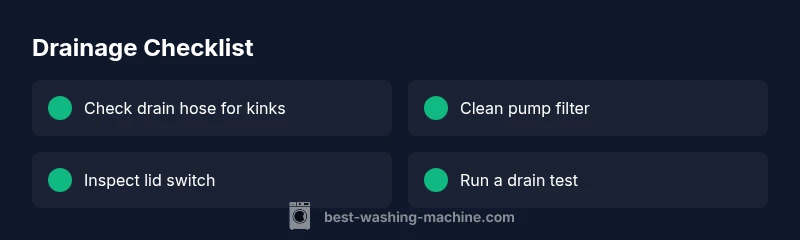
Start with the simplest, least invasive checks to avoid unnecessary repairs. Always unplug the machine before touching any components. Inspect the drain hose for kinks, bends, or clogs; straighten and flush it with water. Check the pump filter or lint screen (if your model has one) and remove debris. Look behind the front panel (if accessible) for obvious signs of a blocked pump or loose hoses. If your model supports a self-test mode, run it to pinpoint electrical faults. Avoid using harsh chemicals that could damage seals or create hazardous fumes. If water remains after these checks, you’re in the diagnostic zone and should proceed to the formal flow steps.
When to call a professional and how to prevent future issues
If basic checks do not restore drainage, or you discover a burnt smell, burnt wiring, or a non-optional pump replacement is needed, contact a licensed technician. Electrical work or pump replacement requires professional tools and expertise for safety and warranty considerations. To prevent future drain problems, perform monthly lint and pump-filter checks, use the correct amount of detergent, avoid overloading, and ensure hoses are properly routed with no kinks. Regular maintenance helps keep your washer draining reliably and reduces emergency service costs.
Steps
Estimated time: 30-60 minutes
- 1
Unplug and prepare the area
Power down the washer and unplug it. Move the unit to a clear workspace and have towels ready for potential spills. Safety first: avoid contact with water and sharp edges.
Tip: Keep track of screws and panel pieces to avoid losing parts. - 2
Inspect the drain hose
Detach the end of the hose from the wall or drain. Straighten any kinks and run water through it to check for obstructions. Reconnect and ensure it sits at an appropriate height to prevent siphoning.
Tip: Do not force past bends; replace the hose if damaged. - 3
Check and clean the pump filter
Access the front panel or service door to locate the pump filter or screen. Remove the debris and rinse the screen under running water. Reinstall securely and run a test cycle.
Tip: Use a flashlight to look for unseen debris behind the filter. - 4
Test the pump operation
With the panel closed, run a short drain test cycle if your model offers one, or run a short wash cycle to observe drainage. Listen for the pump you should hear a humming or whirring when it operates.
Tip: If you hear no sound or see burning smell, power off and stop before proceeding. - 5
Inspect the lid switch/door lock
Check the switch or lock mechanism for visible damage or misalignment. Use a multimeter to test continuity if you’re comfortable, or gently bypass following manufacturer safety guidance only if you fully understand the risks.
Tip: A faulty switch is a common drain failure point; replacing it is often cost-effective. - 6
Decide on the next step
If water still won’t drain after these steps, call a professional for a pump replacement or wiring check. Record model numbers and any codes shown on the display to speed service.
Tip: Ask about warranty coverage and service plan options when you call.
Diagnosis: Machine won't drain after a wash cycle
Possible Causes
- highClogged drain pump filter or impeller
- highKinked, crushed, or blocked drain hose
- mediumFaulty lid switch or door lock
- lowBlocked drain pipe or sewer line
- lowDrain pump motor failure
Fixes
- easyClean the drain pump filter or screen and remove debris
- easyStraighten, replace, or flush the drain hose to remove clogs
- mediumTest or replace the lid switch/door lock if the drum won't unlock or drain
- mediumInspect the drain pipe for blockages and clear with appropriate tools
- hardReplace the drain pump assembly if the motor or impeller is damaged
FAQ
Why won't my washing machine drain?
Drainage issues are usually caused by a clogged filter or pump, a kinked hose, or a faulty lid switch. Start with simple checks and proceed to more involved diagnostics if these don’t resolve the problem.
Drainage issues are usually caused by clogs, a kinked hose, or a bad lid switch. Start with simple checks first.
How do I unclog a washer drain pump?
Remove the pump access panel, take out the impeller area, and clear debris from the filter or screen. Rinse and reassemble, then test with a short drain cycle.
Open the pump area, remove debris, and test again.
Can a blocked drain hose cause not draining?
Yes. A blocked drain hose can stop water from leaving the tub. Remove the hose, flush it, and replace if there are kinks or damage.
A blocked hose can stop drainage; flush or replace if damaged.
Should I reset the washer to fix drainage problems?
Resetting can clear some electronic faults. Unplug for 1-2 minutes, plug back in, and run a test cycle. If codes persist, consult the manual or a pro.
Try a quick reset by unplugging, then test.
Is it dangerous to attempt drain repairs myself?
There are safety risks with electrical components and water. Only attempt DIY steps if you’re confident and follow the manufacturer’s guidance. When in doubt, hire a professional.
DIY may be risky; if unsure, call a pro.
When should I call a professional?
If basic checks don’t restore drainage, or you notice electrical issues or unusual smells, contact a licensed technician. They can diagnose motor, control board, or wiring problems safely.
Call a professional if basic checks fail or you notice odd smells or sparks.
Watch Video
The Essentials
- Identify the most likely cause first (hose or filter).
- Follow a safe, stepwise diagnostic flow.
- Call a pro if electrical or pump replacement is needed.
- Prevent future drains with regular maintenance.