Drain in Washing Machine: Urgent Troubleshooting Guide
Urgent troubleshooting for a drain in washing machine. Quick fixes, diagnostics, and safety tips to clear clogs, protect the pump, and prevent leaks.


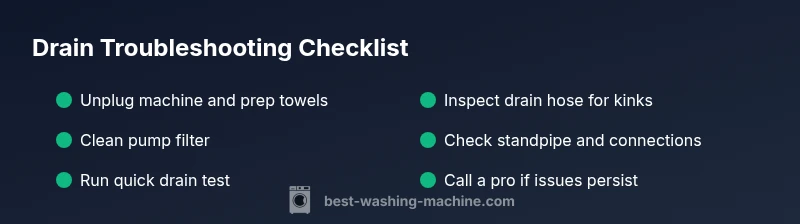
Most drain problems start with a clog in the drain hose or pump filter. For a drain in washing machine, unplug the unit, safely drain any remaining water, check the drain hose for kinks or crushes, then clear debris from the pump filter. If water still won’t drain, move into the diagnostic flow for a deeper check.
Common Symptoms of Drain Issues
If you’re experiencing standing water in the drum after a cycle, a slow or incomplete drain, or unusual noises during the drain phase, you’re likely dealing with a drain in washing machine problem. According to Best Washing Machine, drain issues are among the most common appliance problems, often caused by clogs in hoses or the pump. The Best Washing Machine team emphasizes that early checks save time and money, so start with simple possibilities: a clogged drain hose, a blocked pump filter, or an externally kinked hose that blocks flow. If water remains after a cycle, pull the machine away from the wall, unplug it, and begin the diagnostic flow to identify the root cause.
- Look for standing water in the tub after the cycle.
- Listen for odd grinding or buzzing sounds during draining.
- Check for residual moisture around the pump and hose connections.
- Note whether the issue happens with specific load types or detergents. These details help pinpoint whether a clog, filter, or pump fault is to blame.
Primary Causes of a Not-Draining Washer
Drain problems don’t always come from one source. The most frequent cause is a clog in the drain hose or pump filter, which traps water in the drum. A second common issue is a kink or crush in the drain hose, which blocks flow. Other possibilities include a blocked standpipe, a failed drain pump, or misused cycles that leave water standing. Regular wear, small objects trapped in the pump or lint, and mineral buildup can contribute over time. The Best Washing Machine analysis notes that clogs and filter blockages are typically the primary culprits, but a failing pump is not unheard of. If you suspect a partial blockage, inspect the hose and filter first before predicting a pump failure.
- Clogged drain hose
- Blocked pump filter
- Kinked or crushed hose
- Damaged pump or impeller
- Standpipe obstruction
Diagnostic Approach: Stepwise Troubleshooting
A structured diagnostic flow helps you avoid guesswork. Start by confirming power and draining basics, then test the hose and filter, and finally inspect the pump. Is water backing up into the drum? If yes, the drain pathway is blocked somewhere downstream. Use a flashlight to inspect the hose connections; unplug before touching any parts. After clearing obvious clogs, run a short test cycle to observe drainage. If water still remains, refer to the diagnostic flow to determine whether the issue is hose-related, filter-related, or pump-related. Following the Best Washing Machine analysis, if water still remains after clearing obvious clogs, proceed to inspect the pump impeller and consider part replacement if needed.
- Verify outlet power and cycle settings.
- Check the drain hose for kinks and disconnections.
- Inspect the pump filter for debris.
- Run a test cycle with no laundry to observe drainage.
- If unresolved, move to the pump inspection step.
Inspecting and Cleaning the Drain Hose and Pump
Accessing the drain area requires care. Remove the back panel or toe kick to locate the drain hose and pump. Detach the hose from the drain and the pump inlet, then inspect for kinks, cracks, or crushing. Rinse the hose to remove debris, wipe dry, and reconnect securely. Check hose clamps and fittings for tightness to prevent leaks. Reinsert everything, lower the machine back into place, and run a brief drain test. If water fails to move, you may have a partial blockage further along, which can require disassembly or professional help.
- Ensure the hose is free of kinks and debris.
- Reconnect with secure clamps.
- Test draining after reassembly.
Filter and Pump Maintenance: Cleaning and Replacing
Many washers have a pump filter that catches coins, buttons, hair, and lint. Locate the filter cover, unscrew it, and remove debris. Clean the filter under running water, remove any stubborn buildup with a soft brush, and reassemble. If the filter is damaged or the impeller fails to turn, replacement may be necessary. After maintenance, run a rinse cycle to ensure proper drainage and listen for the pump’s normal operation. Regular cleaning helps prevent repeated clogs and extends pump life.
- Clean the filter every few months, or when you notice slow draining.
- Inspect the impeller for obstructions.
- Replace damaged filters or pumps as needed.
- Consider a yearly drain system check if you have hard water or high debris loads.
Prevention, Safety, and When to Call a Pro
To prevent future drain problems, run periodic checks and avoid overloading the washer, which can pressurize the drain system. Use the right detergent type and avoid items that can clog pumps. Always unplug the machine before inspecting internal parts and never work with live electricity near water. If the pump makes grinding noises, leaks appear, or water won’t drain after maintenance, contact a licensed technician. The Best Washing Machine team recommends routine maintenance as the best defense against recurring drain problems.
- Do not ignore slow drainage; investigate promptly.
- Maintain regular cleaning of filters and hoses.
- Seek professional help if you hear grinding noises or see leaks.
Steps
Estimated time: 25-40 minutes
- 1
Power off and unplug
Unplug the washer and move it slightly away from the wall to access the rear. Put towels down to catch any residual water. This protects you from shocks and keeps your workspace clean.
Tip: Keep the power cord accessible so you can unplug quickly. - 2
Access drain area
Remove the back or toe-kick panel to locate the drain hose and pump. Take photos before disassembly to aid reassembly later. Have a container ready to catch any remaining water.
Tip: Label hoses and screws to avoid confusion during reassembly. - 3
Inspect drain hose
Detatch the drain hose from the wall standpipe and from the pump inlet. Look for kinks, cracks, or crushing. Gently straighten any bends and clear debris from the interior.
Tip: Never force a bent hose; replace if damaged. - 4
Clean the pump filter
Open the filter cover, remove debris, and clean under running water. Use a soft brush for stubborn buildup. Reinsert the filter and confirm it seats snugly.
Tip: Have a shallow tray handy for small parts. - 5
Test drainage
Reconnect hoses, restore power, and run a short cycle with no laundry to observe drainage. Listen for the pump hum; if water drains promptly, the issue may be resolved.
Tip: If water remains, proceed to a more thorough pump inspection. - 6
Reassemble and verify
Turn power back on, move the machine back into place, and run a full cycle with a light load. Check for leaks and confirm normal draining behavior.
Tip: Keep a log of steps and outcomes for future reference.
Diagnosis: Washing machine won't drain or drains slowly
Possible Causes
- highClogged drain hose or standpipe
- highBlocked or dirty pump filter
- mediumKinked or crushed drain hose
- lowDamaged drain pump or impeller
Fixes
- easyUnplug the machine and clear clogs from the drain hose and standpipe
- easyRemove and clean the pump filter, then re-seat securely
- easyStraighten or replace a kinked hose and secure fittings
- mediumTest the pump by running a short cycle with no load
- hardIf the pump or impeller is damaged, replace the part or call a professional
FAQ
Why isn’t my washing machine draining at all?
Most often the drain hose is clogged or the pump filter is blocked. Begin by unplugging the machine, inspecting the hose for kinks, and cleaning the filter. If water still remains, follow the diagnostic flow to test the pump and connections.
Common drain issues are usually hose or filter clogs. Unplug, check hose, clean the filter, and test again. If it persists, follow the full guide.
Where is the pump filter and how do I clean it?
Most washers have a pump filter behind a small access panel. Open it, remove debris, rinse, and reinstall. If the filter is damaged or won't come free, consult the user manual for your model or a technician.
The pump filter is usually behind an access panel; remove debris, rinse, and reassemble. If stuck, check the manual or call a pro.
Can a kinked drain hose cause drainage problems?
Yes. A kink or crush blocks water flow. Straighten the hose, secure it away from sharp bends, and test drainage. If it keeps kinking, replace the hose.
A kinked hose can stop drainage. Straighten or replace it and test again.
Is it safe to use a plunger on a washer drain?
Plungers are not recommended for washing machine drains because they can push debris further or cause seals to fail. Stick to inspecting hoses and filters first, and use professional help if needed.
Avoid plungers on washers; inspect hoses and filters first and call a pro if needed.
What should I do if water drains slowly after cleaning?
If slow draining persists, there may be a partial blockage further along or a failing pump. Recheck all hose connections, run a test cycle, and consider pump replacement if the symptom remains.
If slow draining continues after cleaning, recheck everything and consider pump replacement.
When should I call a professional?
Call a professional if you detect a damaged pump, persistent leaks, or if you cannot safely access or repair internal components. Electrical and water concerns warrant licensed service.
Call a professional if there’s damage, persistent leaks, or if you can’t safely fix it.
Watch Video
The Essentials
- Identify symptoms quickly and act.
- Clear clogs and clean filters before replacing parts.
- Test drainage methodically to isolate the cause.
- Seek professional help if the pump is damaged or leaks occur.
- Maintain regular drain-system maintenance to prevent recurrence.