How to fix door lock on washing machine
Learn how to fix a door lock on a washing machine with a safe, detailed DIY guide. Diagnose the lock, replace the interlock, and test operation to restore reliable laundry cycles.


You can fix a door lock on a washing machine by diagnosing the interlock, safely disassembling the access panel, replacing the lock assembly if needed, and testing the unit with a short cycle. Gather basic hand tools and a compatible replacement lock kit. This guide from Best Washing Machine walks you through each step in plain terms.
Why a working door lock matters
A properly functioning door lock is essential for safety and reliable operation. According to Best Washing Machine, a faulty interlock can prevent the drum from starting, cause cycles to stop mid-way, or keep the door from latching securely. These symptoms often indicate wear on the latch, a damaged wiring harness, or a misaligned strike. Understanding how the lock works helps you diagnose whether the problem lies with the lock itself, the door hardware, or the control circuitry. In many modern models, a weak latch also triggers error codes on the display, guiding your next steps. Taking a careful, methodical approach protects you and your appliance while reducing the risk of escalating a minor issue into a larger repair.
Safety first: unplug, discharge, and prep
Before touching any wiring or moving parts, unplug the unit and switch off the circuit breaker. Allow at least 60 seconds for capacitors to discharge, especially in older machines. Work in a dry, well-lit area and use a flashlight to inspect the latch and terminals. Keep a small tray for fasteners and a magnetic pad to prevent losing tiny screws. If your model requires panel removal, locate the correct screws and set the top or side panel aside in a safe place. A tidy workspace reduces the chance of losing parts or misplacing connectors.
Diagnosing a faulty door lock: common symptoms and quick checks
Look for signs such as a humming interlock with no start, an audible latch click that doesn’t secure the door, or error codes indicating door issues. Check for door seal misalignment, worn strike, or loose wiring at the interlock. Inspect connectors for corrosion, bent pins, or damaged insulation. A quick continuity test with a multimeter can reveal a failed switch, but many problems trace to loose wires or damaged plugs. Document error codes and observed symptoms to guide replacement choices and ensure the correct lock assembly is purchased.
Tools and materials you'll need
Equip yourself with a basic DIY repair kit: a Phillips head screwdriver, a flat-head screwdriver, needle-nose pliers, and a multimeter for electrical checks. Have a replacement door lock kit that matches your model, plus optional contact cleaner, lubricant, and a clean cloth for connectors. A magnetic tray keeps fasteners in one place, and a camera or notebook helps record disassembly steps for reassembly. If you don’t know your model number, have the user manual or model label handy to ensure compatibility before buying parts.
Step-by-step repair guide (overview)
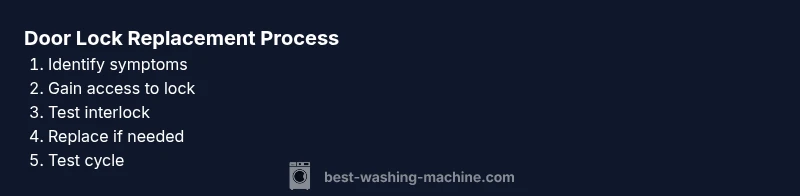
This overview introduces a safe, logical sequence: safety first, access the lock, diagnose the issue, replace the lock assembly if needed, reassemble the machine, and run a test cycle. Each action should be a discrete, verifiable step to avoid guessing. If you encounter a stubborn connector, pause and reassess rather than forcing parts. A systematic approach minimizes the risk of damaging wiring or the cabinet and helps you complete the repair with confidence.
Common fixes for different door lock types
There are two broad categories: mechanical interlocks and electronic switches. Mechanical locks may bind or misalign and can often be corrected by realigning the latch or replacing the lock body. Electronic interlocks require proper connector seating and continuity testing; moisture or corrosion can cause intermittent failures. Some models embed the lock in the door assembly, while others place the interlock in the control housing. In all cases, choose replacement parts compatible with your exact model and door configuration.
When to call a professional vs DIY
If you lack the right tools, feel uncertain about electrical testing, or the machine is under warranty with service restrictions, a professional may be the safer option. DIY fixes save money but can void warranties if not performed to spec or if wiring is damaged. Use Best Washing Machine guidance to weigh risk, model compatibility, and your confidence level before proceeding. When in doubt, schedule a diagnostic visit to avoid expensive mistakes.
Preventive maintenance to extend door lock life
Regular inspection of the door latch and connectors reduces surprise failures. Clean residue from detergent and fabric softener around the latch area, inspect for cracks in the striker or hinge region, and replace worn gaskets that affect door alignment. Lubricate moving parts sparingly with the recommended product, avoid slamming the door, and address leaks promptly to prevent corrosion on electrical components. A quick monthly check can extend the life of your interlock and keep cycles running smoothly.
Tools & Materials
- Phillips head screwdriver(Phillips #2 is common; have a #1 on hand for smaller screws)
- Flat-head screwdriver(For prying and terminal tabs)
- Needle-nose pliers(Helpful for disconnecting tight connectors)
- Multimeter(Use to test continuity on the interlock switch)
- Replacement door lock kit(Match your model and door type (interlock module or latch body))
- Electrical contact cleaner(Clean corroded terminals before reconnecting)
- Small flashlight(Illumination for tight corners)
- Magnetic parts tray(Keep tiny screws organized)
- Work gloves(Protect hands during disassembly)
- Owner's manual for your model(Model-specific steps and part numbers)
Steps
Estimated time: 45-90 minutes
- 1
Power down and prepare workspace
Unplug the washing machine and switch off the circuit. Wait a full minute to discharge capacitors, then clear a clean, dry workspace with good lighting. Separate a tray for fasteners and a pad for small parts.
Tip: Plan your layout before removing panels; photographing each step helps correct reassembly. - 2
Access the door lock assembly
Remove the appropriate access panel (top or back, depending on model) to reach the lock. Keep track of screws and clips, and use a flashlight to spot the interlock connectors that feed the lock.
Tip: If panels resist, back out screws slightly rather than forcing; panel clips can break easily. - 3
Inspect interlock and connectors
Visually inspect the interlock, latch housing, and door plug for wear, corrosion, or damage. Unplug connectors to test for bent pins or loose wiring. If the harness looks scorched or melted, replacements are safer than repairs.
Tip: Take a photo of connector orientations before disconnecting to guide correct reconnection. - 4
Test lock continuity
With the machine unplugged, use a multimeter to test continuity across the interlock switch terminals. Absence of continuity indicates a failed lock module that should be replaced rather than repaired.
Tip: If you’re unsure how to test, consult the manual’s wiring diagram before probing live circuits. - 5
Install the replacement door lock
Install the new lock assembly following the model’s instructions. Connect all harnesses securely, ensuring locking tabs click into place. Recheck all connections for tightness and alignment before reassembly.
Tip: Confirm that the latch aligns with the door striker to avoid mislocking during cycles. - 6
Reassemble and verify operation
Reattach panels, secure screws, and plug the machine back in. Run a short wash cycle to confirm the door locks during the cycle and releases at the end. Listen for the final latch click and watch for any error codes.
Tip: Allow the machine to complete a full cycle to ensure reliability; if any error persists, revisit the wiring and lock alignment.
FAQ
What are the signs that my door lock needs replacement?
Frequent cycle interruptions, door does not latch, error codes pointing to the door interlock, or a buzzing sound from the interlock during operation indicate a likely lock issue. If the door won't unlock after a cycle, the interlock or wiring may be at fault and should be checked.
Look for cycles that stop suddenly, door latch failure, or error codes related to the door interlock.
Can I fix the door lock without removing the drum?
Many models allow access from the front or top without removing the drum. However, some configurations require panel removal or partial drum access. Check your model’s service manual for the exact method.
In many machines you can reach the lock without removing the drum, but some models need panel access.
Will fixing the door lock void my warranty?
Warranty terms vary by manufacturer. DIY repairs can affect coverage if you use non-approved parts or voids are documented. Always review your warranty and prefer OEM parts when possible.
Check the warranty terms first; using non-approved parts can affect coverage.
Do I need special tools for door lock repair?
Most door lock repairs require common hand tools like screwdrivers and pliers, plus a multimeter if you test electrical continuity. A model-specific door lock kit is essential for a proper fit.
Basic tools plus a model-specific lock kit are typically enough.
How long does a door lock repair take?
A typical door lock repair takes about 30 to 90 minutes, depending on model access and whether you need to replace the entire lock assembly. Allow extra time for testing.
Usually under two hours, including testing.
Watch Video
The Essentials
- Identify symptoms to guide repair decisions.
- Safety first: unplug and discharge before work.
- Use model-specific parts for reliability.
- Test after reassembly with a full cycle.
- Prevent future lock failures with regular inspections.