How to Know When Your Washing Machine Is Broken: Quick Troubleshooting
Urgent troubleshooting guide to tell if your washer is broken, with signs, causes, home tests, and steps to fix or when to call a pro.


Not starting, leaks, loud noises, or failure mid-cycle are the most common signs your washer is broken. Start with simple checks: verify power, door switch, and drainage path, then reset the control panel. If basic tests don’t fix it, use our diagnostic flow to identify the likely cause and decide whether repair or replacement is needed.
Signs Your Washing Machine Is Seriously Broken
If you’re trying to learn how to know when washing machine is broken, start by watching for persistent symptoms that appear across cycles. Look for failures that disrupt basic functions: the machine won’t start, stops mid-cycle, leaks, it makes loud noises, or it runs unusually long. Even rare error codes can point to sensor or control issues. In urgent scenarios, water near electrical outlets demands caution and safety. According to Best Washing Machine, early detection helps avoid water damage and costly repairs, so don’t delay testing a few quick checks.
Common Signs by Symptom
- Not starting: Power, lid switch, or control panel problems.
- Not spinning or draining: Clogged pump, worn belt, or blocked hoses.
- Leaks: Loose connections, damaged hoses, or cracked tubs.
- Loud noises: Objects in the drum, worn bearings, or motor issues.
- Error codes: Display clues like error codes on the panel that point to sensors or drainage problems.
These signs are the first hint that something is wrong, and they help narrow the potential causes quickly.
Quick Home Tests to Narrow Down the Cause
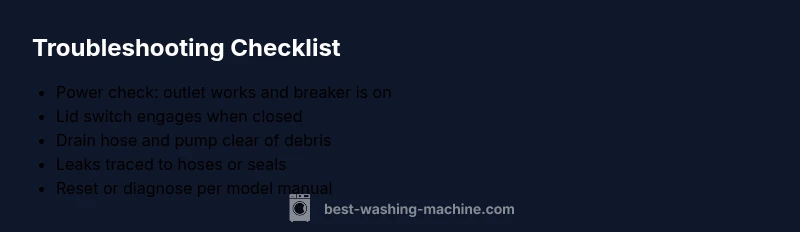
Start with the simplest checks, such as ensuring the outlet has power and the machine is properly plugged in. Test the circuit by plugging a lamp into the same outlet to confirm power flow. Check the door/lid switch by closing the door and listening for a decisive click; the switch should depress when closed. Inspect the drain hose for kinks and clear the filter/pump area of any debris. If needed, reset the machine by powering off for 60 seconds and turning back on.
Safety First: When Not to DIY
Water and electricity share the same space—never operate a machine with exposed wiring or a flooded area. If you smell burning, see scorch marks, or hear buzzing from electronics, stop and unplug immediately. Do not attempt major repairs if your unit is under warranty unless a professional confirms it’s safe. When in doubt, contact a qualified appliance technician to avoid personal injury and property damage.
Diagnostic Flow Overview: From Symptom to Solution
This section outlines a practical flow from symptom to diagnosis and fix. Start with the symptom identification (for example, not starting, leaking, or noisy operation) and then explore common causes (power supply, lid switch, pump, belt). For each cause, check a quick list of checks and apply the simplest fix first. If the symptom persists after basic steps, escalate to professional help. Following a structured flow reduces risk and speeds resolution.
Quick Fix Checklist for the Most Common Issue
This checklist focuses on the most frequent failure: the washer not starting due to power or lid switch. Use it as a fast reference before you break out tools. - Verify outlet power and test a different device. - Ensure the lid switch engages when the door is closed. - Reset the washer by unplugging for 60 seconds. - Inspect for visible signs of damage or loose connections that could block startup.
Quick Prevention Tips to Extend Washer Life
- Schedule regular lint-free cleaning of the filter and pump area to prevent clogs.
- Keep hoses tight and replace worn hoses every few years.
- Use the recommended detergent amount to avoid oversudsing and residue buildup.
- Address issues promptly to prevent leaks from becoming costly water damage.
Steps
Estimated time: 60-90 minutes
- 1
Power down and recheck power
Unplug the washer, wait 60 seconds, then plug back in. Confirm the outlet works with another device.
Tip: Safety first: ensure hands are dry and you’re standing on a dry surface. - 2
Test the lid switch
Close the lid firmly and listen for a click; press the switch manually with a non-conductive tool to hear or feel engagement.
Tip: If the switch feels loose or doesn’t click, it likely needs replacement. - 3
Check power and reset
If available, run the machine’s reset or diagnostic mode. For some models, unplug, wait, then hold the start button for several seconds.
Tip: Not all models have reset; refer to the manual for step-by-step instructions. - 4
Inspect hoses and pump area
Turn off water supply, disconnect, and inspect drain hose for kinks. Remove debris from pump filter if accessible.
Tip: Be prepared for water to spill; have towels ready. - 5
Run a test cycle with a small load
Set to a cold cycle with a small load to observe whether the machine starts, fills, and drains correctly.
Tip: Listen for the pump and motor sounds; unusual noises indicate another fault. - 6
Escalate if unresolved
If the washer still won’t start or leaks after these checks, schedule service and gather model/serial number and purchase date.
Tip: Professional help can prevent electrical hazards and further damage.
Diagnosis: Machine won't start or stops mid-cycle
Possible Causes
- highPower issue (outlet, circuit, or power cord)
- mediumLid/door switch defective or misaligned
- lowControl board or timer fault
Fixes
- easyTest outlet with a lamp or plug the washer into a known working outlet; check the circuit breaker/fuse.
- easyInspect the lid switch for proper engagement and replace if worn or loose.
- easyPower cycle the machine and perform a factory reset per manufacturer guide, if available.
FAQ
What are the most common signs that indicate a washing machine is broken?
Not starting, leaking, unusual noises, and not draining are the most frequent indicators of a broken washer. Always check power, hoses, and the lid switch to confirm.
Common signs include not starting, leaks, and strange noises. Start with power and lid switch checks.
Can I fix a leaking washer myself?
Small leaks from hoses can often be fixed at home by tightening clamps or replacing a hose. If the leak is from a cracked tub or pump, call a professional.
You can often fix small hose leaks yourself, but more serious leaks need a pro.
Is it worth repairing a failing washer or should I replace it?
Consider the age of the unit and how often it fails. If repairs would be frequent or expensive, replacement is often the smarter choice.
If it keeps breaking, replacement may be wiser than ongoing repairs.
What should I do if the washer stops mid-cycle?
Check power, lid switch, and load balance. Reset the machine and run a short test cycle. If it still stops, contact a technician.
If it stops mid-cycle, try power reset and lid switch, then call a pro if needed.
How long do washing machines typically last?
Most washers last several years with proper care. Regular maintenance helps extend life and reduce unexpected breakdowns.
With good care, washers can last many years and maintenance helps prevent surprises.
Watch Video
The Essentials
- Check power and lid switch first
- Leaks require immediate attention
- Follow a diagnostic flow rather than random fixes
- Call a pro when in doubt