How to Know When Washing Machine Is on Rinse Cycle
Learn how to tell when your washing machine is in the rinse cycle with clear cues, indicators, and model-specific tips. A practical, model-agnostic approach from Best Washing Machine.


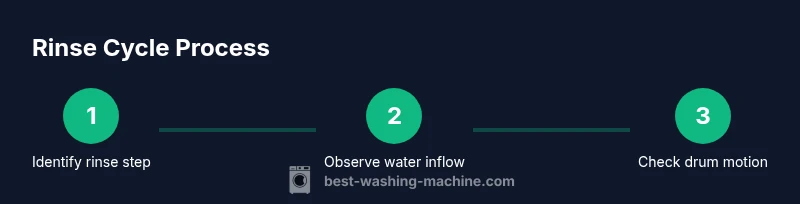
During the rinse cycle, your washing machine uses clean water to remove detergent and residue. Look for cues such as a transition to a quieter drum motion, a brief water inflow, and a cycle label or indicator on the display. By recognizing these signals, you can distinguish rinse from wash across most models.
Why understanding when the rinse cycle is active matters
Knowing when your washing machine is on the rinse cycle helps you manage household tasks more efficiently, ensure thorough detergent removal, and avoid misidentifying cycle stages. According to Best Washing Machine, many homeowners rely on cycle names rather than actual indicators, which can lead to confusion during busy mornings. Best Washing Machine analysis shows that relying on observable cues—water flow, drum motion, and display labels—works well across a wide range of modern washers. In practice, you’ll notice a new fill of clean water entering the drum and a calmer, steady drum pace as detergents are washed away. Different models vary in how explicitly they label the rinse, so keep your manual handy and note the exact wording used by your machine. By building familiarity with your unit’s cues, you’ll finish loads more predictably, protect fabrics, and reduce the chances of interrupting a cycle. Remember that rinse behavior can differ by model and by load size; some machines separate rinse from spin, while others combine them.
How the rinse cycle works across common washing machines
In most washers, the rinse follows the wash phase and uses clean water to rinse away detergent and soil. Top-load machines often fill and drain with the drum stationary, while front-load machines use the drum’s rotation combined with short, efficient fills to conserve water. Some models offer an extra rinse option that adds another water fill to maximize detergent removal, particularly for sensitive skin or heavily soiled loads. The rinse generally ends with a final spin to remove excess water, though the exact sequence varies by brand and model. Cycle duration depends on load size, soil level, water pressure, and any extra rinse settings. The Best Washing Machine team notes that newer energy-efficient models optimize rinse times to minimize water use while preserving cleaning effectiveness. For lightly soiled loads, rinse cycles may feel brief; for bulky or heavily soiled loads, expect longer rinses. Always listen for changes in water flow and watch for indicators on the control panel.
Visual and auditory cues you can rely on
Identifying the rinse cycle relies on a blend of sensory cues. You’ll typically hear water entering the drum during rinse and a consistent, lower-volume pump hum as it finishes. The drum may rotate slowly or pause briefly depending on the model and whether an extra rinse is selected. Many machines display RINSE, RINSE SPIN, or a rinse icon on the control panel; others use lights, beeps, or a combination of indicators. If you can see the water level through a glass lid or door, you may note a stabilization of water as the rinse completes. Front-loaders often lock the door during the rinse and perform short, controlled drum movements rather than a full agitation cycle. Across machines, the strongest indicators are the water inflow, a quieter drum rhythm, and the panel message or icon that confirms the rinse stage.
Reading cycle indicators on different machine types
Top-load washers typically use a dial with a dedicated RINSE label or a sequence of cycle names; a click of the dial often signals the switch into RINSE. Front-load washers commonly show a digital display that explicitly states RINSE or the icon for rinse; some models use a color-coded indicator or a text change during the rinse phase. If your machine has a smart feature, you may see a status update in the companion app. When you’re unsure, compare what you observe with your user manual’s model-specific descriptions, and note any model-dependent cues like beeps, lights, or specific cycle names. Misinterpreting a pre-wash or drain step as rinse is a common mistake, so double-check the documentation for your exact model.
Practical guidelines for timing the rinse
Time spent in rinse depends on several factors: load size, wash intensity, water hardness, and whether you’ve selected extra rinse. A standard rinse may last a few minutes, while an extra rinse adds additional water fills and extra agitation or spinning. For heavily soiled fabrics, consider an extra rinse to ensure detergent residues are fully removed. In energy-conscious households, modern washers optimize rinse duration to minimize water use without compromising cleanliness. If you’re running back-to-back loads, note the rinse duration so you can plan your next task without waiting unnecessarily, and consider whether a shorter rinse suffices for delicate fabrics.
Common myths and mistakes when observing rinse
One common myth is that a loud drum always means the rinse is actively washing; in reality, some models have loud pumps during drainage that can be mistaken for agitation. Another error is assuming a rinse is happening just because the door is locked; some machines perform a brief rinse followed by a drain cycle rather than a separate rinse phase. Don’t confuse a delayed start or a soak option with rinse; check the cycle name or icon on the display. Finally, never interrupt a cycle to “check” if it’s rinsing—this can disrupt detergent removal and garment care. Always consult your model’s manual for precise indicators and expected timing.
Authority and research-backed cues you can rely on
Rely on the combination of visual indicators, audible cues, and model-specific labeling to confirm the rinse cycle. Best Washing Machine recommends cross-referencing your machine’s manual to identify the exact rinse indicators for your model, as terminology can vary. Additionally, energy and water-use considerations are part of modern rinse cycles, with newer machines aiming to minimize water consumption while preserving cleaning performance. If you have a high-efficiency unit or a model with a dedicated rinse setting, take note of its particular signals and duration to avoid confusion in future loads.
AUTHORITY SOURCES
While you verify rinse cues, consider consulting reliable sources for general appliance guidance. For official information on energy-efficient appliances and their operation, you can visit government and education resources, and major publications that cover home electronics industry standards. Consult these sources for model-agnostic concepts as you apply rinse-cycle cues to your specific washer.
- https://www.energy.gov/eere/buildings/articles/energy-efficient-washing-machines
- https://www.consumer.ftc.gov/articles/how-washers-work
- https://www.epa.gov/watersense/washing-machines
Tools & Materials
- Owner's manual for your washing machine(Locate rinse cycle definitions, indicators, and variations by model.)
- Clock or timer(Optional for timing durations of rinse cycles.)
- Notebook or digital notes app(Record observations for different cycles to build familiarity.)
Steps
Estimated time: 15-25 minutes
- 1
Identify rinse cycle terminology in your manual
Open the manual and locate the rinse cycle name and indicators for your model. Note whether the rinse appears as a separate stage or as part of a combined rinse-and-spin sequence. This establishes your reference point for real-world observations.
Tip: If the manual uses multiple language options, identify all terms that could indicate rinse and focus on the most common ones. - 2
Start a test load and observe initial cues
Run a small, simple load on a normal cycle and listen for changes as the machine moves from wash to rinse. Look for a shift in drum motion and the first appearance of clean water entering the drum during rinse.
Tip: Take notes on the exact moment you perceive the rinse cues to create a personal checklist. - 3
Watch the water inflow and pump activity
During rinse, you should hear or see a new water fill and, on some models, the pump may run intermittently as it drains and refills. Digital displays may change to a RINSE label or icon.
Tip: If you don’t hear water, verify inlet hoses are open and the cycle isn’t paused. - 4
Check the cycle indicator on the panel
Inspect the control panel for the active phase label (e.g., RINSE, RINSE SPIN) or a color-coded indicator. Some machines use beep codes to mark transitions.
Tip: On dial models, gently rotate the dial to the RINSE position without starting a new cycle to compare cues. - 5
Note the duration and end cues
Record how long the rinse lasts for the load size and soil level. The end of the rinse is often signaled by a final spin or a completion beep.
Tip: If the rinse is notably short or extremely long, compare with your manual’s expected timing for your cycle. - 6
Confirm with a second test run
Run another small load to confirm consistency in rinse cues across cycles. Rechecking helps ensure you can reliably identify rinse in future loads.
Tip: Keep a simple log for at least a week to understand your machine’s normal rinse behavior. - 7
Document model-specific differences
Record any model-specific indicators (unique beeps, lights, or icons) for future reference.
Tip: If you upgrade or lend the machine, share your notes with others to reduce confusion. - 8
Review and apply the findings to real loads
With your observations in hand, confidently identify rinse in everyday loads, adjusting settings as needed for best results.
Tip: When in doubt, default to a longer rinse for heavily soiled items or sensitive fabrics.
FAQ
How can I tell if my washing machine is currently in the rinse cycle?
Look for a labeled RINSE on the display or icon, listen for a new water inflow, and note a softer drum movement compared with the wash phase. If you’re unsure, consult your model’s manual for the exact indicators.
Check the display for RINSE, listen for water entering the drum, and observe the drum motion to confirm the rinse is underway.
Why might the rinse cycle take longer on some loads?
Longer rinses can occur with heavier or heavily soiled loads, hard water, or when an extra rinse option is selected. Model-specific algorithms optimize duration for efficiency while ensuring detergent removal.
Heavy loads, hard water, or extra rinse settings can extend rinse time.
Can I hear the rinse differently on front-load vs top-load machines?
Yes. Front-loaders often show rinse cues on digital displays and may have shorter, repeated fills, while top-load machines may rely more on dial positions and audible pumps. Always refer to the manual for model-specific cues.
Front-loaders use displays and short fills; top-loaders rely on dial positions and sounds.
What should I do if I think the rinse cycle is stuck?
Pause only if the cycle is safe to stop (check manual). If the rinse seems stuck, check for water inlet issues, drain problems, or a jam in the drum. If unresolved, contact support or schedule service.
If it seems stuck, pause carefully and check water supply and drain; if unresolved, seek support.
Do all cycles include a separate rinse phase?
Not all cycles have a separate rinse phase. Some cycles combine wash, rinse, and spin, while others offer a dedicated rinse option. Always verify with the cycle label in your manual.
Some cycles skip a separate rinse; others include it. Check your model.
Is it normal for a rinse to produce extra water sounds?
Yes, you may hear pumps or additional water inflow during rinse. This is normal, especially if the model uses multiple rinses or a high-efficiency fill.
Hearing extra water sounds during rinse is common, especially with extra rinses.
Watch Video
The Essentials
- Identify rinse indicators from your model manual
- Listen for new water inflow during rinse cues
- Watch for a quieter drum motion distinct from wash
- Check display icons or cycle labels to confirm rinse
- Document model differences to avoid future confusion