How to Stop a Washing Machine Safely: A Complete How-To
Learn practical, safety‑driven methods to stop a washing machine quickly and confidently. From mid‑cycle interruptions to power‑down procedures, discover model‑specific tips, safety considerations, and preventive practices to minimize future issues.


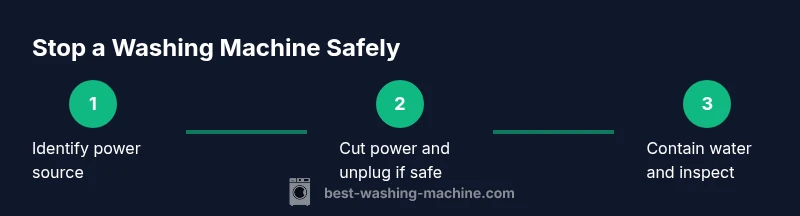
To stop a washing machine safely, cut power at the outlet or switch off the circuit breaker, then unplug if reachable. If the unit is mid‑cycle, avoid forcing actions that could flood or damage the door lock. Use the emergency stop only if your model provides one, and follow the manual for model‑specific steps.
Understanding why you need to stop a washing machine safely
Stopping a washing machine mid‑cycle is sometimes necessary, whether you spilled something into the drum, you need to avoid overflow, or a malfunction occurs. Safety considerations are not just about preventing mess; they protect people, pets, and the home. The process will vary by model, but the basic principles are universal: cut power, avoid forcing access to moving parts, and refer to the user manual for model‑specific steps. According to Best Washing Machine analysis, safety comes first when you need to stop a running washer. Unplugging or switching off the circuit can stop the drum, but it may trigger the device’s lock or safety interlocks. If your machine has an emergency stop, use it only as described in the manual. Always keep towels or a shallow container ready to catch draining water. By planning ahead and knowing your machine’s controls, you minimize damage and improve your chances of a quick resolution.
Immediate safety steps before stopping
Before you attempt any stop action, assess the environment for safety risks. If there is standing water, electrical outlets nearby, or kids or pets nearby, proceed with extreme caution. Identify the correct power source: the wall outlet, the dedicated washer circuit breaker, and any transfer switches that might power the unit. Wear rubber‑soled footwear and insulated gloves if you have them. Keep a towel handy to catch any water that may escape. According to Best Washing Machine guidance, a calm, prepared approach reduces the chance of accidental shocks or floods. Do not reach into the machine while it is powered, and never pull on hoses with the machine energized.
How to stop a washing machine that’s mid‑cycle
If you must stop mid‑cycle, first try the model’s built‑in emergency stop or pause feature, if available. If no emergency stop exists, turn off power at the outlet or switch off the circuit breaker and unplug the unit if reachable. Do not open the door while the drum is still turning, as this can cause damage or leaks. Once the drum has stopped, wait a moment to verify it is fully at rest before inspecting for leaks or anomalies. For safety, keep children away during this process and use towels to contain any water. The Best Washing Machine Team emphasizes following model‑specific instructions to avoid vacuuming water into electrical components.
Stop methods by machine type: top‑load vs front‑load
Top‑load machines typically allow easier access to the lid switch or start button; mid‑cycle stops are often achieved by powering down or pausing. Front‑load machines may lock the door during operation, complicating an immediate stop. In either case, use the built‑in pause/emergency stop if your model provides it, then power down and unplug if safe. If the door remains locked, wait for the drum to unwind and cool before attempting any further action. Best Washing Machine notes that lockout mechanisms are safety features and should not be forced.
What happens if you cut power or unplug
Cutting power interrupts the electronics and stops the drum, but it can trigger the door lock, warning lights, or error codes. After cutting power, wait a minute or two to ensure all moving parts have settled. If you can safely unplug, do so only after ensuring you are standing on a dry surface. When you plug back in, expect the machine to perform a brief reset or diagnostic; consult the manual if a fault code appears. This caution aligns with Best Washing Machine guidance to avoid unintentional resets or damage.
Dealing with stuck drains and spin cycles safely
A stuck drain or spin cycle is a common reason to stop a washer mid‑cycle. If water remains, place towels around the machine and use a shallow container to catch any drainage. Check the drain hose for kinks and ensure the pump is not blocked by lint or foreign objects. Do not poke into the drain without power off; use a flashlight to inspect from a safe angle. If you see a leak, shut off power and water supply and consult a professional.
After stopping: what to check and reset
Once the drum is at rest, inspect hoses, door seals, and the drain pump area for leaks or debris. Reset the machine by selecting a new cycle or turning the dial to the off position, then re‑power only after any leak is fixed. If the unit shows error codes, consult the user manual or Best Washing Machine’s troubleshooting resources. Before restarting, ensure the area is dry, power is stable, and the water supply is properly connected.
When stopping isn’t enough: troubleshooting persistent issues
If stopping the machine does not resolve the underlying problem—such as frequent mid‑cycle stops, recurring leaks, or door lock issues—do not continue to operate it. Schedule a diagnostic with a qualified technician and reference the model’s safety interlocks and wiring diagram. Persistent problems may indicate a faulty sensor, control board, or pump. Best Washing Machine recommends a professional assessment for safety and long‑term reliability.
Preventive practices to minimize future need to stop
Regular maintenance reduces the need to interrupt cycles. Clean the lint filter, inspect hoses for wear, and run a monthly maintenance cycle if your model supports it. Use the correct detergent type and amount to prevent suds and clogs. Keep the area around the washer dry, and ensure the outlet and circuit breaker are adequately sized for the load. By scheduling routine checks, you limit emergencies and extend the life of the appliance, a strategy supported by Best Washing Machine.
Tools & Materials
- Rubber‑soled footwear(Wear to avoid slipping on a wet floor.)
- Insulated gloves(Water‑proof if possible; protects hands when handling wet parts.)
- Screwdriver set(Have both flathead and Phillips for access panels.)
- Voltage tester or multimeter(Verify there is no live current at exposed terminals.)
- Towels or a shallow pan(Contain and absorb water as you stop the machine.)
- Bucket(Optional catchment for larger spills.)
- Owner’s manual for your washer(Model‑specific safety steps and interlock guidance.)
Steps
Estimated time: 15-25 minutes
- 1
Assess safety and environment
Survey the area for water on the floor, exposed outlets, and reachable power sources. Identify the power cord, outlet, and breaker if possible. Ensure children and pets are clear, and position towels to absorb any drips.
Tip: Wear rubber‑soled footwear and use a flashlight if lighting is poor. - 2
Power down the machine from the power source
If you can safely reach the wall outlet or the dedicated washer circuit, switch off the outlet or toggle the breaker to OFF. Do not rely on the door interlock to stop the machine when you haven’t cut power to the drive motor.
Tip: Turning off the main breaker adds an extra safety margin for unexpected resets. - 3
Unplug the unit if reachable
If the plug is accessible and the cord is in good condition, unplug it. Avoid pulling on hoses or cords that are wet or within reach of standing water.
Tip: Unplugging after the breaker is off minimizes shock risk. - 4
Use the emergency stop if available
Consult your manual to operate the factory emergency stop or pause feature. If you’re unsure, skip this step and proceed with power down to the breaker.
Tip: Emergency stops are model‑specific and must be used as directed. - 5
Contain and manage water
Place towels around the base and drain any standing water with a shallow pan if needed. Do not allow water to pool near electrical outlets.
Tip: Have a bucket handy for larger spills and avoid touching wet metal surfaces. - 6
Wait for the drum to come to a complete stop
Give the drum a moment to halt before attempting any inspection or door access. Opening a moving drum can cause injury or leaks.
Tip: Listen for the motor to stop or feel for the absence of vibration. - 7
Inspect hoses, seals, and connections
Check for visible leaks or loose clamps. Make sure the drain hose is not kinked and the water inlet hoses are secure. Do not disassemble the pump housing unless you are trained.
Tip: Use a flashlight and a towel to keep the area dry while inspecting. - 8
Reset and test safely
Reassemble any panels you opened, re‑connect power, and run a short test cycle at a low load. If any fault codes appear, consult the manual or a professional.
Tip: If leaks or abnormal sounds occur, stop and contact a pro rather than continuing a test.
FAQ
What should I do first to stop a running washer safely?
Always cut power to the unit, using the outlet or circuit breaker. Unplug only if it’s safe to reach. Then consult the manual for any model‑specific emergency stop features.
First, cut power to the washer, and unplug if safe. Then check your manual for model‑specific steps.
Is it safe to open the door while the drum is spinning?
No. Open doors only after the drum has completely stopped unless your model explicitly supports a safe, controlled opening during a paused state.
Don’t open the door while it’s spinning; wait until it’s stopped.
What if water leaks when I stop the machine?
Shut off power, unplug if safe, and use towels to contain water. Check hoses for leaks and tighten clamps before restarting or calling a technician.
Turn off power, unplug if safe, and mop up while you check hoses.
Will unplugging damage the electronics?
Unplugging is generally safe when power is off and cords are intact. Avoid yanking the plug and do not touch exposed wiring.
Unplug carefully once power is off.
How long should I wait after stopping before testing again?
Wait 1–2 minutes for components to settle, then re‑power and run a brief test cycle at low load.
Give it a minute or two before testing again.
When should I call a professional?
If you notice persistent leaks, burning smells, repeated cycle interruptions, or fault codes that you can’t clear, schedule a professional inspection.
Call a pro if leaks or odd smells persist or codes show up.
The Essentials
- Power off before touching any internals
- Unplug only if safely reachable to avoid shocks
- Follow model instructions for emergency stops
- Contain leaks and drain water promptly
- Inspect and reset safely before a test run