What to Do When Your Washing Machine Is Full of Water
Urgent, step-by-step troubleshooting for when your washing machine is full of water. Quick fixes, safety tips, and guidance on when to call a professional.


Unplug the washer and switch off power at the outlet first. The most likely causes are a clogged drain pump or a kinked, blocked drain hose. Check the hose for kinks, then locate and clean the pump filter. If water remains after these checks, do not force-drain—manually remove as needed and call a professional if it won’t drain.
Immediate Safety Steps
If you’re asking what to do when washing machine is full of water, safety comes first. Unplug the washer from the outlet and, if you can reach it safely, switch off the circuit breaker. Avoid touching metal parts if there’s standing water near outlets. If the room feels unsafe or you see exposed wiring, leave the area and call for professional help. Once you’re safe, gather a bucket, towels, and a flashlight to inspect the drain area. Best Washing Machine Team emphasizes calm, systematic actions to prevent shocks, floods, or further damage.
Common Causes of a Full Washer
There are several frequent culprits when a washer is full of water after the drain cycle. The top causes include a kinked or blocked drain hose, a clogged drain pump filter, or a failed drain pump. Less common but possible issues include a faulty lid switch on top-load models and a blocked standpipe or drain trap. In rare cases, an electronic control fault can prevent draining. Understanding these causes helps you target the fix without unnecessary disassembly, and it aligns with the guidance from Best Washing Machine Team in 2026.
Quick Checks You Can Do Without Tools
Begin with simple checks before you dive into panels or tools. Ensure the power is off and the water supply valves are closed. Inspect the drain hose for kinks or sharp bends that could block flow, and disconnect it from the standpipe to visually inspect for obstructions. If you have a front-loading model, open the access panel to check and clean the drain pump filter. Reconnect everything, select a drain cycle, and observe the water flow. If water still remains, proceed to safer manual drainage and document your observations for a technician if needed.
How to Drain Water Safely (Manual Drain)
When immediate draining is required, use a bucket or towels to manage the water in the drum. Slowly remove water through the drain hose by placing the end into a bucket, keeping the hose elevated to prevent backflow. If you cannot drain through the hose, use a wet/dry vacuum to extract water from the drum. Do not use high-pressure tools to push water out, as this can damage seals. Always unplug the machine before attempting any manual draining.
How to Test the Draining System
After performing the initial checks, test the system by running a short drain cycle with no load. Listen for the drain pump motor and observe whether water is evacuating smoothly through the hose. If you hear a humming sound without actual draining, the pump may be obstructed or failing. Inspect the pump impeller for debris and verify it spins freely. If debris exists or the impeller is jammed, clear or replace as needed. If the pump does not activate, consider wiring, switches, or control board issues and consult a technician.
Step-By-Step Fix for the Most Common Cause
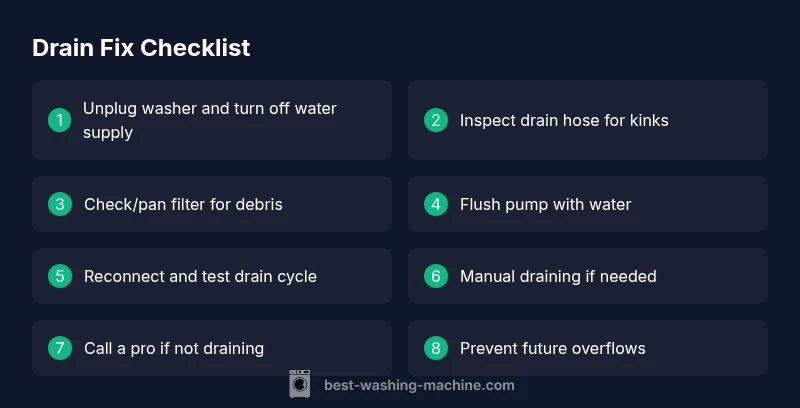
- Power down and unplug the unit. 2) Access the drain area (front panel or back panel, depending on model). 3) Remove and clean the drain pump filter, clearing all debris. 4) Straighten and rinse the drain hose to remove kinks and blockages. 5) Reassemble components securely and run a test drain cycle. 6) If water drains, run a full wash to verify normal operation. 7) If water remains, move to professional support and document model and symptoms so a technician can diagnose.
When to Call a Professional
If you have tried the basic drain hose and filter clean, and the washer still won’t drain, or you hear a grinding or burning smell from the pump, it’s time to call a professional. Also contact a pro if you notice water leaks around the pump or hoses after reassembly. The Best Washing Machine Team recommends scheduling service promptly to prevent mold growth and electrical hazards. Do not continue to run cycles if water remains in the drum.
Prevention Tips to Avoid Future Overflows
Regular maintenance can prevent repeated overflows. Clean the drain pump filter every 2–3 months, inspect hoses for wear or kinks, and ensure the drain path is free of obstructions. Use the correct detergent amount to minimize suds that could hinder draining. Consider a quick annual check by a professional to maintain the pump, valve seals, and hoses in good condition. Following these practices helps maintain reliable drainage and extends the life of your washer.
Steps
Estimated time: 45-60 minutes
- 1
Power down and safety check
Unplug the washer and cut power at the outlet. If safe, switch off the dedicated circuit breaker. Remove any standing water from the floor to reduce slip hazards.
Tip: Wear rubber-soled shoes and dry hands before handling plugs. - 2
Access the drain path
Move the machine if needed and access the drain hose behind the base panel or from the back. Loosen clamps and gently pull the hose free if you can reach it safely.
Tip: Do not tug on hoses if you’re unsure of the model’s layout. - 3
Inspect the drain hose
Check the hose for kinks, cracks, or clogs. Detach from the standpipe and flush with water to clear blockages.
Tip: Keep a bucket handy to catch any residual water. - 4
Clean the pump filter
If your model has a front-access filter, open the panel and remove debris. Rinse the filter under running water and reinstall securely.
Tip: Take a photo before disassembly to aid reassembly. - 5
Test the drain cycle
Reconnect power and run a short drain cycle with no load. Watch for water to drain and listen for the pump’s operation.
Tip: If the pump hums but won’t move water, stop the cycle and inspect the impeller area. - 6
Manual drainage if needed
If water still remains, carefully drain with a bucket or use a wet/dry vacuum to remove water from the drum.
Tip: Never use forceful vacuums on wet electrical components. - 7
Reassemble and test
Secure all panels and hoses. Run a full wash cycle to confirm normal draining and prevent leaks.
Tip: Monitor for signs of leaks for the first few minutes after testing.
Diagnosis: Water remains in drum after a wash cycle and the drain won’t finish
Possible Causes
- highDrain hose is kinked, blocked, or misrouted
- highClogged drain pump filter
- mediumFaulty lid switch or door latch (top-load models)
- mediumFailing drain pump or impeller
- lowElectrical control issue preventing pump activation
Fixes
- easyUnkink the drain hose and clear proper routing to drain
- easyOpen and clean the drain pump filter to remove debris
- mediumTest lid switch function and replace if it fails to trigger
- mediumInspect the drain pump for obstruction or failure and replace if needed
- hardCheck wiring/control board for faults; hire a professional if unsure
FAQ
What should I do first if my washing machine is full of water?
First unplug the machine and turn off the circuit if safe. Check the drain hose for kinks and inspect the pump filter for blockages. If water remains, proceed with manual draining and avoid running the machine until inspected.
First unplug the machine, check the drain hose for kinks, and inspect the filter. If water won't drain, switch to manual draining and call a professional if needed.
Why won’t my washer drain after a cycle?
Common reasons include a kinked hose, clogged pump filter, or a faulty drain pump. Inspect these components and test the drain cycle to identify the failing part.
Usually it's a kinked hose, clogged filter, or a failing pump. Check those parts and test the drain cycle.
How do I check the drain hose for kinks?
Turn off power and water supply, detach the hose from the standpipe, and straighten it. Look for visible kinks or bends and replace or reposition as needed.
Power off, detach and straighten the hose. Look for kinks and fix or replace.
Can I fix a clogged drain pump myself?
Yes, if you have access to the pump filter, you can remove debris and flush the impeller area. If the pump motor or wiring shows damage, seek professional service.
You can clean the filter and inspect the pump, but replace or professional service is needed if the pump is damaged.
When should I call a professional?
Call a professional if the pump runs but does not drain, if you hear grinding, or if water leaks post-reassembly. Electrical concerns or unfamiliar disassembly also require expert help.
Call a pro if the pump won’t drain or you hear unusual noises or see leaks.
Is standing water in the tub dangerous?
Standing water can create slip hazards and mold growth. It’s important to unplug, dry the area, and avoid reusing the machine until the issue is resolved.
Standing water is a slip and mold risk. Dry the area and fix the issue before using again.
Watch Video
The Essentials
- Unplug power and prioritize safety before any checks
- Drain hose and pump filter are common culprits
- Manual drainage is safer than forcing water out
- Call a professional if the pump or electronics fail
- Regular maintenance prevents future overflows