What to Do If Washing Machine Leaks: Quick and Safe Troubleshooting
If your washer leaks, act fast. This urgent troubleshooting guide covers common causes, practical checks, safety tips, and step-by-step fixes to stop leaks and prevent water damage.


Most leaks come from simple sources like loose hoses or worn door seals. Start by turning off the water, unplugging the machine, and inspecting hose connections for tightness. If you see water pooling near the door, check the door seal; replace it if necessary. This quick check often stops the leak and guides the next steps.
Why a washing machine leaks and how to respond quickly
Water leaks from a washing machine are more than a nuisance—they can cause water damage, mold growth, and costly repairs if not addressed promptly. If you’re wondering what to do if washing machine leaks, act quickly: shut off the water supply, unplug the unit, and place towels to contain spills. According to Best Washing Machine, prompt troubleshooting not only stops the current leak but also helps you pinpoint the root cause before it worsens. In many homes, leaks trace back to simple, fixable issues such as loose hoses, worn door seals, or clogged drainage. This guide walks you through a safe, step-by-step approach to diagnose and fix the problem, with clear safety notes and when to call a professional. Remember: do not ignore a leak, especially if you see electrical moisture near outlets or you notice pooling water under the machine.
Common causes of leaks in washing machines
Leaks have several likely sources, and knowing them helps you pick the right fix quickly. Here are the most common culprits:
- Loose or damaged water supply hoses and clamps that feed the washer.
- Drains hoses that are loose, cracked, or not properly seated in the standpipe.
- Worn door seal or gasket, especially on front-loading models.
- Cracked tub or frame, which can allow water to escape during cycles.
- Detergent buildup in the dispenser or overload of detergent, causing overflow.
- Faulty water inlet valve or pressure switch allowing water to escape.
Identifying the exact source matters because the fix ranges from a simple tightening to a full seal replacement.
Quick checks you can do before calling a pro
These early checks help you rule out the simplest issues. They’re fast and safe if you follow basic precautions:
- Safety first: unplug the machine and turn off the water supply at the status valve. If you’re not comfortable with electrical work, skip complicated checks.
- Inspect all visible hoses (both hot and cold) for bulges, cracks, or moisture along the connections. Tighten clamps by hand, then snug with a screwdriver—don’t overtighten.
- Look at the drain hose and standpipe. Remove any kinks and ensure the hose is fully inserted and secured with a clamp.
- Check the detergent drawer and door seal for wear or overflow. Clean residue that might be siphoning water into the drum and inspect the gasket for rips.
- Run a short test cycle with a shallow load and a catch basin beneath the washer. Note where water drips start and stop.
If these steps don’t locate or stop the leak, you’ll need a more thorough diagnostic flow or professional help.
Diagnostic flow: symptom → diagnosis → solutions
A systematic approach helps you translate a symptom into a precise fix. Use the following workflow:
- Symptom: Water pooling on the floor during or after a cycle. Diagnosis: Likely hose, valve, or drain issue. Solution: Check hoses, tighten clamps, inspect valve seals. If the pool persists, test the drain pump for leaks.
- Symptom: Water leaking around the door seal. Diagnosis: Worn or damaged door gasket. Solution: Replace the gasket and inspect the tub lip for damage.
- Symptom: Water leaking inside the drum or back panel. Diagnosis: Cracked tub, drum seal, or internal hose failure. Solution: Stop using the machine and have a professional assess structural components.
- Symptom: Water appears only with high-velocity spins. Diagnosis: High-speed balance issue or misaligned drum. Solution: Rebalance load; if persists, consult a pro.
Always test after each fix to confirm whether the leak stops before moving to the next potential cause.
Step-by-step fixes for the most common leak you’ll encounter
- Step 1 — Power down and secure water supply
- Description: Turn off the machine and shut off both hot and cold water valves. Unplug the unit from the outlet. Move towels or a small bucket under the area where you saw water. Tip: power and water safety reduces the risk of electrical shock.
- Step 2 — Inspect hoses and clamps
- Description: Check all inlet and outlet hoses for bulges, cracks, or moisture. Tighten clamps by hand, then snug with a screwdriver. If hoses appear damaged, replace with the correct size hose.
- Step 3 — Check the drain system
- Description: Inspect the drain hose for kinks and confirm it’s properly inserted into the standpipe or drain. Ensure clamps are secure; replace if cracked. Run a short cycle to see if the leak repeats.
- Step 4 — Inspect the door seal/gasket
- Description: Front-loading models often leak due to a worn gasket. Inspect for tears, warping, or lint buildup that keeps the seal from making full contact. Replace the gasket if needed.
- Step 5 — Check the detergent drawer and tub area
- Description: Remove residue in the detergent drawer and around the tub lip. Excess detergent can overflow and cause leaks on the outside. Run a cleaning cycle to flush residues.
- Step 6 — Observe and decide on next action
- Description: If the leak continues after these steps, it may be a faulty inlet valve, pump seal, or tub crack. At this point, document what you saw, notes on the water source, and schedule a service call. Pro tip: take photos for your technician.
Estimated total time: about 45-90 minutes, depending on access and parts needed.
Safety tips and mistakes to avoid
- Always disconnect power before inspecting any electrical components near water. Never touch electrical parts with wet hands.
- Don’t force hoses into tight bends or kinks; replace damaged hoses with correct-length parts.
- Avoid using the washer while there’s visible water near electrical outlets or on the floor—this is a serious safety risk.
- Don’t assume a quick clamp fix is permanent; recheck after the first test cycle.
- If you’re unsure about replacing a door seal or tub components, seek professional help rather than proceeding with an unsafe repair.
Prevention and maintenance to stop future leaks
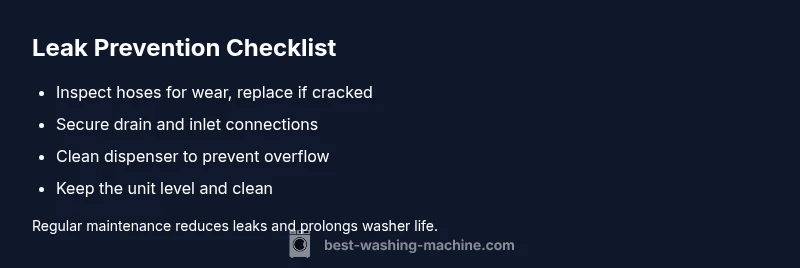
Regular maintenance reduces the chance of leaks and extends washer life. Here are practical habits:
- Inspect hoses every 3-6 months for wear and replace every 5-7 years, even if no visible damage exists.
- Use the correct detergent amount and switch to high-efficiency (HE) formulas when applicable to avoid dispenser overflow.
- Clean the lint and filter area (where applicable) to prevent clogs that force water through seals.
- Run a monthly cleaning cycle with hot water to flush out residue and prolong gasket life.
- Keep the washer level; an uneven machine can stress seals and hoses over time.
When to call a professional and what to expect
If you can’t identify the leak source after the quick checks, or if water continues to leak after all basic fixes, it’s time to contact a certified appliance technician. A pro will perform a pressure test, inspect tub seals, pump assemblies, inlet valves, and hoses, and replace worn parts with genuine components. Expect a diagnostic visit to take 30-60 minutes, plus any parts replacement. If your unit is under warranty, check whether leaks are covered and what service terms apply.
Steps
Estimated time: 45-90 minutes
- 1
Power down and secure water
Shut off the washer, unplug, and close both hot and cold water valves. Move towels to catch any residual water and ensure the area is safe before opening panels.
Tip: If you smell gas or see sparking, stop and unplug immediately. - 2
Inspect inlet hoses
Visually inspect both hoses for bulges, cracks, or dampness. Tighten clamps by hand, then snug with a screwdriver. Replace damaged hoses.
Tip: Use new clamps if you replace hoses. - 3
Check the drain path
Ensure the drain hose is straight, not kinked, and secured into the standpipe or drain. Remove clogs and verify the connection is tight.
Tip: Run a short cycle with a shallow load to observe any leakage. - 4
Inspect the door seal/gasket
Look for tears, rips, or deformities in the gasket. Clean any residues that prevent a proper seal and replace if damaged.
Tip: Test with a flashlight to spot small cracks. - 5
Check the detergent area and tub
Clear detergent drawer of buildup and verify the tub lip is free of cracks. Run a cleaning cycle to flush residues.
Tip: Use the recommended amount of HE detergent. - 6
Test and decide on next steps
Run a test cycle and observe where the leak originates. If water persists, prepare for professional service and document leaks with photos.
Tip: Keep a log of symptoms and times for the technician.
Diagnosis: Machine leaks water during or after cycles
Possible Causes
- highLoose or damaged water inlet hoses
- highWorn door seal or gasket
- lowCracked tub or internal hose
- mediumFaulty drain pump or drain hose
- lowDetergent buildup causing overflow
Fixes
- easyTighten and replace damaged hoses; check clamps
- mediumReplace worn door seal or gasket
- hardInspect the tub and internal hoses for cracks; replace as needed
- mediumInspect/replace drain pump or correct drain hose installation
- easyClean detergent drawer and switch to appropriate HE detergent to prevent overflow
FAQ
What are the most common causes of a washing machine leak?
Hoses and seals are the most frequent culprits. Loose connections, worn door seals, and clogged drains commonly lead to leaks. A quick hose check and gasket inspection often resolves the issue; deeper problems may require a professional repair.
Leaks usually come from hoses, door seals, or the drain system. Check connections and gaskets first, then call a pro if the leak continues.
Can a leaking washing machine be fixed without a professional?
Many leaks originate from replaceable parts like hoses or door seals and can be fixed by a confident DIYer. For tub cracks or pump issues, professional service is advised to prevent electrical or structural hazards.
Often you can fix leaks from hoses or gaskets yourself, but more serious issues need a pro.
How can I tell where the leak is coming from?
Observe the water path carefully during a cycle: note where water appears first on the exterior, beneath the machine, or around door seals. Use a flashlight and towels to help locate the source precisely.
Watch where water starts dripping and check hoses, seals, and the pump area.
What should I do if water pools behind the washer?
Move the washer away from the wall to inspect access panels, hoses, and the back area. Check for damaged hoses and ensure there’s no blocked drain causing backflow.
Move the washer out a bit, inspect hoses, and check for backflow from the drain.
Is it safe to keep using the washer when leaking?
No. Stop the cycle, unplug, and switch off water valves. Continuing to use a leaking washer can pose electrical risks and cause more damage.
Don’t run it again until you’ve identified and fixed the leak.
The Essentials
- Identify leak sources quickly with basic hose checks.
- Tighten clamps and replace damaged parts to stop most leaks.
- Prevent future leaks with regular hose and gasket maintenance.
- Call a professional for persistent or unclear leaks.
- Document issues for warranty or service visits.