How to Tell If a Washing Machine Transmission Is Bad: A Practical Troubleshooting Guide
Urgent, step-by-step troubleshooting guide to identify and fix a failing washing machine transmission, with clear signs, diagnostics, safety tips, and guidance on when to call a professional.


If you’re wondering how to tell if washing machine transmission is bad, start with the clearest signs: grinding noises, prolonged fills, failing to spin or agitate. The most common causes are worn gear sets, a broken input shaft, or a failed clutch. Begin with basic checks (belts, couplers, wiring) and escalate to replacement if symptoms persist.
Understanding Transmission Basics
A washing machine transmission is the mechanism that translates motor power into controlled agitation and spin. In modern units, transmissions are sealed gear assemblies or direct-drive units, not simple belts. When a transmission starts to fail, you may notice grinding noises, clunking during cycles, extended wash times, or clothes that come out still wet. According to Best Washing Machine, transmission problems are more common in older, high-mileage models, underscoring the importance of early detection (Best Washing Machine Analysis, 2026). Understanding the role of the transmission helps homeowners distinguish it from pump or motor issues and informs safer, targeted troubleshooting.
Common Signs That Your Transmission Is Failing
Look for persistent grinding or clunking during agitation or spin, unusual smells, or cycles that stop mid-way with the drum still turning. A slipping or weak spin, inability to reach high speeds, or clothes coming out damp are red flags. In some models, you may hear whines or chirping from the gearcase or notice fresh oil on the floor near the rear panel. If any of these symptoms occur, you should treat them as potential transmission trouble and proceed with caution. Based on Best Washing Machine Analysis, 2026, transmission issues are more common in older units, so consider age and mileage when evaluating risk.
Safety First: How to Check Without Risk
Before inspecting anything, unplug the washer and shut off the hot and cold water valves. Do not disassemble live electrical components or reach inside while power is present. Use a cloth to wipe up any spilled oil safely if you see leaks. Wear safety gloves and eye protection, and keep children and pets away. If you’re unsure about safe disassembly, contact a professional; working with gearsets and high-tault components can cause injury or further damage.
Quick Pre-Diagnosis Steps You Can Do
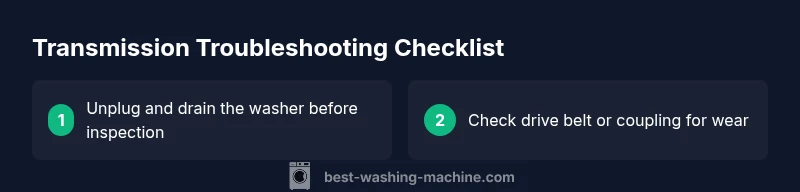
Start with the simplest checks applicable to most models. If you have a belt-driven machine, inspect the drive belt for cracks, fraying, or looseness. For newer direct-drive units, inspect the transmission coupling for wear or breakage. Listen for abnormal noises with the drum turned manually (with power disconnected) to gauge resistance. Check for oil or gear lubricant leaks around the gearcase; a leak can indicate seal failure. These steps don’t replace a professional diagnosis but help you decide whether a repair is feasible.
Diagnostic Flow: Symptom → Diagnosis → Solutions
This flow begins with your observed symptom (no spin, grinding, or leaks) and proceeds to a likely diagnosis, then a practical solution path. If the symptom is a loud grind and no spin, suspect worn gears or a failing clutch; if the drum spins freely with little resistance, it may be a broken connection or a frayed belt. For each diagnosed cause, start with the simplest fix (belt or coupler) and escalate to transmission replacement only if necessary. Always document observations to show a technician and avoid unnecessary part replacements.
Step-By-Step: Inspect and Decide on Repair or Replacement
- Ensure safety: unplug, shut off water, and drain the tub. 2) Locate the transmission access panel and identify whether you have a belt-driven or direct-drive design. 3) Inspect belts, pulleys, and couplers for wear or breakage; replace if needed. 4) Check for gearcase leaks or worn bearings—these indicate deeper transmission wear. 5) If components show clear damage or noise persists after basic fixes, prepare for a transmission replacement or professional evaluation. 6) Reassemble, test run on a gentle cycle, and monitor for abnormal sounds or leaks.
When to Call a Professional
If you hear grinding, clunking, or smell burning, stop using the machine and seek professional help. A faulty transmission often requires specialized tools and knowledge to replace or rebuild. A pro can confirm the diagnosis, source the correct part, and ensure the unit remains safe and reliable. Do not continue to operate the washer if the drum resistance changes suddenly or leaks appear.
Prevention and Maintenance to Extend Transmission Life
Regular maintenance can reduce transmission wear. Clean the drum area to prevent debris from affecting gear engagement. Replace belts and couplers at their first signs of wear and avoid overloading the washer, which accelerates gear and bearing stress. Maintain level installation to reduce vibration; use the proper detergent and water levels. Schedule periodic professional inspections if the machine is older or frequently used in heavy-load conditions.
Myths vs Reality and Final Notes
Myth: A loud noise always means a failed transmission. Reality: It can also indicate a loose belt, worn pulley, or a misaligned drum. Myth: Replacing only the belt fixes a transmission fault. Reality: If the transmission itself is worn, belt replacement won’t resolve issues. Remember that diagnosing a bad transmission requires systematic checks, safety-first steps, and, when needed, professional evaluation.
Steps
Estimated time: 2-3 hours
- 1
Power down and drain safely
Unplug the washer, turn off water valves, and run a brief empty cycle to check for leaks. This protects you from electric shock and makes path tracing easier if you need professional help.
Tip: Always have a bucket ready for spills and take photos of the setup before disassembly. - 2
Locate transmission access
Remove the back or bottom panel to access the transmission. Identify whether your model uses a belt-driven or direct-drive transmission to guide next steps.
Tip: Consult the user manual for panel screws and safe disassembly notes. - 3
Inspect the drive system
Check the drive belt (if present) for cracks, fraying, or looseness. Inspect the transmission coupling for wear or breakage. Replace if needed.
Tip: Even minor wear on a belt can cause slipping and noise. - 4
Check for leaks and bearing wear
Look for oil around the gearcase and listen for unusual bearing noise when rotating the drum by hand. Leaks or heavy resistance indicate wear.
Tip: Do not mix gear lubricant with other fluids; use the manufacturer’s recommended lubricant if needed. - 5
Test with loaded cycle observations
Reassemble for a gentle wash, observe spin behavior, and note any abnormal noises or vibrations. If issues persist after basic fixes, escalation is likely required.
Tip: Keep a log of symptoms and timings to share with a technician. - 6
Decide on repair vs replacement
If the transmission shows significant wear or repetitive failures, evaluate replacement versus rebuild with a professional. Plan for safe disposal of old parts.
Tip: A professional can source the correct part and ensure safe, compliant installation.
Diagnosis: Washing machine won't spin, agitates poorly, or makes grinding noises
Possible Causes
- highWorn transmission gears or bearings
- mediumFaulty clutch or input shaft
- lowDamaged belt or coupling on belt-driven models
Fixes
- hardReplace or rebuild the transmission assembly
- mediumReplace worn clutch or input shaft
- easyReplace drive belt or coupling (model-dependent)
FAQ
What are the most common signs of a bad washing machine transmission?
Common signs include grinding noises, failure to spin or agitate, and clothes remaining damp after a cycle. Leaks or skidding sensation may also indicate gear or seal wear. If you notice these, treat them as transmission issues.
Look for grinding sounds, no spin, or damp clothes after cycles. Those signs often point to a transmission problem.
Can a transmission be repaired without replacing it?
In some cases, worn gears or a broken clutch can be repaired or replaced in part. However, partial repairs may not restore full reliability, and many repair jobs lead to a full transmission replacement.
Sometimes parts can be replaced, but often a full transmission replacement is more reliable.
Is it safe to keep using a washer with transmission problems?
No. Continuing to use a washer with suspected transmission problems can cause further damage or a hazardous situation. Stop using it and call a professional.
No—stop using the machine until a technician confirms it’s safe to operate.
How much does transmission work typically cost?
Costs vary widely by model and repair scope. It’s best to get a professional assessment to understand whether repair or replacement is required.
Costs vary a lot; a pro will assess and tell you what’s needed.
How can I prevent transmission problems in the future?
Avoid overloading the machine, perform regular maintenance, and service seals and drive components as part of scheduled care to extend transmission life.
Prevent issues with proper use and regular maintenance.
Watch Video
The Essentials
- Identify symptoms early to prevent further damage
- Start with simple belt/coupler checks before deep gearwork
- Know when to call a pro to avoid risky repairs
- Regular maintenance can extend transmission life