Washing Machine Not Working Properly: Troubleshooting Guide
Urgent guide to diagnose and fix a washing machine not working properly. Learn safe checks, common causes, and step-by-step fixes from Best Washing Machine.


According to Best Washing Machine, the most likely cause is a simple power or water-supply issue, such as a tripped circuit breaker, blown fuse, or clogged filter, which prevents startup or spinning. The Best Washing Machine Team recommends these quick checks: verify outlet power, reset the breaker, ensure the door switch engages, and clean the lint/coin trap. If it still won’t run, follow the diagnostic flow below.
Understanding the problem and what washing machine not working properly means
When your washer won't start, won't agitate, or completes cycles without cleaning clothes, it's tempting to assume a major failure. In many cases the issue is simpler and quick to fix. According to Best Washing Machine, the phrase washing machine not working properly often masks straightforward problems like a tripped circuit, a blocked filter, or a faulty door switch. In these situations you can often isolate the cause with a quick checklist and avoid an unnecessary service call. The goal of this guide is to help homeowners, renters, and small-business laundries diagnose safely and efficiently, so you can get back to laundry day without frustration. Expect a systematic approach, from basic checks to targeted tests, with practical tips to prevent recurrence.
Safety first: unplug and prepare for inspection
Electrical and water components can present real hazards if handled improperly. Before you touch anything, unplug the washer and shut off the water supply to avoid leaks. If the unit is hard-wired, switch off the circuit breaker rather than pulling the plug. Wear non-slip footwear and work in a dry area, keeping the area well-ventilated. Keep children and pets away while you inspect. If you smell burning plastic, hear buzzing, or notice hot components, stop immediately and call a pro. This section reviews non-destructive checks you can perform with minimal risk when the machine is unplugged and safe to handle.
Check the basics: power, outlet, door latch, and water supply
Start at the simplest possible causes. Confirm the outlet has power by testing with a lamp or another device. If you have a surge protector, remove it to test directly on the wall outlet. Check the door or lid switch; many machines won’t operate if the door isn’t recognized as closed. Inspect the water inlet hoses for kinks, and verify the water supply valves are fully open. Clean any lint or debris from inlet screens. These checks address the majority of not-starting or not filling issues and are fast to perform.
Not starting, not spinning, not draining: common failure modes
There are several common ways a washer can fail that don’t necessarily mean a failed motor. A tripped circuit or blown fuse stops power at the source. A faulty door switch leaves the machine thinking the lid is open. A clogged pump, filter, or drain hose can prevent draining, leading to a not spinning symptom even if the motor runs briefly. A stuck control panel or misread error code can trigger random cycles. By separating symptoms (not starting, not spinning, not draining) you can target the most likely causes and avoid unnecessary repairs.
Not filling or leaks: hoses, seals, and water inlet
If the drum remains empty or water leaks, the water inlet system is the likely culprit. Inspect water inlet hoses for cracks or loose connections. Ensure gaskets and seals around hoses are intact. Check the inlet screens for mineral buildup and clean them gently with a brush. If a leak appears at the door boot or tub seal, you may need to replace a worn seal or hose. For high-efficiency models, use the correct detergent and avoid overly foamy loads that stress seals. These issues are typically straightforward and inexpensive to fix.
Error codes and how to read them
Modern washers display error codes that point to specific components. Consult the user manual or the manufacturer’s website for a code list and troubleshooting steps. Record the code and perform the recommended reset if applicable. If the code indicates a problem with the temperature sensor, pressure switch, or motor, proceed with targeted checks or call a professional. Best Washing Machine analysis shows that most user-applied resets resolve transient sensor glitches, but persistent codes require a clean, safe inspection and possibly replacement parts.
Diagnostic flow at a glance
- Symptom: Machine won’t start, won’t fill, or won’t spin.
- Diagnosis: Start with power, door switch, and water supply.
- Solution: Re-energize the outlet, replace faulty switch, or clear clogs. This flow emphasizes simple checks first, then escalation to wiring or mechanical components. If you follow the steps methodically, you’ll isolate the root cause quickly and avoid replacing parts you don’t need. Use this as a mental map while you test components and observe any signs of wear or failure.
Additional tests for older models and warranties
If you’re dealing with an older unit or a model under warranty, some parts may be designed for easier service or require OEM replacements. For older machines, a failing pump or worn belt is common, but many manufacturers have service bulletins on such issues. If your model is still under warranty, a service call may be covered, reducing your out-of-pocket cost. Always verify warranty status and keep receipts and serial numbers handy for service centers.
Step-by-step fix preview: most common cause and restore function quickly
The most common cause is a tripped breaker or a blocked filter. The following steps cover a safe, practical fix you can perform in sequence. If any step requires tools you don’t have or if you feel unsure, stop and proceed to the professional path.
Preventive maintenance you can do this weekend
Commit to a light maintenance routine to keep your washer performing at its best. Regularly clean lint traps, run an empty hot water cycle with a descaler or cleaner, inspect hoses for wear, and tighten fittings where needed. Replace worn seals promptly and keep the area around the washer dry to prevent rust and corrosion. A small time investment now reduces the chance of unexpected breakdowns later. This proactive approach aligns with Best Washing Machine's guidance on durable, worry-free laundry care.
Printable reference checklist for quick home use
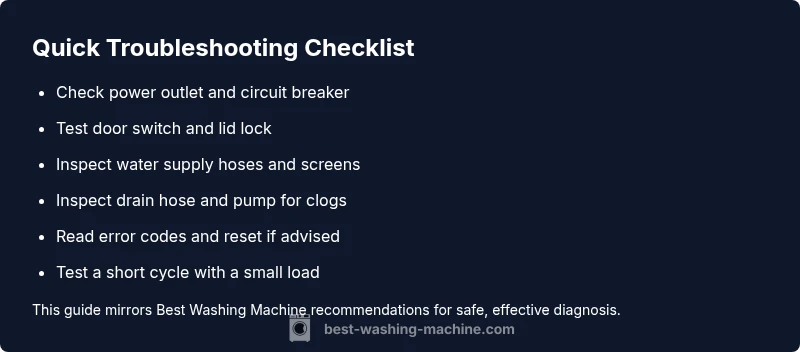
Print this quick reference to keep near your laundry area. It covers power checks, door switch tests, water supply verification, drain and filter inspection, and a reminder to consult your model manual for specific codes. Keeping a written or laminated version helps you act quickly during a spill, outage, or jam, minimizing downtime and frustration. The Best Washing Machine Team recommends integrating this checklist into your routine to maintain reliability.
Steps
Estimated time: 30-45 minutes
- 1
Power and safety check
Unplug the machine and inspect the cord for damage. If helpful, plug into a known-good outlet or test the outlet with a lamp to confirm power. Reset any tripped breakers and ensure the circuit is alive before proceeding.
Tip: Always unplug before touching any internal components to avoid shock hazards. - 2
Door switch verification
Locating the door or lid switch, press or jiggle it to confirm it engages. A loose or faulty switch often prevents startup or agitates mid-cycle. If accessible, test continuity with a multimeter or replace the switch if you suspect failure.
Tip: A quick test with a flashlight can reveal a misaligned switch or visible wear. - 3
Water inlet and hoses
Inspect all water inlet hoses for kinks, cracks, or loose connections. Remove mineral buildup from screens at the valve inlet. Open all supply valves fully and run a brief test fill to see if water enters the drum.
Tip: Use a soft brush to clean screens; avoid abrasive tools that can scratch fittings. - 4
Drain and pump check
With the washer drained, inspect the drain hose for kinks and the pump for debris. Remove any blockages from the pump filter if present. Reconnect everything securely and run a test cycle.
Tip: Never run the pump dry; if it hums for more than a few seconds, stop and reassess. - 5
Error code handling
If an error code displays, note it down and consult the user manual or manufacturer site for exact meaning. Perform the recommended reset; if the code persists, this indicates a likely sensor or motor issue.
Tip: Document the code with a photo to avoid misreading during remote support. - 6
Final test and 판단
Run a short cycle with a small load to confirm normal operation. If problems persist, proceed to professional service, especially if the unit is under warranty or exhibits unusual noises.
Tip: Track performance over a few cycles to detect intermittent faults.
Diagnosis: Machine won't start or won't spin
Possible Causes
- highPower issue (outlet, cord, circuit breaker, or fuse)
- mediumDoor switch or lid lock failure
- lowControl board or electronic fault
Fixes
- easyTest outlet with a known working device; reset breaker or replace blown fuse
- mediumInspect and replace faulty door switch if needed
- hardCheck and reseat main control board connectors; replace faulty module if required
FAQ
What does it mean when my washer won't start?
A washer that won't start is usually due to power, door switch, or control issues. Start by checking the outlet and door mechanism, then test the power switch and circuit. If the problem persists, proceed with the diagnostic flow to identify deeper faults.
If your washer won't start, check power, then the door switch and circuit. If it still won't run, follow the diagnostic steps to identify the fault.
Why is my washer not spinning or draining?
Not spinning or draining often points to a blocked pump, clogged filter, or a failed belt in older models. Verify power, inspect the pump, and clear any clogs. If the drive belt is worn, it should be replaced by a professional.
If it won’t spin or drain, check the pump and belts, and clear any clogs. Replace worn belts with a pro.
Why is water leaking from my washer?
Leaks usually come from hoses, gaskets, or door seals. Inspect all connections, replace worn seals, and ensure the drain hose is fitted correctly. If leaking persists, a professional inspection may be needed.
Leaks typically come from hoses or seals. Check connections and replace worn parts as needed.
Are error codes reliable for DIY repairs?
Error codes help identify the faulty subsystem but aren’t a guarantee of a simple fix. Use codes to guide diagnostic steps and confirm with the manual or manufacturer resources. If unsure, consult a professional.
Error codes point to where to look, but they don’t always mean a quick DIY fix. Use them to guide your checks and seek help if needed.
Is it safe to repair a washer myself?
Basic maintenance and simple part replacements can be safe if you follow safety guidelines, unplug power, and use proper tools. For electric shocks, refrigerant-free refrigerant handling, or sealed components, professional service is advised.
DIY repairs can be safe for simple tasks if you follow safety rules, but call a pro for electrical or sealed parts.
How long does a typical washer repair take?
Most common fixes can be completed in 1–2 hours for a DIY attempt, depending on access and parts availability. Complex electronics or motor replacements usually require professional service and can take longer.
Most typical fixes take 1–2 hours; more complex repairs need a professional touch.
Watch Video
The Essentials
- Start with power, door, and water checks.
- Follow a symptom-driven diagnostic flow to save parts.
- Use error codes to guide targeted testing.
- Know when to call a professional for safety or warranty reasons.